- Get A Free Consultation.
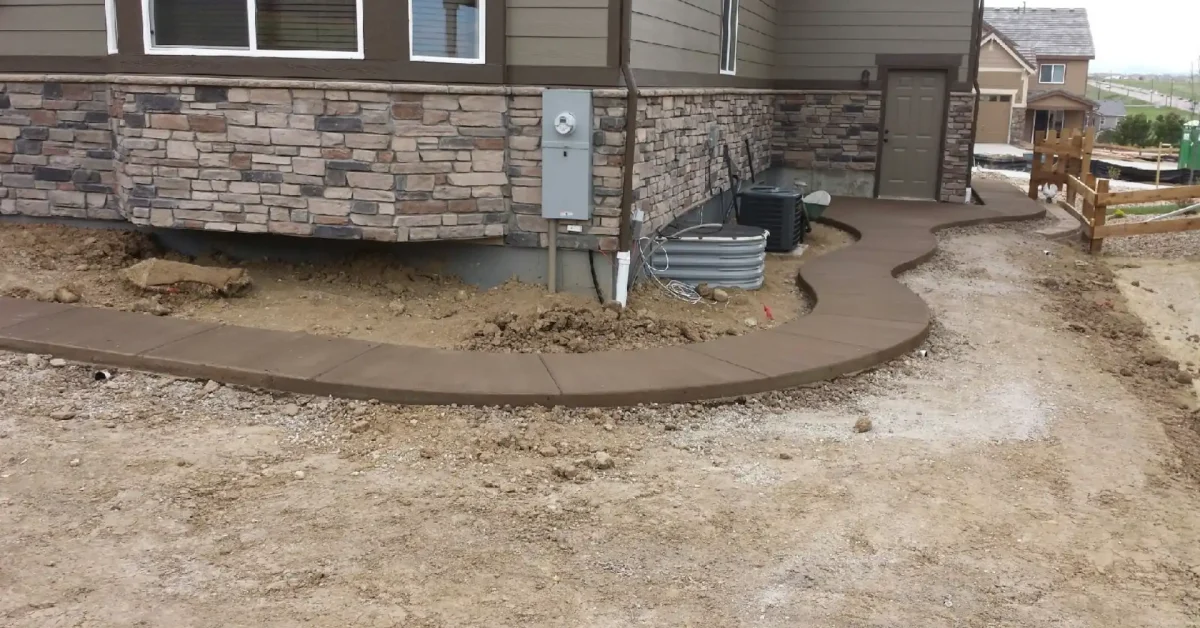
Technically, yes, you can lay pavers directly on sand without a compacted gravel base underneath. Whether you should is a different question, and for most real walkways, the honest answer is no. Sand alone doesn’t provide the structural support a walkway needs to handle regular foot traffic, seasonal ground movement, and drainage the way a proper gravel base does.
That said, there are a handful of smaller, lighter-use situations where sand alone is a genuinely reasonable choice, and it’s worth understanding the difference before deciding which category your project falls into.
At Ridgewell Landscape and Design, we get this question fairly often from homeowners looking to save time or money on a project, and it’s a fair question to ask. This guide breaks down exactly what sand does and doesn’t do structurally, where a sand-only approach actually works fine, and where skipping the base ends up costing more in repairs than it would have to do the job right the first time.
Paver sand, specifically bedding sand, serves one main purpose in a properly built walkway: it creates a thin, level, adjustable surface for pavers to sit on top of a compacted gravel base. It’s a fine-tuning layer, not a structural one.
The gravel base underneath is what actually distributes weight, resists compression, and allows water to drain away from the pavers rather than pooling underneath them. Sand alone can’t do any of that. It compresses unevenly under repeated weight, it doesn’t distribute load the way angular, compacted gravel does, and it doesn’t manage water movement in the same way.
Every time someone walks across a paver sitting on sand alone, that sand compresses slightly under the weight. Over time, and especially in areas that see repeated traffic in the same spots, this compression becomes uneven, since foot traffic naturally concentrates in certain paths rather than distributing evenly across the entire walkway. The result is a surface that develops dips, low spots, and rocking pavers within a single season in many cases, sometimes faster in high-traffic areas.
A compacted gravel base is angular and porous, which lets water move through it and drain away from the walkway rather than sitting stagnant against the pavers. Sand, by contrast, can hold water differently depending on compaction and composition, and without a gravel layer underneath to manage drainage, water has nowhere consistent to go. This becomes a bigger problem specifically in a climate with freeze and thaw cycles, since water sitting in or under a sand-only base expands as it freezes, pushing pavers up and out of position.
Soil naturally shifts a small amount with seasonal moisture changes and temperature swings, more so with certain soil types like clay. A properly compacted gravel base acts as a buffer against this movement, distributing and absorbing some of that shift rather than transmitting it directly to the pavers above. Sand alone offers essentially none of that buffering, which means ground movement translates much more directly into paver movement.
Edge restraints, the material that keeps pavers from spreading apart at the borders of a walkway, rely on being anchored into something reasonably firm. Sand alone doesn’t offer the same holding power as a properly compacted gravel base, which means edge restraints on a sand-only installation are more prone to working loose over time, allowing the whole pattern to gradually spread.
None of this means sand should never be used without a full gravel base. There are genuinely appropriate situations for it, mostly where the load is minimal, the area is small, and long-term precision isn’t the priority.
Individual stepping stones set into sand within a garden bed or lawn area see occasional, light foot traffic rather than the sustained daily use of a main walkway. Some settling or minor unevenness over time is a low-stakes issue here, easily fixed by lifting a stone and adding a bit more sand underneath, rather than a structural failure.
A compact area meant to hold a few potted plants or a small decorative feature, rather than being walked across regularly, doesn’t need the same structural support as an actual pathway. Light, stationary weight from planters is a very different load than repeated foot traffic.
If you’re setting up a path for a single event, a garden party, a temporary access route during a renovation, or something similarly short-term, a sand-only installation is a reasonable, low-effort choice, since you’re not expecting it to hold up for years.
A tiny paved accent area, like a small square around a mailbox post or a decorative border that isn’t actually walked on, can reasonably skip the full base treatment, since it isn’t functioning as a walkway in the structural sense at all.
If your project falls into any of these categories, skipping the gravel base is very likely to cost you more in the long run than it saves upfront, since repairing a settled or shifted walkway generally means tearing it up and redoing the base properly anyway.
Part of why sand-only feels appealing is that it looks like a meaningful shortcut, less digging, less material, less time. In practice, the difference is smaller than it appears. A standard gravel base runs 4 to 6 inches deep, which does mean additional excavation and material compared to a thin sand bed alone, but the compaction process itself, using a rented plate compactor, adds relatively little time to an overall project when weighed against redoing a failed sand-only installation a year or two later. Our guide to how thick paver base should be breaks down exactly what that gravel layer involves and why the depth matters.
If you’ve already installed a walkway on sand alone and are seeing the predictable signs, dips, rocking pavers, edges spreading apart, the fix generally means lifting the affected pavers, excavating deeper to make room for a proper gravel base, compacting that base correctly, and resetting the pavers on top of it. This is essentially the same work as building it correctly from the start, just with the added step of removing and setting aside the pavers first. It’s a common repair scenario, and one that’s avoidable with a bit more effort at the outset.
Some homeowners ask whether a thinner gravel base, say 2 inches instead of the standard 4 to 6, might be an acceptable middle ground between full base depth and sand alone. In practice, this doesn’t work as well as people hope. A base that’s too thin to properly distribute weight and resist compression behaves much more like sand alone than like a properly built base, since the structural benefit of a gravel base comes largely from having enough depth and compacted layers to actually do that job. If budget or time is the concern, it’s better to build a smaller walkway with proper base depth than a full-size one with an inadequate base.
If you’re unsure which category your project falls into, ask yourself a few honest questions. How often will this area actually be walked on, daily, occasionally, or almost never? Is it meant to last for years or just a season? Does it connect to other hardscape that people move between regularly? A yes to regular use, multi-year lifespan, or connection to other walked areas points strongly toward needing a proper gravel base rather than sand alone.
It’s worth noting that even in a correctly built walkway with a full gravel base, the type of sand used for bedding and jointing matters. Coarse, angular bedding sand performs better than fine, rounded sand, since it compacts more predictably and resists shifting under the pavers. Polymeric sand for the joints, rather than plain sand, adds a binding quality once activated that plain sand simply doesn’t offer, helping resist weed growth and joint erosion over time. Neither of these sand choices substitutes for the gravel base underneath, but getting them right adds meaningfully to how well a properly based walkway performs.
Freeze and thaw cycles along the Front Range put extra stress on any structure that isn’t properly based, and this effect is even more pronounced on a sand-only installation. Water movement and expansion during freezing weather is one of the primary forces that shifts and unsettles ground-level structures, and a compacted gravel base is specifically designed to help manage that movement in a way sand simply isn’t built for. This is part of why we see sand-only walkways in this climate fail faster than similar installations might in a milder, more consistently dry region.
If you’re on the fence about whether your specific project needs a full base or can reasonably get by with sand alone, it’s worth a quick conversation with someone who can assess your actual site, soil type, and intended use rather than guessing based on general rules. What works fine for a stepping stone path through a garden bed is very different from what a daily-use entry walkway needs, and the line between those two isn’t always obvious without seeing the actual space.
With over 15 years of building and repairing walkways across a wide range of project sizes and soil conditions in the Denver area, our team at Ridgewell Landscape and Design can help you figure out what your specific project actually needs, whether that’s a full gravel base or a simpler sand-only approach for something smaller. Explore our paver patio services to see the kind of properly based, long-lasting work we build for full walkway projects.
Technically yes, but it’s only appropriate for small, light-use areas like garden stepping stones or temporary paths. Any regularly used walkway needs a compacted gravel base underneath for structural support.
Expect uneven settling, rocking pavers, and edges spreading apart within a season or two, particularly with regular foot traffic and in a climate with freeze and thaw cycles.
Not really. A base that’s too thin to properly distribute weight behaves much more like sand alone than a properly built base, since the structural benefit comes from having sufficient depth and compaction.
Yes, though the fix typically involves lifting the pavers, excavating for a proper gravel base, compacting it correctly, and resetting the pavers, which is essentially the same work as building it correctly from the start.
Yes. Coarse, angular bedding sand and polymeric jointing sand both perform significantly better than plain, fine sand, even when a proper gravel base is already in place underneath.
Yes, for small, low-traffic applications like garden stepping stones, potted plant areas, or temporary paths that aren’t expected to last multiple years or handle regular foot traffic.
Sand alone has its place for small, low-stakes projects, but for anything that functions as a real walkway, proper base preparation is what determines whether it lasts for decades or needs redoing within a year or two.
Ridgewell Landscape and Design has been building properly based paver walkways across Denver, Broomfield, Parker, and the surrounding communities for over 15 years. If you’d like help figuring out what your specific project actually needs, reach out for a free quote and consultation.
Fresh Ideas From our experts
What Your Neighbors Are Saying
"They are the best. We have a small backyard and needed it to reflect a relaxing and enjoyable space. Chris used our ideas and came up with the perfect design. Then Francisco came with the cost projections and worked to accommodate our budget. He and his team then used their considerable construction expertise to create a space that’s an extension of our home where we spend a lot of time. Thank you for creating such a welcoming space."
"I am new to Colorado and hired Chris and Francisco to design and implement a plan for my new build house. From design to finish and followup they were beyond my expectations. They are in constant contact throughout the project and their crew is very hardworking. They followup when the project is finished and are always available for whatever questions you may have. I would highly recommend them, and I get many complements on the work they have done for me."
"We were thrilled with the end result of our brick paver patio refurbishment. We hired Chris, Francisco and their team to fix our sinking brick paver patio. It had been installed by a different landscaper, and after only 2 years it was collapsing. Boo hiss! Ridgewell Landscape and Design came in and saved the day! They discovered the original installation was done incorrectly, and that’s why it was collapsing. Their team worked hard and got the project done quickly and professionally. We are thrilled with the look and finish of the job! Bravo!!"