- Get A Free Consultation.
A paver walkway’s structural edge, the restraint holding pavers in place underground, isn’t the same thing as its visual edge, what you actually see when you look down at the finished walkway. That visual finish, the border treatment, the transition into surrounding lawn or beds, the plantings alongside it, is what separates a walkway that looks intentionally designed from one that looks like it just stops where the pavers ran out. Getting this right is often less about construction and more about a handful of design decisions that tie the hardscape into the rest of the yard.
At Ridgewell Landscape and Design, side and edge finishing is one of the details we spend real design time on for every walkway we build across the Denver area, including Broomfield, Parker, and the surrounding communities, since it has an outsized effect on how finished the whole project reads. This guide covers the main options for finishing the sides of a paver walkway, how they compare on cost and upkeep, how to handle the transition into different surrounding surfaces, and how to combine approaches for a cohesive, layered result.
| Option | Look | Maintenance | Best For |
| Contrasting border course | Defined, framed edge | Low | Formal entries, defined pathways |
| Natural stone or boulder edging | Rustic, organic | Low to moderate | Mountain or naturalistic landscapes |
| Mulch bed border | Soft, garden-style | Moderate, needs refreshing | Garden paths, planting-heavy yards |
| Groundcover planting edge | Green, living border | Moderate | Softer, cottage-style landscapes |
| Gravel border | Clean, low-maintenance | Low | Modern or xeriscape-style yards |
| Direct lawn transition | Simple, blended | Moderate, edging upkeep | Traditional yards with turf |
None of these options are mutually exclusive, many finished walkways combine two or three, a contrasting border course right at the paver edge, followed by a planting bed a bit further out, for example.
It’s easy to spend most of the planning process focused on paver color, pattern, and material, and treat the edge as an afterthought once the main surface is done. In practice, the edge is where a walkway either blends convincingly into the rest of the landscape or looks like a strip of hardscape dropped into the yard without much thought. A well-chosen edge treatment does real work, it frames the walkway, manages the practical transition between materials, and often solves small maintenance headaches, like grass creeping onto pavers, before they start.
A border course uses a different color, size, or material paver along the outer edge of the walkway, creating a defined frame around the main field. This is a purely decorative choice built into the paver installation itself, distinct from the structural edge restraint hidden underneath.
A contrasting border reads as intentional and finished, giving the walkway a clear, framed edge rather than an abrupt stop. It pairs particularly well with formal entries or walkways using a simple pattern like running bond, where the border adds visual interest without competing with an already busy pattern.
Because a border course is installed as part of the paver field itself, it needs to be planned before construction begins, not added afterward. Deciding on border width, typically one or two paver widths, and confirming it against your overall walkway dimensions early avoids awkward cuts or a border that reads as too thin or too heavy relative to the main field.
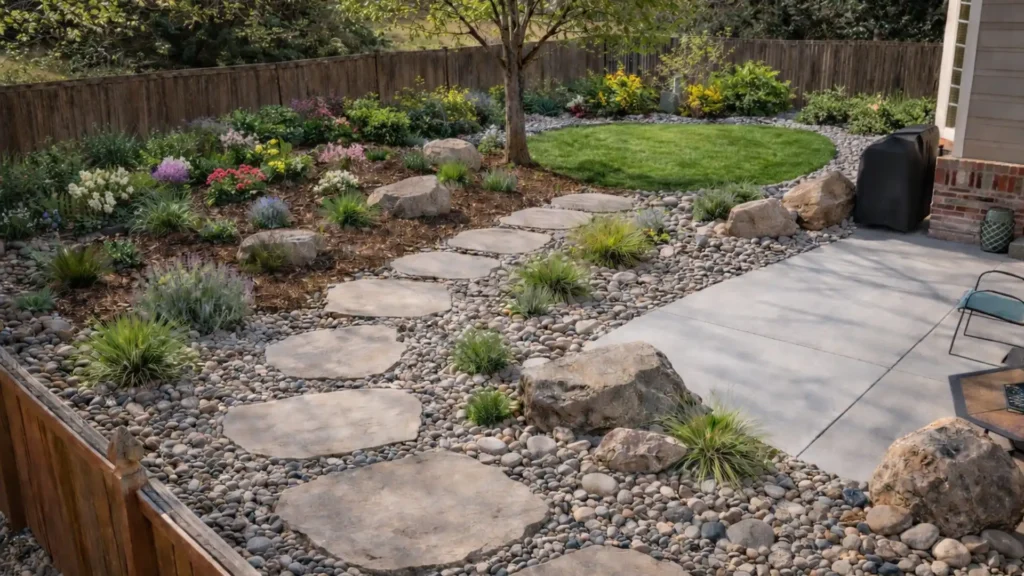
Larger natural stones or boulders placed along one or both sides of the walkway, either loosely arranged or more formally set, create a rugged, organic border that works especially well with a mountain or natural design aesthetic.
This option pairs naturally with the kind of mountain-inspired landscaping common across the Denver area, echoing the natural stone found throughout the region’s terrain. It also requires very little ongoing maintenance once placed, since the stones themselves don’t need refreshing the way mulch or plantings do.
Boulder and larger stone edging works best when placed with some intentional irregularity rather than in a perfectly even row, which reads as more artificial than natural. Mixing a few different stone sizes along the edge, rather than uniform pieces, generally produces a more convincing, natural-looking result.
A planting bed filled with mulch running alongside the walkway, either bare or interplanted with shrubs, perennials, or seasonal color, creating a soft, garden-style transition from the hardscape into the rest of the yard.
Mulch beds need periodic refreshing, typically once a year, to maintain their appearance and continue suppressing weeds effectively. This is a bit more ongoing upkeep than a stone or gravel border, but it offers more flexibility for seasonal plantings and color changes.
Bark mulch is the most common choice and breaks down gradually, enriching the soil as it does. Rock or gravel mulch alternatives last longer without needing annual refreshing but don’t offer the same soil benefits. For a walkway border specifically, a mid-weight bark mulch that resists washing out during heavy rain is generally the more practical choice over lighter, finer mulch products.
Low, spreading plants, like creeping thyme, sedum, or ornamental grasses, planted directly alongside the walkway edge create a green, living border rather than a hardscape or mulch treatment.
Groundcover softens the hardscape’s edge more than any of the other options here, and many varieties can handle occasional light foot traffic spilling slightly over the walkway’s edge without damage. This option does require some establishment time and ongoing care compared to a stone or gravel border.
Drought-tolerant, low-growing varieties tend to perform best alongside a walkway in this climate, since they establish well without heavy irrigation and don’t require frequent trimming to stay low and tidy. Creeping thyme in particular has become a popular choice for exactly this application, since it tolerates occasional foot traffic and releases a pleasant scent when brushed against.
A band of decorative gravel, often a different color or size than the walkway’s own base material, running along one or both sides of the pavers.
Gravel borders are low maintenance, drain well, and pair particularly well with modern or xeriscape-style landscapes common in water-conscious Colorado yards. Our guide on xeriscape landscaping covers drought-tolerant design approaches that often incorporate this kind of gravel edge treatment.
Loose gravel migrates over time without something holding it in place. A shallow metal or paver-set edge between the gravel border and any adjacent lawn or planting bed keeps the gravel contained and prevents it from gradually spreading into areas where it isn’t wanted.
The simplest approach, the walkway edge transitions directly into surrounding turf with no additional border material between them.
This approach looks clean when the transition is crisp, but it requires consistent edging maintenance to keep grass from creeping onto the paver surface or leaving a ragged, uneven line along the walkway’s edge over time. A hard edge, like the paver’s own edge restraint sitting slightly proud of the soil line, helps keep this transition looking sharp with less frequent maintenance than a soft soil-to-paver transition would need.
For a clean lawn transition, it helps to have the walkway’s edge restraint sit at, or very slightly above, the surrounding soil grade, giving the lawn mower’s wheel a defined edge to run along, which reduces how much hand-trimming is needed to maintain a crisp line over time.
A mulch or planting bed transition benefits from a slight buffer, either a border course or a few inches of gravel, between the paver edge and the mulch itself, which keeps mulch from migrating onto the walking surface after heavy rain or wind.
Where a walkway meets a broader gravel area, matching or intentionally contrasting the gravel size and color creates a more deliberate look than an arbitrary transition point. A slightly recessed paver edge, or a thin metal or paver-set border, helps keep the two materials from migrating into each other over time.
If you’re adding a border course or a planting buffer alongside your walkway, it’s worth factoring that additional width into your overall design and site planning, since it does add to the total footprint beyond the walking surface itself. Our guide on standard paver walkway width covers typical walking-surface widths by use case, and any border or buffer treatment should be planned as additional space beyond that functional width, rather than eating into it.
Different edge treatments carry noticeably different upfront and ongoing costs. Gravel and direct lawn transitions tend to be the least expensive to install initially. Contrasting border courses add a modest material cost, since they’re part of the paver order itself, plus a small amount of extra labor for planning and cutting.
Natural stone or boulder edging can range widely depending on stone size and sourcing, from relatively affordable to a significant investment for larger, more dramatic pieces. Mulch beds and groundcover plantings carry lower upfront cost but higher ongoing maintenance investment over the life of the walkway, whether that’s your own time or paid landscaping upkeep.
Edge treatments and path lighting often go hand in hand, particularly for front walkways where nighttime visibility and curb appeal both matter. Low-voltage fixtures tucked just behind a border course or nestled within a groundcover or mulch bed add both function and a finished look after dark, without the fixtures themselves becoming a visually dominant feature during the day. Planning lighting placement alongside your border decision, rather than as a separate afterthought, generally produces a cleaner, more integrated result.
Each edge option comes with its own seasonal rhythm. Mulch beds typically need refreshing once a year, often in spring. Groundcover plantings may need occasional trimming or thinning as they establish and spread.
Gravel borders benefit from an occasional rake or top-off if some material has migrated or compacted over the season. Stone and boulder edging need essentially nothing beyond an occasional visual check. Direct lawn transitions need the most frequent attention, regular edging to keep grass from creeping onto the paver surface throughout the growing season.
Many well-finished walkways layer two or three of these options together rather than relying on just one. A common combination is a contrasting border course laid directly into the paver installation, followed by a narrow gravel or mulch buffer, and then the surrounding lawn or planting bed beyond that. This layered approach gives the eye a few distinct zones to move through, from the walking surface, to the framed edge, to the softer surrounding landscape, rather than one abrupt jump from pavers to whatever’s next to them.
The right edge treatment generally follows the same design logic as the rest of your landscape. A formal, symmetrical front yard suits a defined border course. A mountain or naturalistic property suits stone or boulder edging. A cottage-style or heavily planted yard suits a mulch bed or groundcover border. And a modern, low-maintenance yard often suits a clean gravel edge. Matching the finish to your yard’s overall design language keeps the walkway feeling like part of a cohesive landscape rather than an isolated feature.
Simple options like a gravel border or a straightforward mulch bed are reasonable for a homeowner to handle without professional design input, particularly on a smaller project. Where design help tends to add real value is on more visible walkways, front entries especially, where border choice, plant selection, and how everything ties into the broader landscape carries more weight, and where a well-considered plan avoids a mismatched or piecemeal result that’s harder to fix after the fact than to plan correctly from the start.
With over 15 years of designing and finishing walkways across a range of landscape styles in the Denver area, our team at Ridgewell Landscape and Design pays close attention to these finishing details as part of every project. Explore our paver patio services to see examples of walkways with a range of edge and border treatments.
A gravel border or a direct lawn transition are generally the lowest maintenance options, requiring less ongoing upkeep than a mulch bed or groundcover planting edge.
Either can work well, a matching border creates a subtle, cohesive look, while a contrasting border adds visual definition and a more framed, intentional appearance.
Leaving a small buffer, either a border course or a few inches of gravel, between the paver edge and the mulch bed helps keep mulch from migrating onto the walking surface.
Natural stone or boulder edging tends to pair especially well with mountain-inspired landscaping, echoing the natural terrain found throughout the region.
Yes, since it adds material and labor beyond the core walking surface, though the amount varies significantly depending on which border option and width you choose.
Yes, and many finished walkways do, commonly layering a contrasting border course with a gravel or mulch buffer and then the surrounding lawn or planting bed.
It can technically be added later, but planning lighting placement alongside your border choice from the start generally produces a cleaner, more integrated result than retrofitting fixtures after the fact.
The details along a walkway’s sides do as much to make a project feel finished as the pavers themselves, and choosing the right approach ties the whole space together.
Ridgewell Landscape and Design has been designing and finishing paver walkways across Denver, Broomfield, Parker, and the surrounding communities for over 15 years. If you’d like help choosing the right edge treatment for your yard, reach out for a free quote and consultation.
Fresh Ideas From our experts
What Your Neighbors Are Saying
"They are the best. We have a small backyard and needed it to reflect a relaxing and enjoyable space. Chris used our ideas and came up with the perfect design. Then Francisco came with the cost projections and worked to accommodate our budget. He and his team then used their considerable construction expertise to create a space that’s an extension of our home where we spend a lot of time. Thank you for creating such a welcoming space."
"I am new to Colorado and hired Chris and Francisco to design and implement a plan for my new build house. From design to finish and followup they were beyond my expectations. They are in constant contact throughout the project and their crew is very hardworking. They followup when the project is finished and are always available for whatever questions you may have. I would highly recommend them, and I get many complements on the work they have done for me."
"We were thrilled with the end result of our brick paver patio refurbishment. We hired Chris, Francisco and their team to fix our sinking brick paver patio. It had been installed by a different landscaper, and after only 2 years it was collapsing. Boo hiss! Ridgewell Landscape and Design came in and saved the day! They discovered the original installation was done incorrectly, and that’s why it was collapsing. Their team worked hard and got the project done quickly and professionally. We are thrilled with the look and finish of the job! Bravo!!"