
Choose a gas fire pit if you want instant, smoke-free fires with no cleanup, fewer HOA and burn-restriction issues and a modern look. Choose a wood-burning fire pit if you want real crackling flames, more heat, campfire cooking and a lower build cost. In the Denver area, built-in wood fire pits typically cost $2,500 to $6,000 and gas fire pits $5,000 to $12,000, plus $1,000 to $3,500 for a natural gas line.
Both create a great gathering spot. The right one depends on how you’ll use it, your neighborhood’s rules and how much hassle you’re willing to accept. Here’s a full comparison.
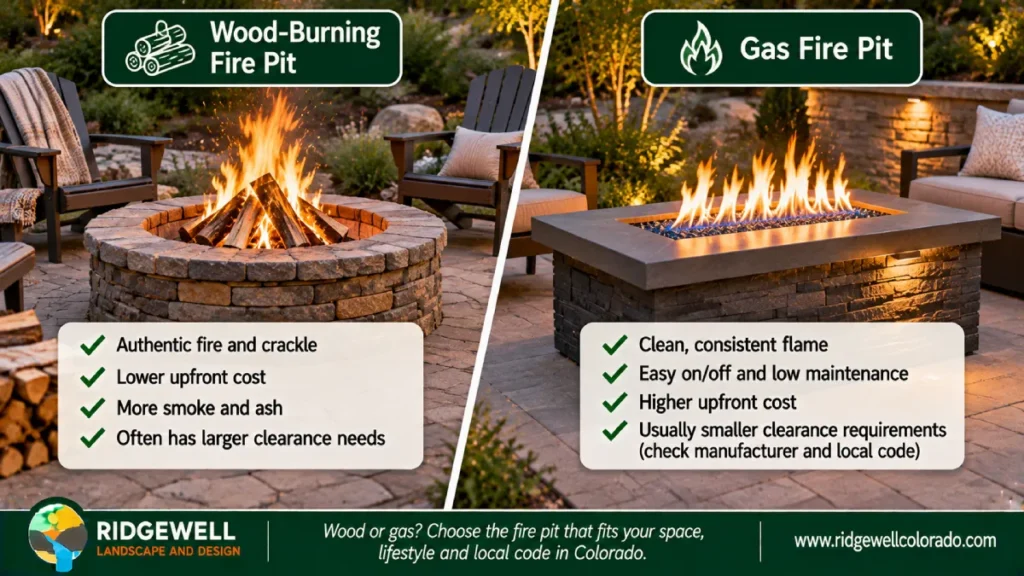
Gas vs Wood Fire Pit at a Glance
| Factor | Gas fire pit | Wood-burning fire pit |
|---|---|---|
| Built-in cost (Denver) | $5,000 to $12,000 + gas line | $2,500 to $6,000 |
| Startup | Switch, key or remote | Build and light a fire |
| Smoke | None | Yes; drifts toward guests and neighbors |
| Heat output | Moderate, adjustable | Higher, harder to control |
| Sparks and embers | None | Yes |
| Cleanup | Minimal | Ash removal |
| Fuel | Natural gas or propane | Firewood |
| Cooking | Limited (not for marshmallows over fire glass) | Great for s’mores and campfire cooking |
| HOA and burn restrictions | Allowed more often | Restricted more often |
| Ambiance | Clean, modern | Classic campfire |
Gas Fire Pit Pros and Cons
Pros
- Turns on instantly with a switch or remote
- No smoke in your eyes or your neighbor’s windows
- No sparks or embers near pergolas, trees or furniture
- No ash cleanup or firewood storage
- Often allowed when HOAs or burn restrictions limit wood fires
- Can be placed closer to structures (per manufacturer clearances and code)
Cons
- Higher build cost, plus a permitted gas line or propane tank
- Less heat than a big wood fire
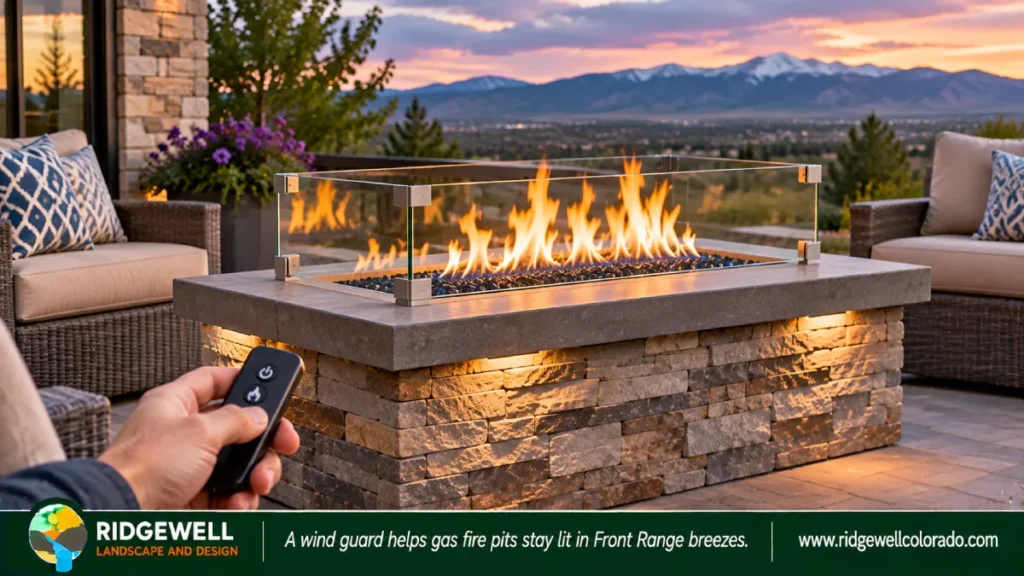
- Wind can blow out flames without a wind guard
- No crackle or wood smoke smell
Wood-Burning Fire Pit Pros and Cons
Pros
- Lower build cost; no gas line needed
- Authentic campfire experience
- More heat on cold Colorado evenings
- Great for roasting and campfire cooking
Cons
- Smoke and sparks
- Ash cleanup and firewood storage
- More clearance needed from structures
- Often restricted by HOAs and during fire danger or air quality alerts
Colorado Considerations
Fire danger and burn restrictions
Dry, windy conditions along the Front Range lead to periodic fire restrictions. Rules vary by city and county, and wood fires are often the first thing restricted. Gas appliances are sometimes exempt, but check the specific order in your area.
Air quality
The Denver metro sometimes issues air quality advisories, and some local rules limit wood burning during high-pollution periods. Gas fire pits avoid most of these concerns.
Wind
Front Range winds can blow sparks from wood fires and snuff gas flames. A wind guard helps gas units, and placing any fire pit in a sheltered spot helps both.
HOA rules
Many Denver-area HOAs allow only gas fire features or prohibit wood burning entirely. Check your covenants before you design.
Natural Gas vs Propane
- Natural gas: Higher install cost (permitted gas line by a licensed plumber), lower operating cost, no refills.
- Propane: No gas line, but needs a hidden tank and regular refills; often more expensive per hour.
Be sure to review local safety codes and requirements before scheduling your natural gas fire pit installation with a licensed professional.
Which Should You Choose?
Choose gas if convenience, clean air, a modern look, HOA compliance or placement near a house or pergola matters most.
Choose wood if you love a real campfire, want the most heat for the money and have the space and rules to allow it.
To see what a professional design looks like in action, view our recent backyard paver patio and fire pit installation.
Frequently Asked Questions
Gas is better for convenience, smoke-free fires and fewer restrictions. Wood is better for authentic campfires, heat and lower build cost.
Yes, but usually less than a large wood fire. Larger burners and fire tables produce more heat.
It’s generally not recommended over fire glass or lava rock, because drips can clog burners and media. Check your manufacturer’s guidance.
Rules depend on your city, HOA and current fire restrictions. Many communities allow recreational fires with conditions, while some HOAs ban wood burning entirely. Check before you build.
Natural gas is usually inexpensive per hour. Propane typically costs more. Firewood costs vary by type and quantity.
Find the Right Fire Pit
Ridgewell Landscape and Design builds gas and wood-burning fire pits across Denver and the Greater Denver Metro. See our fire pit cost guide, explore our fire pit services or book a free consultation.