
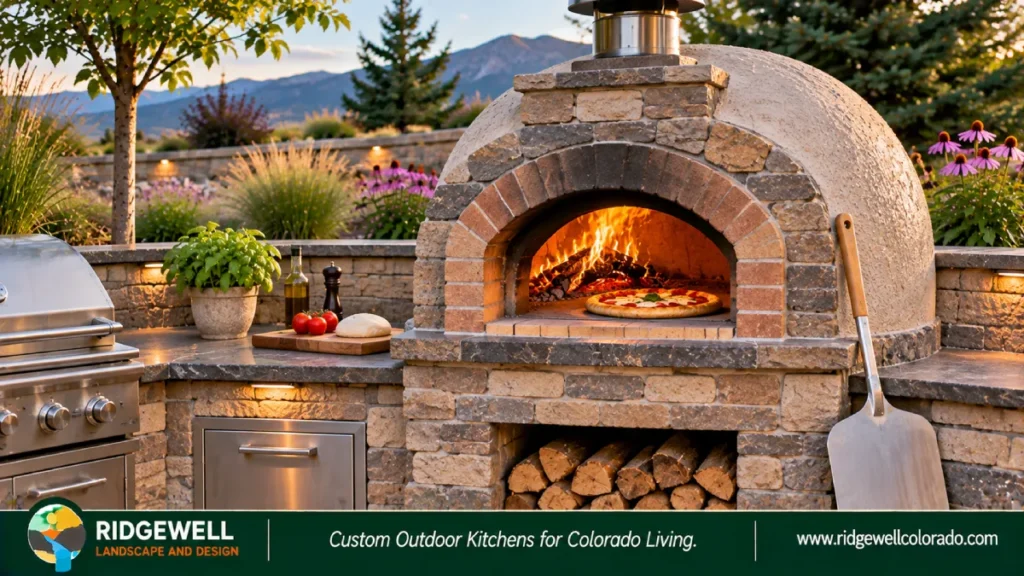
An outdoor pizza oven is worth adding to your backyard if you love entertaining and cooking with high heat. Pizza ovens reach temperatures around 700 to 900°F, cooking Neapolitan-style pizza in a couple of minutes, and they also roast meats, vegetables and bread. Options range from portable countertop ovens that cost a few hundred dollars to built-in masonry or modular ovens that typically run $2,500 to $10,000 or more installed. Choose between wood, gas or hybrid fuel based on flavor, convenience and local burn rules.
Pizza ovens have become one of the most popular outdoor kitchen upgrades. Here’s how to decide if one fits your space and how to choose the right type for Colorado.
Types of Outdoor Pizza Ovens
| Type | Typical cost | Pros | Cons |
|---|---|---|---|
| Portable countertop (gas or wood pellet) | A few hundred to about $1,000 | Affordable, quick to heat, movable | Small; fewer pizzas at once |
| Freestanding cart oven | About $1,500 to $5,000 | Larger capacity, no construction | Takes patio space |
| Modular built-in oven kit | About $2,500 to $7,000 installed | Integrates with island; good heat retention | Needs a solid base and finishing |
| Custom masonry oven | About $5,000 to $10,000+ | Showpiece; excellent heat retention | Highest cost; longer build |
Wood vs Gas Pizza Ovens
- Wood-fired: Classic smoky flavor, very high heat, longer heat-up and cleanup. Subject to burn restrictions and HOA rules in some areas.
- Gas: Faster startup, easy temperature control, no ash. Requires a gas line or propane.
- Hybrid: Gas burner with the option to add wood for flavor.
If you decide on a gas or hybrid model, check out our comparison of natural gas vs propane to plan your line installation and budget.
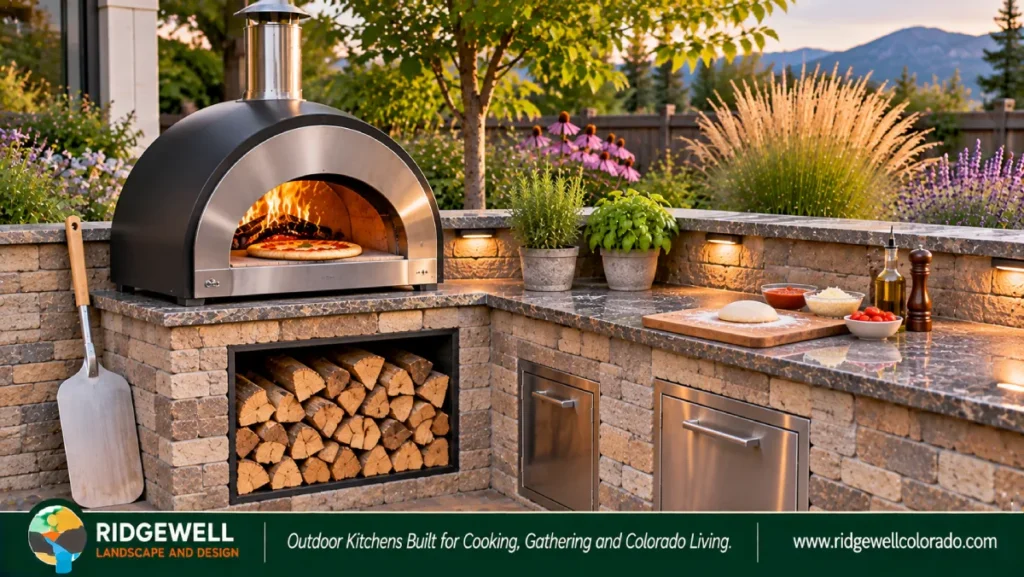
Adding a Pizza Oven to an Outdoor Kitchen
- Placement: Usually at the end of the island or in a corner, with landing space for pizza peels and toppings.
- Base: Built-in ovens are heavy and need a solid, reinforced base and a compacted foundation.
- Chimney and clearance: Follow manufacturer clearances to combustibles, especially under pergolas or roofs.
- Wood storage: Built-in wood storage below the oven keeps fuel dry.
- Prep space: At least 24 to 36 inches of counter nearby for prep.
Pizza Ovens in Colorado
- Altitude: Dough rises faster at altitude; recipes may need adjustment.
- Cold weather: Pizza ovens work well on cool evenings and in winter; well-insulated ovens hold heat best.
- Moisture: Protect masonry ovens from rain and snow with a cover or roof, and cure them properly to prevent cracking.
- Burn rules: Wood-fired ovens may be restricted during fire bans or air quality alerts. Gas ovens are often less affected.
Is an Outdoor Pizza Oven Worth It?
Worth it if: You entertain often, love cooking, want a social centerpiece and have space in your kitchen layout.
Maybe skip if: You rarely cook outside, have limited space or budget, or would use a grill for most cooking anyway. A portable oven is an affordable way to try it first.
Frequently Asked Questions
Portable ovens cost a few hundred dollars. Built-in modular or masonry ovens typically cost about $2,500 to $10,000 or more installed.
Wood gives classic flavor and very high heat; gas is faster and more convenient. Hybrid ovens offer both.
Many reach about 700 to 900°F, cooking a Neapolitan-style pizza in a couple of minutes.
Often, yes, with a solid base, proper clearances and enough prep space. Portable ovens are the easiest add-on.
Yes. Well-insulated ovens work in cold weather, though they may take longer to heat.
Wood-fired ovens typically have a chimney or flue. Follow the manufacturer’s instructions for venting and clearances.
Add a Pizza Oven to Your Outdoor Kitchen
Ridgewell Landscape and Design builds outdoor kitchens with pizza ovens across Denver and the Greater Denver Metro. Explore our outdoor kitchen services or book a free consultation.