
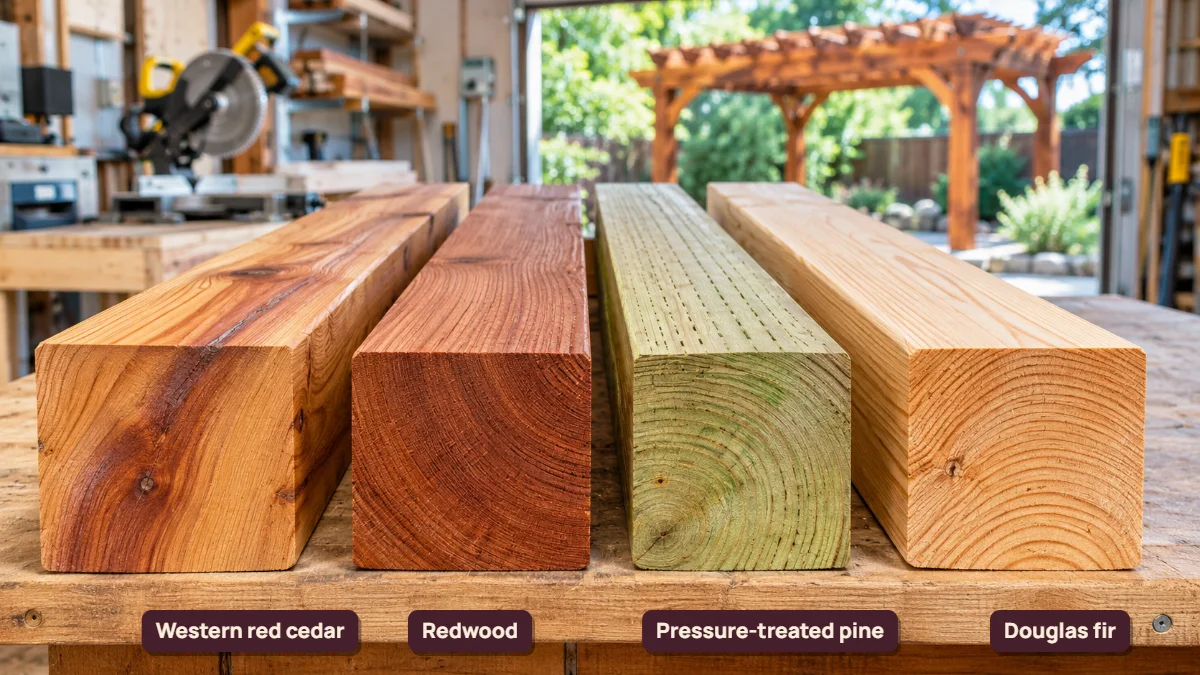
The best wood for a pergola in Colorado is usually Western red cedar, which naturally resists rot and insects, stays relatively stable in dry air and looks beautiful. Redwood performs similarly but is typically more expensive and less available in Colorado. Pressure-treated pine is the most affordable and strong, but it’s more prone to checking, twisting and needs regular finishing. Douglas fir is strong for beams but needs protection. Whatever wood you choose, plan to stain or seal it every 2 to 4 years because of Colorado’s intense UV.
Wood choice affects your pergola’s look, cost, strength and maintenance. Here’s how the common options compare.
Pergola Wood Comparison
| Wood | Rot and insect resistance | Stability in dry climate | Strength | Relative cost | Notes |
|---|---|---|---|---|---|
| Western red cedar | High (natural) | Good | Moderate | $$ | Most popular; lightweight, aromatic |
| Redwood | High (heartwood) | Good | Moderate | $$$ | Beautiful color; limited availability in Colorado |
| Pressure-treated pine | High (treated) | Fair; prone to checking and twisting | High | $ | Budget option; best painted or solid-stained |
| Douglas fir | Low to moderate | Fair | High | $ to $$ | Strong beams; must be protected |
| Thermally modified or tropical hardwoods | High | Good | High | $$$$ | Premium; very durable |
Cedar vs Redwood Pergola
Both are naturally rot- and insect-resistant softwoods with beautiful grain. Cedar is lighter in color and weight, widely available along the Front Range and usually less expensive. Redwood offers rich red tones and excellent stability but typically costs more and may need to be special-ordered. For most Colorado pergolas, cedar is the practical choice.
Why Colorado Is Hard on Wood
- Intense UV at altitude: Fades finishes and grays wood quickly.
- Dry air: Causes checking (surface cracks) and twisting, especially in pine.
- Temperature swings: Wood expands and contracts daily.
- Snow and moisture: Water sitting on tops of beams and at post bases accelerates decay, and heavy snow adds load; our guide to pergola snow load in Colorado explains sizing.
How to Make a Wood Pergola Last
- Use post bases that hold posts off concrete so the end grain stays dry, the same detail used when building a pergola on pavers.
- Choose larger members where possible; thicker wood resists twisting and checking.
- Use quality fasteners: hot-dipped galvanized or stainless steel.
- Seal end grain on cut ends.
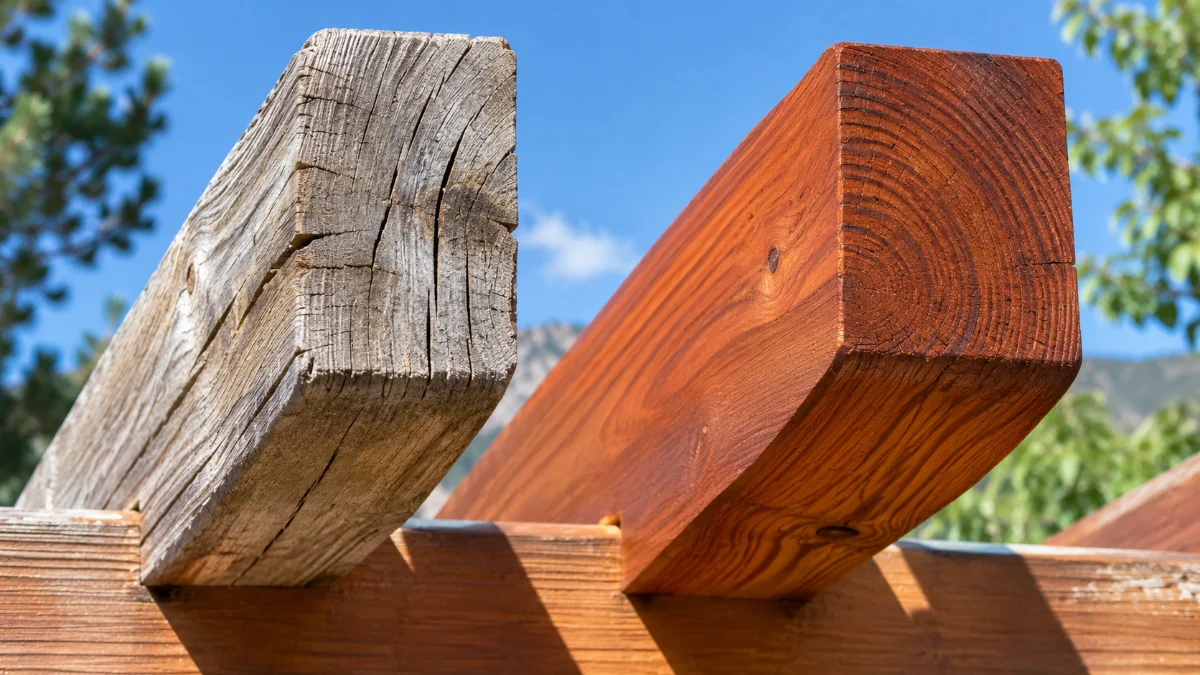
- Stain or seal every 2 to 4 years with a UV-protective exterior finish.
- Keep snow piles away from posts.
- Inspect each spring for loose connections and damage.
Wood vs Metal
If you love wood but not maintenance, consider aluminum with a wood-grain finish, or a hybrid design with metal posts and wood rafters. Our comparison of wood vs aluminum vs steel pergolas covers the trade-offs.
Frequently Asked Questions
Western red cedar is the most popular choice in Colorado for its natural rot resistance, stability and beauty.
Both perform well. Cedar is usually more affordable and available in Colorado; redwood offers richer color at a higher price.
It’s strong and affordable but more prone to checking and twisting in dry climates. It looks best painted or solid-stained.
About 20 to 30 years in Colorado with regular staining and good construction details.
Every 2 to 4 years in Colorado, depending on sun exposure and the finish.
Either can work. Wood posts need bases that keep them off concrete; metal posts eliminate rot at the base.
Build a Wood Pergola That Lasts
Ridgewell Landscape and Design builds cedar and wood pergolas across Denver and the Greater Denver Metro with details that stand up to Colorado weather. Explore our pergola services or book a free consultation.