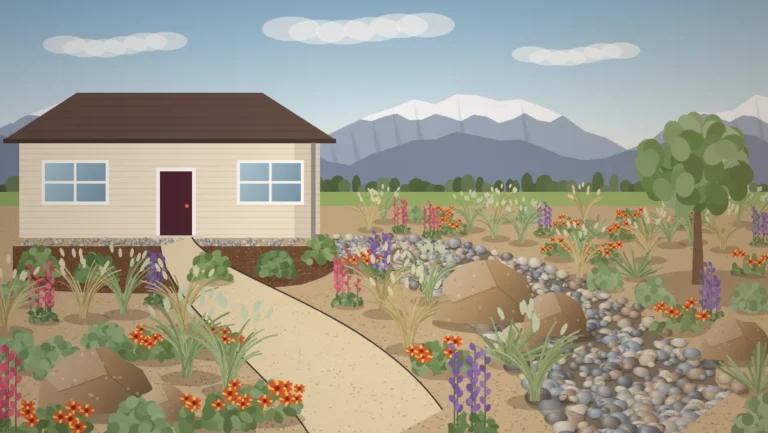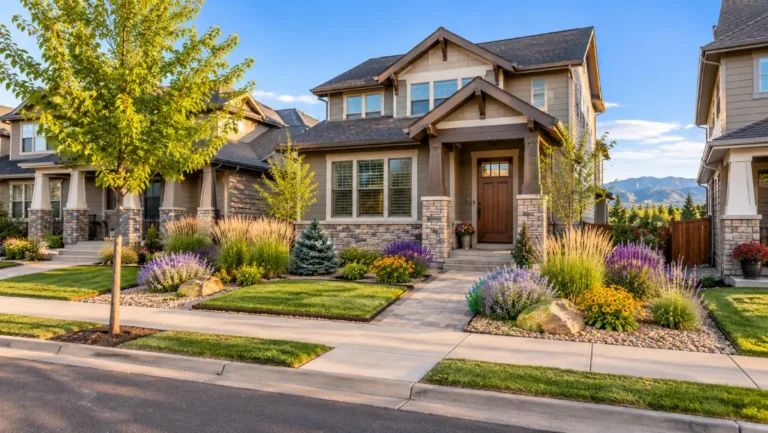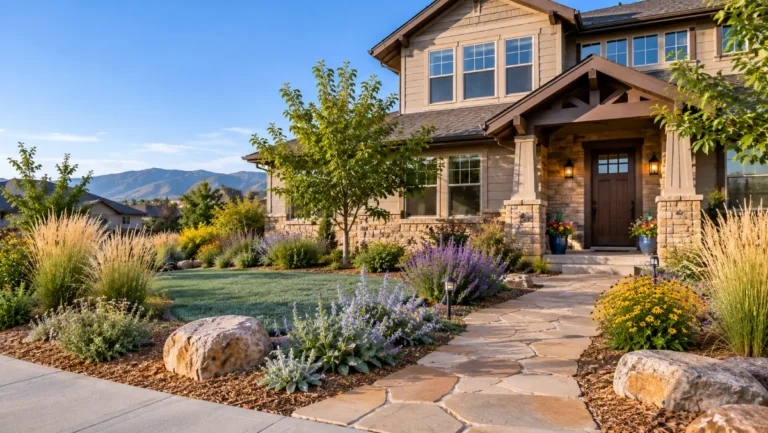

Defensible space landscaping in Colorado reduces the chance that wildfire embers and flames ignite your home. The Colorado State Forest Service (CSFS) divides the area around a home into the Home Ignition Zone: Zone 1 (0 to 5 feet), where you should use non-combustible materials like rock, pavers and hardscape and keep plants minimal and well watered; Zone 2 (5 to 30 feet), where you thin and space vegetation to reduce fire intensity; and Zone 3 (30 to 100 feet), where you manage vegetation so fire stays low to the ground. Fire-resistant landscaping uses well-spaced, moist, low-growing plants and limits flammable mulch and shrubs near structures.
Wildfire risk isn’t limited to the mountains. Front Range foothills and grassland communities, including parts of the Denver metro, face real wildfire threats, as the 2021 Marshall Fire in Boulder County showed. Here’s how to landscape with fire safety in mind.
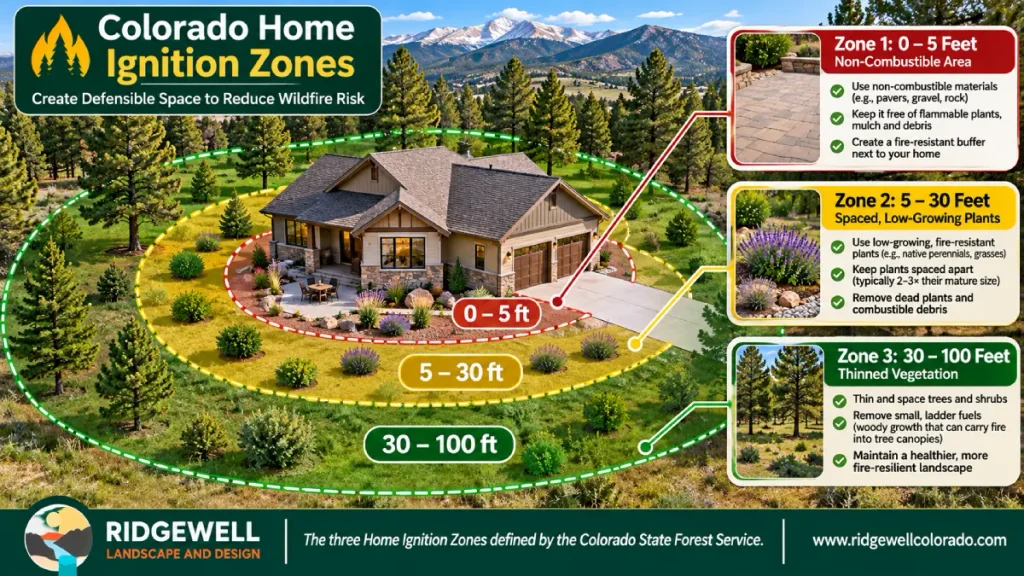
The Home Ignition Zones
| Zone | Distance from home | Goal | Landscaping approach |
|---|---|---|---|
| Zone 1 | 0 to 5 ft | Prevent embers and flames from igniting the home | Rock mulch, pavers, gravel; minimal low, well-watered plants; no wood mulch or firewood |
| Zone 2 | 5 to 30 ft | Reduce fire intensity and radiant heat | Spaced, low-growing plants; thinned shrubs and trees; mowed or irrigated areas; hardscape breaks |
| Zone 3 | 30 to 100 ft | Keep fire on the ground | Thinned trees, limbed-up branches, reduced ladder fuels |
Zone 1: The Most Important 5 Feet
- Use rock, gravel, pavers or concrete next to the foundation instead of wood mulch.
- Keep plants sparse, low and well watered; avoid shrubs under windows and eaves.
- Remove dead leaves, needles and debris from gutters, decks and corners.
- Move firewood, propane tanks and combustible furniture away from the house.
- Choose non-combustible fencing where it attaches to the house.
Zone 2: Spacing and Fire-Resistant Plants
Fire-resistant landscaping in Colorado favors plants that are low-growing, have high moisture content and don’t accumulate dead material. Examples include many perennials and ground covers such as yarrow, penstemon, blanket flower, sedum, hardy ice plant and creeping thyme, along with well-spaced deciduous shrubs. Avoid or carefully manage resinous, oily or dense evergreens like junipers near the home.
- Space shrubs and trees so crowns don’t touch.
- Remove ladder fuels, low branches that let fire climb into trees.
- Use patios, walkways and gravel paths as fuel breaks.
- Keep grass mowed short or replace with low, irrigated plantings.
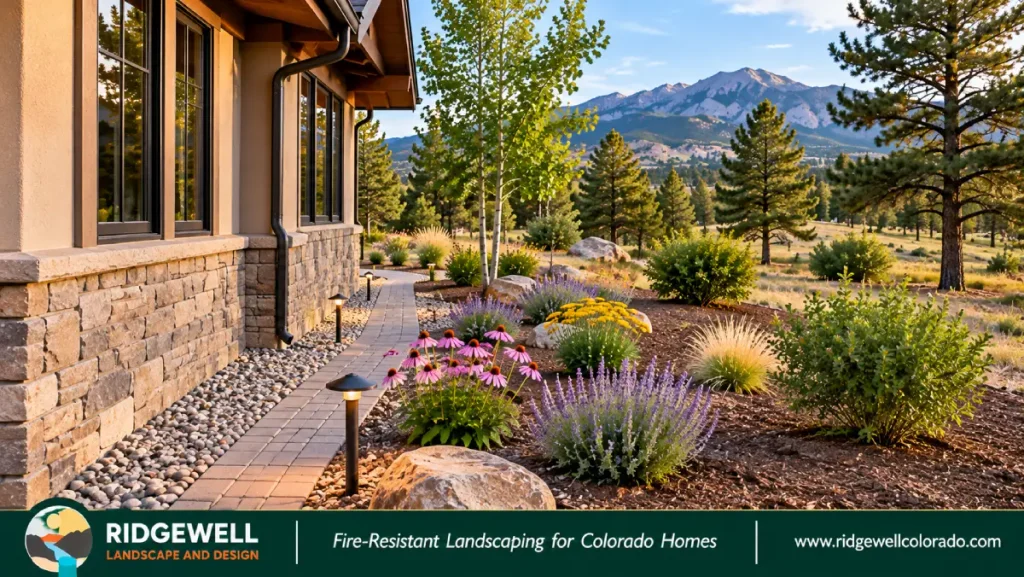
Hardscape as Fire Protection
Patios, paver walkways, gravel paths, stone walls and rock mulch don’t burn and can break up continuous fuels. A paver or flagstone patio next to the house is both a living space and part of Zone 1. Read xeriscape rock ideas for more better fire protection.
Balancing Fire Safety and Water-Wise Landscaping
Water-wise landscapes and fire-wise landscapes overlap well: both favor spaced, drought-tolerant plants and hardscape. The key differences are keeping Zone 1 nearly free of vegetation and mulch, and keeping plants close to the house healthy and hydrated with drip irrigation.
Colorado Programs and Resources
The Colorado State Forest Service publishes the Home Ignition Zone guide and offers local assistance. Many fire districts offer free wildfire mitigation assessments. Colorado also created a statewide Wildfire Resiliency Code Board in 2023 to develop minimum building and landscaping standards for homes in the wildland-urban interface, so check with your local jurisdiction for current requirements.
Frequently Asked Questions
It’s the area around a home managed to reduce wildfire risk, divided by the Colorado State Forest Service into Zone 1 (0 to 5 feet), Zone 2 (5 to 30 feet) and Zone 3 (30 to 100 feet).
Non-combustible materials such as rock, gravel and pavers, with minimal low, well-watered plants and no wood mulch or firewood.
Low-growing perennials and groundcovers with high moisture content, such as yarrow, penstemon, sedum, ice plant and creeping thyme, plus spaced deciduous shrubs.
Wood mulch can ignite from embers. Use rock or gravel within 5 feet of structures in wildfire-prone areas.
Yes. Foothills and grassland communities along the Front Range face wildfire risk, as fires like the 2021 Marshall Fire demonstrated.
Junipers contain oils and can burn intensely. Keep them away from the house and well spaced in wildfire-prone areas.
Design a Fire-Wise Landscape
Ridgewell Design creates landscapes that balance beauty, water efficiency and wildfire safety across Denver and the Greater Denver Metro. Explore our landscape design services or book a free consultation.