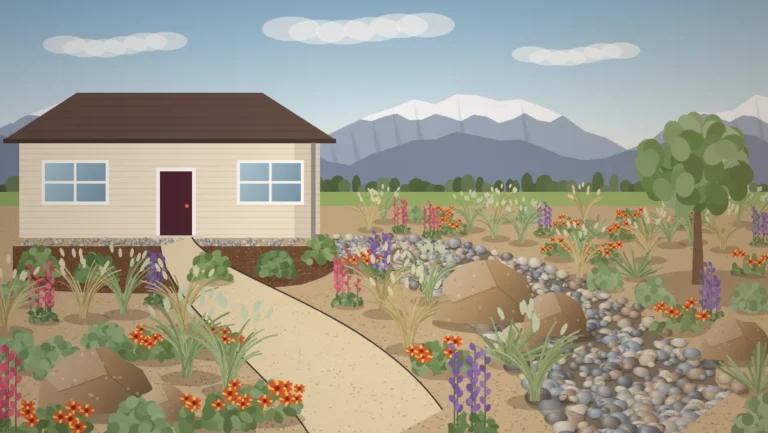

Drip irrigation delivers water slowly and directly to plant roots through tubing and emitters, which wastes far less water than spray heads and is ideal for Colorado’s dry climate, clay soils and watering restrictions. It’s the best way to water xeriscapes, shrub and perennial beds, trees and vegetable gardens. Under Denver Water’s 2026 Stage 1 drought rules, trees, shrubs and beds watered by drip or handheld hose may be watered on any day, while lawns are limited to two assigned days per week. Converting beds to drip typically costs $1.50 to $4 per square foot.
Here’s how drip irrigation works, how to design it for Colorado and how to maintain it.
How Drip Irrigation Works
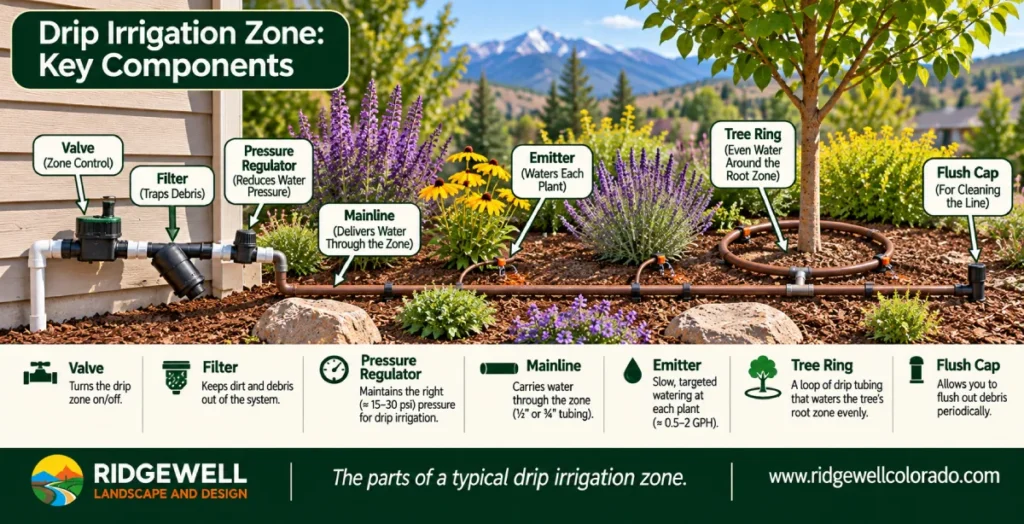
- Control zone: A valve, filter and pressure regulator reduce pressure and keep debris out.
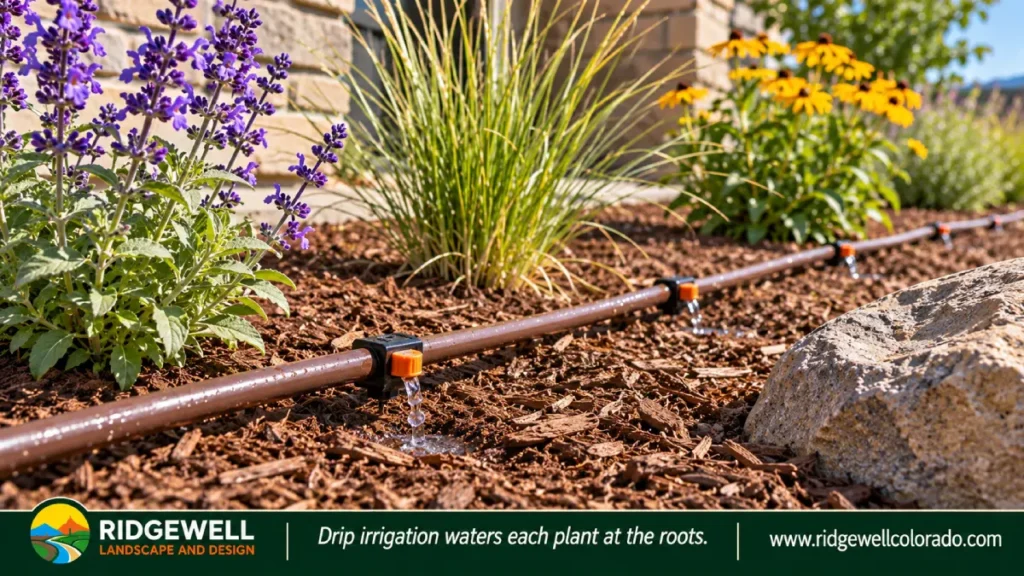
- Mainline tubing: Carries water through the bed.
- Emitters or inline drip: Release water at a slow, measured rate, often in gallons per hour.
- End caps and flush valves: Close the system and allow flushing.
Spray Vs Drip Irrigation
| Drip | Spray | |
|---|---|---|
| Water efficiency | High; water goes to roots | Lower; losses to wind, evaporation and overspray |
| Best for | Beds, shrubs, trees, xeriscape, slopes | Lawns |
| Weeds | Fewer, since space between plants stays dry | More, since the whole area gets wet |
| Overspray on hardscape | None | Common if poorly adjusted |
| Watering rules (Denver Water 2026) | Beds and trees on drip: any day | Lawn: two assigned days per week |
Drip Irrigation for Xeriscape
Drip and xeriscape go hand in hand. Group plants by water needs (hydrozoning), then give each zone its own valve so you can water thirstier plants more and established xeric plants less, especially helpful when planning how to replace a lawn with xeriscape.
Emitter guidelines
- Small perennials and grasses: One emitter per plant.
- Shrubs: Two emitters on opposite sides.
- Trees: Multiple emitters or a ring of inline drip, expanded outward as the tree grows.
- Dense beds: Inline drip tubing with built-in emitters every 12 to 18 inches.
Designing Drip for Colorado
- Clay soil: Water spreads sideways in dense clay, so run longer, slower cycles to let it soak in a core strategy when xeriscaping in clay soil.
- Slopes: Place emitters on the uphill side of plants and use pressure-compensating emitters.
- Mulch: Cover drip lines with mulch to protect them from UV and reduce evaporation.
- Trees: Water trees deeply and occasionally, especially during dry winters on mild days.
- Smart controller: Adjusts for weather and season.
Maintenance
- Spring: Flush lines, check filters and look for clogged or missing emitters.
- Summer: Watch plants for stress and adjust run times.
- Fall: Winterize by draining or blowing out lines before hard freezes.
- Ongoing: Repair nicks from shovels and critters; add emitters as plants grow.
Costs
Converting existing beds from spray to drip typically costs $1.50 to $4 per square foot in the Denver area. Adding new drip zones to an existing setup depends on valve locations and run lengths, for a broader breakdown of labor and materials, review typical sprinkler system installation cost factors.
Frequently Asked Questions
Yes. It’s one of the most water-efficient ways to irrigate in Colorado’s dry climate and works well with xeriscapes and clay soils.
Under Denver Water’s 2026 Stage 1 drought rules, trees, shrubs and beds watered by drip or handheld hose may be watered any day. Check Denver Water for current rules.
It depends on emitter flow, soil and plants. Many beds run 30 to 60 minutes per cycle, less often than spray. Adjust based on soil moisture and plant health.
Converting beds to drip typically costs about $1.50 to $4 per square foot in the Denver area.
Yes. Drain or blow out drip zones before hard freezes to prevent damage.
Yes. Spray zones for planting beds can be converted to drip by capping heads and installing drip components with a filter and regulator.
Switch to Drip Irrigation
Ridgewell Landscape and Design installs and converts drip irrigation systems across Denver and the Greater Denver Metro. Explore our irrigation services or book a free consultation.