
For a wood-burning fire pit, the most common rule is at least 25 feet from your house and other structures, based on the International Fire Code that many Colorado communities adopt. Portable outdoor fireplaces are commonly allowed at 15 feet. Gas fire pits are installed according to the manufacturer’s listed clearances and local code, which are often much smaller. Your city, fire district and HOA have the final say, so always check local rules.
Fire pit placement is a safety decision first and a design decision second. Here’s how to figure out the right distance and spot for your yard.
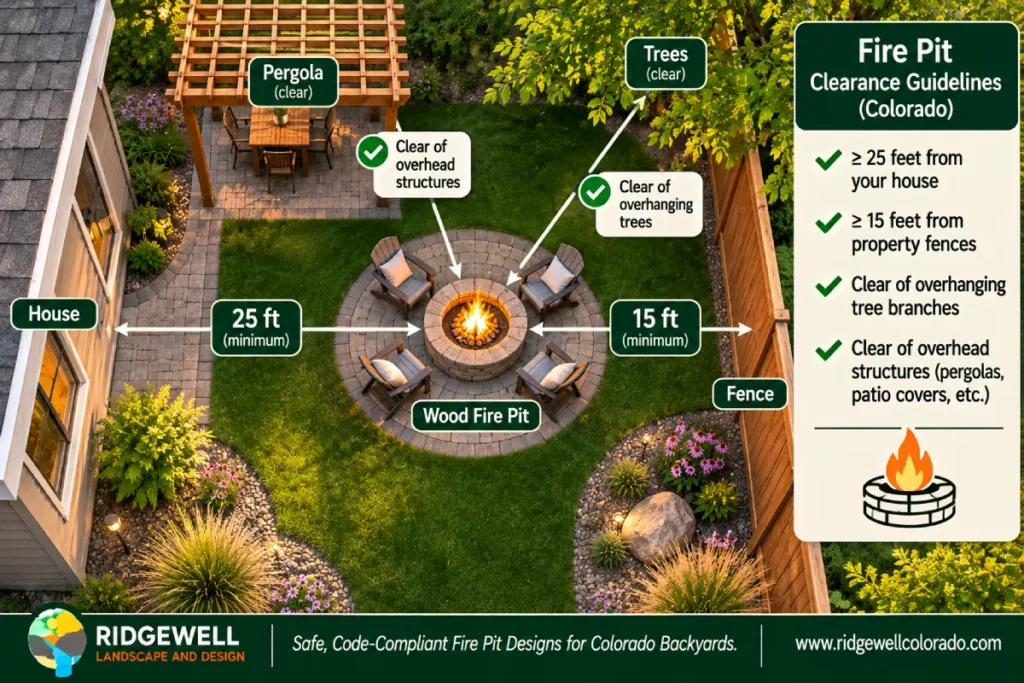
Fire Pit Clearance Guidelines
| Fire feature | Common minimum distance from structures | Source of the rule |
|---|---|---|
| Wood-burning recreational fire (in-ground or built-in pit) | 25 feet | International Fire Code, as adopted locally |
| Portable outdoor fireplace (manufactured wood unit) | 15 feet | International Fire Code, as adopted locally |
| Gas fire pit or fire table | Per manufacturer’s listed clearances | Product listing and local code |
| Overhead clearance (branches, pergolas, eaves) | Varies; keep well clear | Manufacturer and fire code |
“Structures” usually include your house, decks, sheds, garages, fences and anything combustible. Some jurisdictions add rules on fire size, attendance and extinguishing equipment.
Where to Check Local Rules
- Your city or county fire department or fire protection district for recreational fire rules.
- Current fire restrictions issued during dry, windy periods, which can temporarily ban open flames.
- Your HOA covenants, which may ban wood fires or set their own distances.
- Your building department for gas line permits.
Rules differ across Denver, Aurora, Lakewood, Centennial, Littleton, Parker and other communities, so confirm for your address.
Gas Fire Pit Clearances
Gas fire pits don’t throw sparks or embers, so they can often sit closer to your home than wood-burning options. Every listed unit comes with manufacturer guidelines specifying clear side and overhead distances from combustible materials. Be sure to follow these specifications closely and work with a licensed professional for your natural gas fire pit installation to ensure proper permitting and safety.

Other Placement Factors
Overhead clearance
Keep fire pits out from under trees, pergolas, umbrellas, awnings and roof eaves. Heat rises, and embers can ignite branches and wood structures.
Wind
Note the prevailing wind direction so smoke doesn’t blow into your house or your neighbor’s yard. A sheltered spot also keeps gas flames steady.
Surface underneath
Build on non-combustible surfaces like stone, gravel, or pavers, and never on a wood deck unless the product is specifically rated for it. If you’re planning your base, learn more about putting a fire pit on pavers to ensure proper heat protection and structural support.
Seating and circulation
Plan a circle about 14 to 18 feet across for the fire pit, seating and walking room.
Neighbors and property lines
Some communities set distances from property lines. Even where they don’t, consider smoke drift and placement relative to fences.
Fire Pit Safety Checklist
- Check fire restrictions before every wood fire
- Never leave a fire unattended
- Keep a hose, extinguisher or bucket of water nearby
- Burn only dry firewood, never trash or yard waste
- Keep fires small and contained
- Fully extinguish fires and ashes before leaving
- Keep kids and pets at a safe distance
Frequently Asked Questions
For wood-burning fire pits, 25 feet from structures is a common rule based on the International Fire Code. Gas fire pits follow manufacturer clearances and local code.
Treat a wood fence like a structure. Many local rules require the same distance as for buildings, often 25 feet for wood fires.
Wood fire pits should not be under pergolas. Some gas fire features can be used under open structures if the manufacturer’s overhead clearances are met.
Often yes, with conditions. Rules depend on your city, fire district, HOA and current fire restrictions. Gas fire pits are allowed more often than wood.
Yes. Gas fire pits need the side and overhead clearances listed in the manufacturer’s instructions, which are typically less than for wood fires.