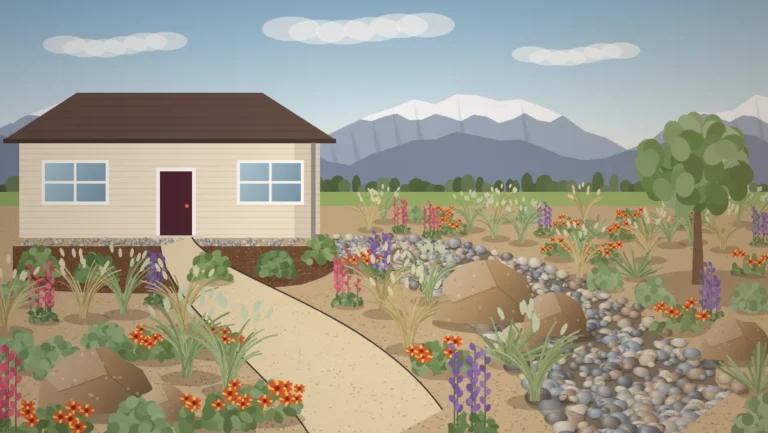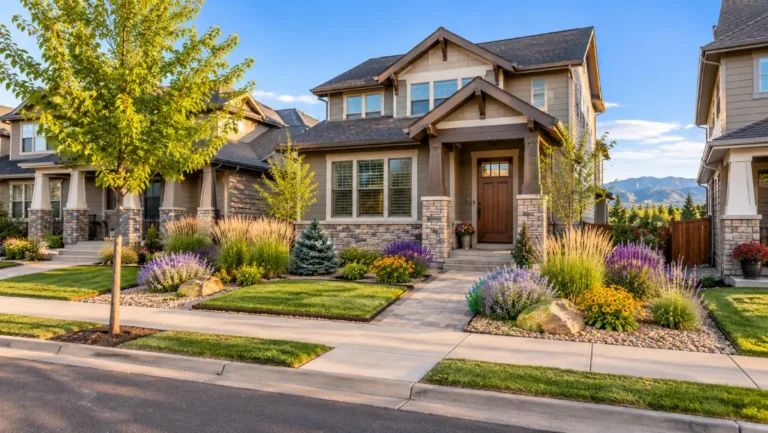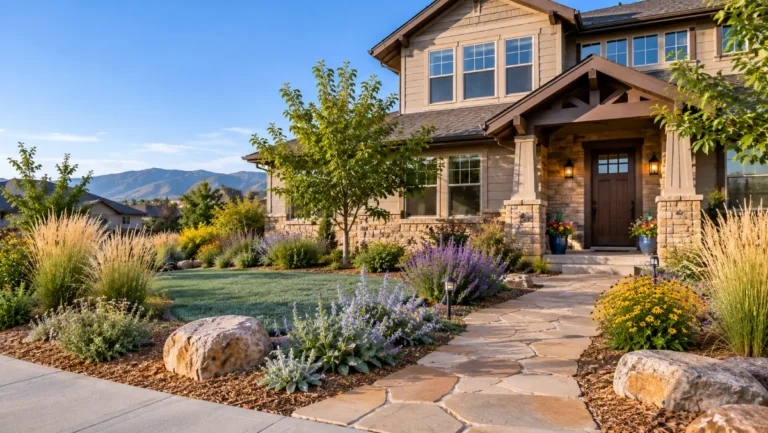

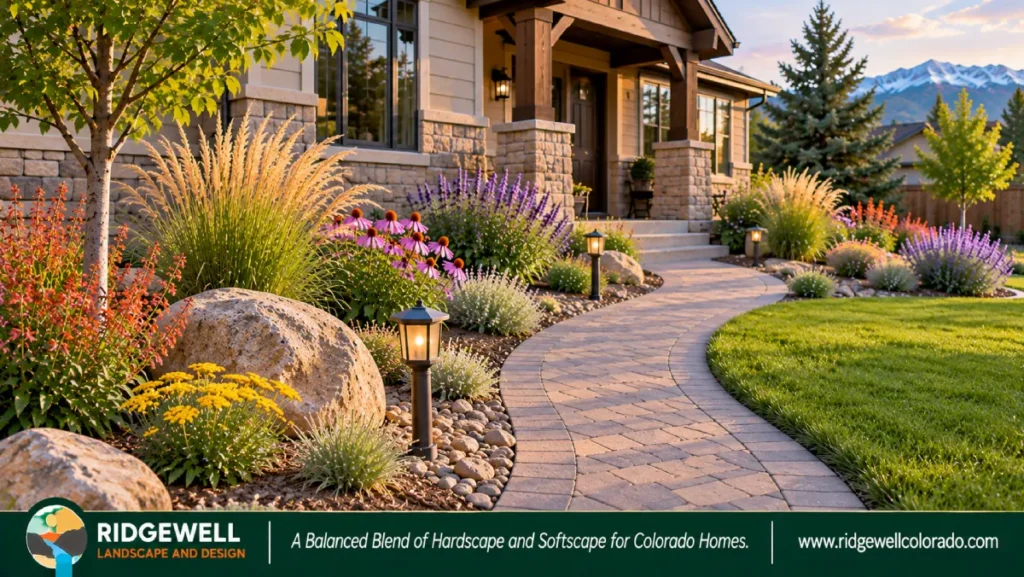
Hardscape is the non-living, built part of your yard, such as patios, walkways, retaining walls, fire pits and pergolas. Landscape, sometimes called softscape, is the living part, such as lawn, trees, shrubs, flowers and mulch beds. A great yard balances both: hardscape creates structure and usable space, while softscape adds color, shade and life.
The terms get mixed up a lot, and it matters when you’re hiring a contractor or planning a budget. Here’s a clear breakdown.
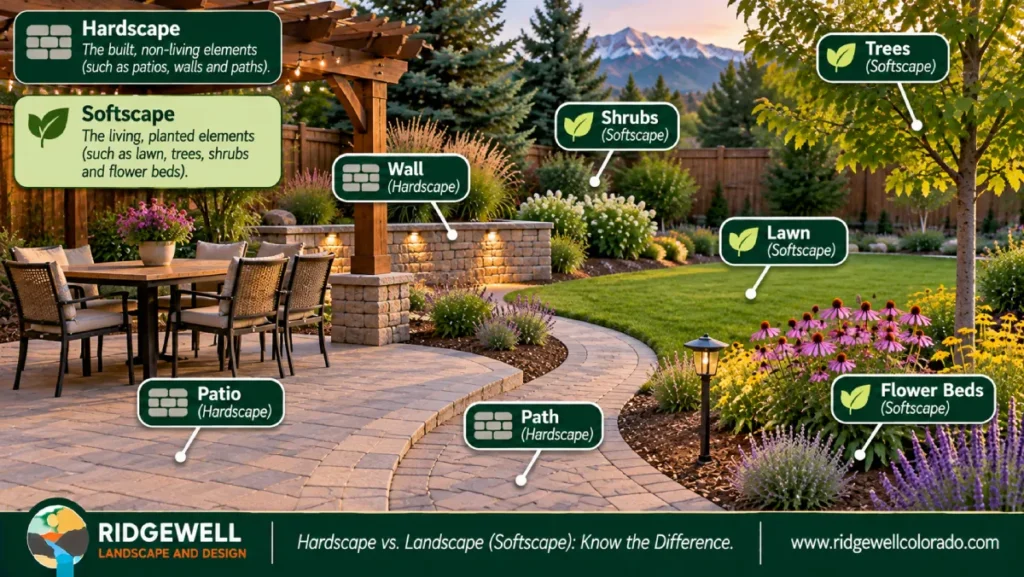
What Is Hardscaping?
Hardscaping means any landscape element made from hard materials like stone, concrete, brick, wood or metal. It’s built, not grown, and once installed it stays largely the same over time.
Common hardscape features:
- Paver, flagstone and concrete patios
- Walkways, paths and steps
- Driveways
- Retaining walls and seat walls
- Fire pits and outdoor fireplaces
- Outdoor kitchens
- Pergolas, arbors and fences
- Edging, boulders and rock mulch areas
What Is Softscaping?
Softscaping covers the living, growing parts of a landscape and the soil they grow in.
Common softscape elements:
- Lawn and groundcovers
- Trees and shrubs
- Perennials, grasses and annual flowers
- Vegetable gardens
- Soil amendments and wood mulch
Hardscape vs Landscape: Side-by-Side
| Hardscape | Softscape (landscape) | |
|---|---|---|
| Materials | Stone, pavers, concrete, wood, metal | Plants, turf, soil, mulch |
| Changes over time | Very little | Grows and changes with seasons |
| Water use | None | Varies from high (lawn) to low (xeric plants) |
| Maintenance | Low: occasional cleaning and joint care | Ongoing: watering, pruning, mowing |
| Upfront cost | Higher | Lower, varies by plant size |
| Build order | Usually first | Usually after hardscape |
Why Hardscape Usually Comes First
Hardscape projects involve excavation, heavy equipment and grading. Building them first protects new plants and lawn from being damaged. It also sets the final grades and drainage that the planting design depends on.
Finding the Right Balance in Colorado
In Colorado’s semi-arid climate, the balance between hardscape and softscape has real water and maintenance implications.
- Too much hardscape can feel stark, absorb heat and send more runoff toward your home or neighbors.
- Too much thirsty softscape, such as large bluegrass lawns, means high water bills and more upkeep.
- A balanced design uses hardscape for living areas and paths, and water-wise plants for color and texture.
Colorado law also protects homeowners’ right to use water-wise landscaping, even in HOAs. HOAs can set design guidelines, but they can’t prohibit xeriscape. Learn more in our guide to Colorado HOA rules on xeriscaping.
Cost and Maintenance Compared
Hardscape usually costs more up front, while softscape costs more to keep up over time. A few typical Denver-area numbers:
- Paver patio: $18 to $35 per square foot installed, with minimal yearly upkeep.
- New sod lawn: Much cheaper to install, but needs regular watering, mowing, fertilizing and aeration.
- Water-wise planting beds: Typically $10 to $20 per square foot installed as part of a xeriscape, with low water use once established.
For more numbers, see our guides to hardscaping cost and xeriscape cost.
How Hardscape and Softscape Work Together
- Edges: Planting beds soften the hard lines of patios and walls.
- Shade: Trees and pergolas cool patios in Colorado’s intense summer sun.
- Drainage: Hardscape directs water; plants and mulch beds absorb it.
- Structure: Walls and paths give planting areas shape and make them easy to maintain.
- Seasonal interest: Stone and pavers look the same all year, while plants change color through the seasons.
Do You Need a Hardscaper or a Landscaper?
- Hardscape contractor: Specializes in patios, walls, walkways, fire features and kitchens.
- Landscaper or landscape installer: Focuses on plants, lawn, irrigation and mulch.
- Design-build landscape company: Designs and installs both, so the whole yard works together.
If your project includes both, a design-build firm keeps everything coordinated. Explore the pros and cons of design-build vs hiring separately and review our tips on how to choose a hardscape contractor.
Frequently Asked Questions
Hardscaping is the built, non-living part of a landscape, such as patios, walkways, retaining walls, steps, fire pits and pergolas.
Hardscape includes hard, built elements like stone and pavers. Landscape, or softscape, includes living elements like lawn, trees, shrubs and flowers.
Yes. Retaining walls, whether made from block, boulders, stone or concrete, are hardscape features.
Wood mulch is generally considered softscape because it supports plant beds. Rock mulch and gravel are often grouped with hardscape.
Hardscape is usually installed first, because it involves grading and heavy equipment that could damage new plants.
Plan Your Hardscape and Landscape Together
Ridgewell Colorado designs and installs both hardscape and landscape across Denver and the Greater Denver Metro. Explore our services, see our landscape design and installation work, or book a free consultation.