
Polymeric sand is a mix of fine sand and polymer binders that hardens when activated with water, locking pavers together and resisting weeds, ants and washout. Most polymeric sand lasts several years, and many installers expect about 3 to 10 years depending on the product, weather and traffic. Replace or top it up when joints are low, cracked, crumbling, washing out or growing weeds. In Colorado, plan a quick joint check every spring.
Joint sand is a small part of a paver patio, but it does a big job. Here’s how polymeric sand for pavers works, when to replace it and how to install it correctly.
What Does Polymeric Sand Do?
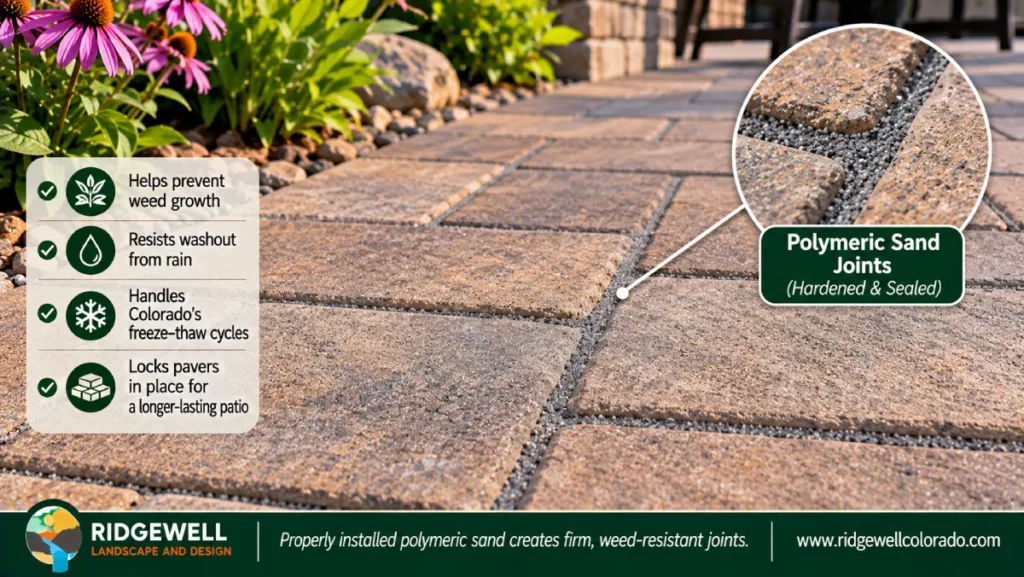
- Locks pavers in place: Full joints transfer loads between pavers, which is part of what makes interlocking pavers strong.
- Resists washout: Binders keep sand from eroding in rain, snowmelt and sprinklers.
- Reduces weeds: Hardened joints make it hard for seeds to root.
- Deters ants: Ants have a harder time excavating firm joints.
- Improves appearance: Clean, full joints in a color that complements the pavers.
Polymeric Sand vs Regular Sand
| Polymeric sand | Regular joint sand | |
|---|---|---|
| Hardens | Yes, after activation | No, stays loose |
| Washout resistance | High | Low |
| Weed and ant resistance | High | Low |
| Installation | More steps; must be done in dry weather | Simple |
| Cost | Higher per bag | Lower |
| Best for | Most patios, walkways and driveways | Permeable systems use clean stone instead; some special cases |
Permeable paver systems use small clean aggregate in the joints instead of sand so water can drain through, explore eco-friendly drainage solutions in our guide to permeable pavers in Colorado.
How Long Does Polymeric Sand Last?
Lifespan depends on the product, how well it was installed, joint width, drainage, sun exposure and traffic. Many installations perform well for years, but Colorado’s freeze-thaw cycles, intense UV, snow shoveling and pressure washing all wear joints over time. Expect to top up some joints periodically and do a full replacement when most joints have degraded.
When to Replace Polymeric Sand
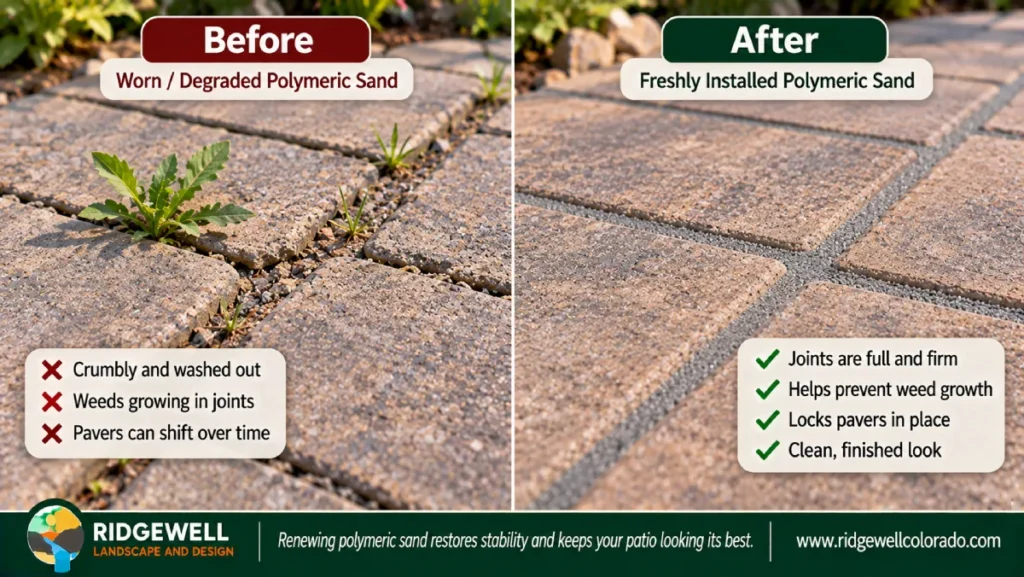
- Joints sit noticeably below the paver edges
- Sand is cracked, crumbly or powdery
- Weeds or moss are growing in multiple joints
- Ants are pushing sand onto the surface
- Pavers rock or shift when stepped on
- Sand has washed out near downspouts or low spots
- After lifting and resetting pavers for a repair
How to Install Polymeric Sand
- Check the forecast. You need dry pavers and no rain during curing, plus temperatures within the product’s range.
- Remove old material from the joints, at least about an inch deep for replacements.
- Make sure pavers are completely dry.
- Pour and sweep polymeric sand into the joints with a stiff push broom.
- Compact with a plate compactor (with a protective pad) or tamp by hand, so sand settles deep into joints.
- Repeat sweeping and compacting until joints are full to just below the bevel or about 1/8 inch below the top.
- Remove all residue from the paver surface with a leaf blower or soft broom. Leftover dust can leave a hazy film.
- Activate with a gentle mist of water as the label directs, without flooding or washing sand out.
- Let it cure, keeping traffic and water off for the specified time.
Common Mistakes
- Installing on damp pavers: Causes a stubborn haze and weak joints.
- Leaving dust on the surface: Hardens into a film that’s hard to remove.
- Not compacting: Joints settle and crack later.
- Too much water: Washes binders out of the joints.
- Too little water: Only the top hardens, leaving a weak crust.
- Using it on very wide joints beyond the product’s rating.
Polymeric Sand for Flagstone
Many polymeric products are formulated specifically for wider joints between natural stone. Check the joint width rating and choose a color that blends with the materials, learn more about long-term care in our guide on how to seal and maintain flagstone.
Frequently Asked Questions
It often lasts several years, commonly cited around 3 to 10, depending on product, installation, weather and traffic. Check joints each spring.
Replace it when joints are low, cracked, crumbly, washing out or growing weeds, or after resetting pavers.
For small top-ups, yes, if the old material is still firm. For degraded joints, remove the old sand first so new sand can bond deeply.
Rain before curing can wash out binders or cause haze. Check the label for cure time and avoid installing if rain is forecast.
For most patios, walkways and driveways, yes. It reduces weeds, ants and washout and helps keep pavers locked together.
Not usually. It needs dry conditions and temperatures above freezing to cure. Plan installs for spring through fall.
Need Your Joints Refreshed?
Ridgewell Colorado installs and restores paver patios, walkways and driveways across Denver and the Greater Denver Metro. Explore our paver patio services or get in touch.