- Get A Free Consultation.
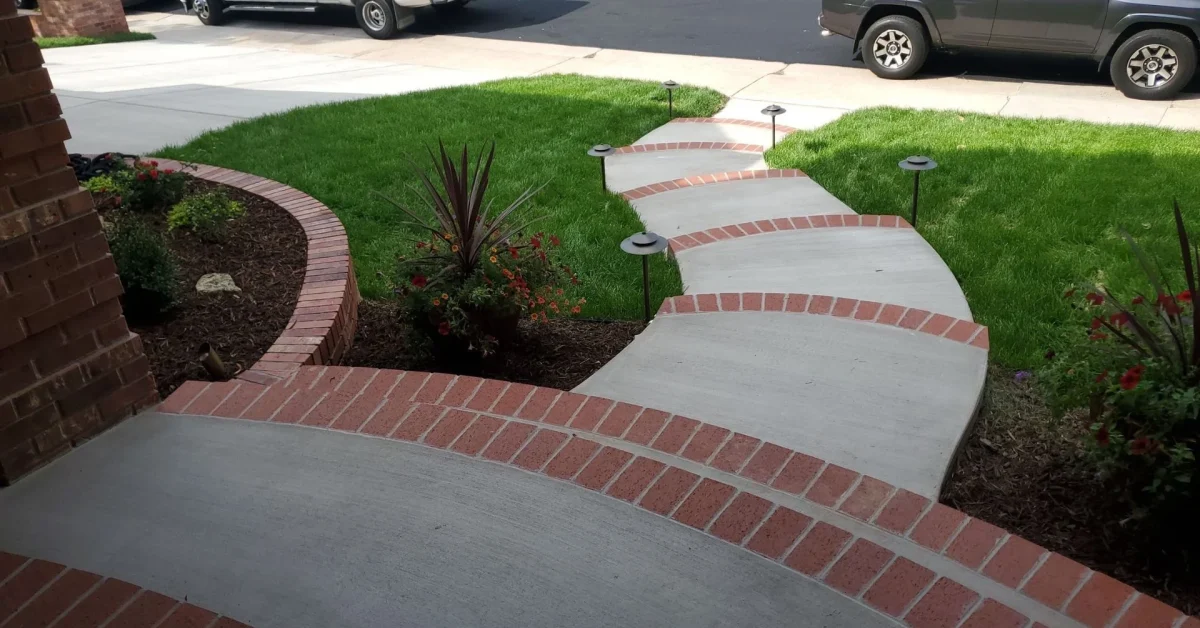
Brick pavers bring a warmth and traditional character that concrete pavers don’t quite replicate, which is exactly why so many homeowners gravitate toward brick for a front entry or garden path. The construction process shares a lot of DNA with any paver walkway project, base prep, leveling, laying, jointing, but brick itself has a few quirks worth understanding before you start, from how it handles moisture to how it behaves differently than concrete once it’s cut.
At Ridgewell Landscape and Design, we build brick paver walkways across the Denver area, including Broomfield, Parker, and the surrounding communities, and brick remains one of the most requested materials for homeowners going for a classic, timeless look. This guide walks through the full process of building a brick walkway, how brick compares to concrete pavers, and what to know if you’re considering reclaimed or antique brick for the project.
| Factor | Brick Pavers | Concrete Pavers |
| Appearance | Classic, warm, traditional | Wide range, from traditional to modern |
| Cost | Generally higher per square foot | Generally lower per square foot |
| Durability | Very durable, can chip at edges over time | Very durable, resists chipping well |
| Moisture absorption | Higher, can affect freeze-thaw performance | Lower, more freeze-thaw resistant in most products |
| Cutting | Can crack unpredictably along the cut | Cuts more predictably with the right blade |
| Color consistency | Can vary noticeably between batches | Generally more consistent between batches |
Brick’s biggest practical difference from concrete is moisture absorption. Brick is naturally more porous, which means it can hold more water than a dense concrete paver, and that extra moisture matters more in a climate with regular freeze and thaw cycles, since absorbed water expanding as it freezes is one of the main causes of surface flaking or spalling on brick over time. This isn’t a reason to avoid brick, it’s just a reason to choose the right brick product and sealing approach for the climate, which we’ll get into further down.
Standard clay brick pavers, fired at high temperatures specifically for exterior paving use, are denser and less porous than traditional building brick, making them a much better choice for a walkway than repurposed wall brick, which isn’t rated for the same freeze-thaw exposure or foot traffic.
Reclaimed brick brings a genuinely unique, aged character that new brick simply can’t replicate, and it’s a popular choice for homeowners going for a more historic or rustic look. That said, reclaimed brick comes with some real considerations. Older brick, especially building brick reclaimed from demolished structures, wasn’t always made for ground-level foot traffic and can be more porous and prone to freeze damage than brick manufactured specifically for paving. If you’re set on a reclaimed look, it’s worth having each batch inspected for density and condition, and consider sealing more proactively than you would with new paving brick.
Brick color and size can vary meaningfully between manufacturing batches, more so than with concrete pavers. For a walkway of any real length, it’s worth purchasing all the brick from a single batch where possible, since mixing batches can result in a visibly patchy color pattern once the walkway is finished.
Materials
Tools
Brick walkways lean naturally toward traditional patterns like herringbone, basketweave, and running bond, all of which suit brick’s smaller, uniform format well. Our guide on how to lay a paver walkway covers these patterns in more depth, and the same technique and difficulty considerations apply directly to brick.
Mark your layout and excavate to a depth accounting for base, sand, and brick thickness combined, generally landing around 6 to 8 inches total, slightly less than a thicker concrete paver product since brick tends to run thinner. Our guide on leveling ground for a paver walkway covers the tools and techniques for this stage in detail.
Add crushed gravel in 2 inch layers, compacting each one before adding the next. Base depth recommendations are the same as for any paver walkway, generally 4 to 6 inches depending on soil type, with clay-heavy soil across parts of the Denver area benefiting from the fuller 6 inch depth.
Roll out landscape fabric over the compacted base, then add and screed about 1 inch of coarse sand to create a level surface for the brick.
Place brick pavers snugly against each other, tapping each into place with a rubber mallet. Brick’s smaller format means more individual pieces per square foot compared to standard concrete pavers, so patterns like herringbone take noticeably longer to lay than they would with larger format pavers.
Brick is more prone to unpredictable cracking than concrete when cut with a dry angle grinder. A wet saw designed for masonry produces cleaner, more controlled cuts and significantly reduces the chance of a brick cracking in the wrong place partway through a cut.
Secure edge restraints tightly against the outer edge of the brick field. This step matters just as much for brick as for any paver material, keeping the entire pattern locked in place against seasonal ground movement.
Sweep polymeric sand into the joints, remove excess from the surface, and mist lightly to activate. Brick’s slightly more textured, porous surface can hold a bit more residual sand than smoother concrete pavers, so a careful final sweep matters for a clean finished look.
Run the plate compactor over the finished walkway one final time. Given brick’s higher moisture absorption, sealing the finished walkway is worth stronger consideration here than it might be for concrete pavers, particularly in a climate with regular freeze and thaw cycles.
Sealing isn’t strictly required, but it offers real benefits for brick specifically, given its natural porosity. A quality paver sealer reduces water absorption, which in turn reduces the risk of surface flaking during freeze and thaw cycles, and it also helps brick resist staining from dirt, oil, and de-icing salt residue over time. Reapplying sealer every two to three years is a reasonable maintenance rhythm for a brick walkway in this climate.
Brick pavers generally cost more per square foot than standard concrete pavers, both in material price and in labor, since brick’s smaller format means more individual pieces to lay and cut for the same square footage. Reclaimed or antique brick often costs even more, both for the material itself and for the additional care needed in sourcing and inspecting it. Our paver walkway cost guide covers general pricing that applies to paver walkways broadly, with brick typically landing toward the higher end of that range.
Brick’s tendency to crack unpredictably when cut incorrectly, its higher moisture sensitivity, and the batch consistency issues that come up when sourcing material all add a bit more complexity than a standard concrete paver project. None of this makes brick a bad DIY choice for a motivated, patient homeowner, but the margin for a costly mistake, cracked brick, a patchy color mismatch, or moisture damage from skipping sealer, is a bit higher than with concrete. We generally lean toward recommending professional installation for brick specifically, more so than for a comparable concrete paver project.
With over 15 years of building brick and concrete paver walkways across the Denver area, our team has a good sense of how brick behaves differently at each stage of construction, from sourcing to cutting to long-term sealing needs. Explore our paver patio services to see the range of material and pattern work we’ve built for homeowners going for a classic brick look.
Generally yes, both in material cost and labor, since brick’s smaller format requires more individual pieces and cutting for the same square footage compared to standard concrete pavers.
Yes, but it’s worth having reclaimed brick inspected for density and condition first, since older building brick wasn’t always made for ground-level foot traffic or the same freeze-thaw exposure as brick manufactured for paving.
It’s not strictly required, but it’s recommended given brick’s natural porosity, particularly in a climate with regular freeze and thaw cycles where absorbed moisture can lead to surface flaking.
A wet saw designed for masonry produces cleaner, more predictable cuts than a dry angle grinder, which can cause brick to crack unpredictably along the cut line.
No, base depth recommendations are generally the same, 4 to 6 inches of compacted gravel depending on soil type, regardless of whether you’re using brick or concrete pavers.
This is often caused by mixing brick from different manufacturing batches. Purchasing all brick for a project from a single batch helps avoid this issue.
Brick brings a classic, warm character to a walkway, but it comes with a few material-specific considerations worth getting right from the start.
Ridgewell Landscape and Design has been building brick and concrete paver walkways across Denver, Broomfield, Parker, and the surrounding communities for over 15 years. If you’re picturing a brick walkway for your home, reach out for a free quote and consultation.
Fresh Ideas From our experts
What Your Neighbors Are Saying
"They are the best. We have a small backyard and needed it to reflect a relaxing and enjoyable space. Chris used our ideas and came up with the perfect design. Then Francisco came with the cost projections and worked to accommodate our budget. He and his team then used their considerable construction expertise to create a space that’s an extension of our home where we spend a lot of time. Thank you for creating such a welcoming space."
"I am new to Colorado and hired Chris and Francisco to design and implement a plan for my new build house. From design to finish and followup they were beyond my expectations. They are in constant contact throughout the project and their crew is very hardworking. They followup when the project is finished and are always available for whatever questions you may have. I would highly recommend them, and I get many complements on the work they have done for me."
"We were thrilled with the end result of our brick paver patio refurbishment. We hired Chris, Francisco and their team to fix our sinking brick paver patio. It had been installed by a different landscaper, and after only 2 years it was collapsing. Boo hiss! Ridgewell Landscape and Design came in and saved the day! They discovered the original installation was done incorrectly, and that’s why it was collapsing. Their team worked hard and got the project done quickly and professionally. We are thrilled with the look and finish of the job! Bravo!!"