
In 2026, most retaining walls in the Denver area cost $40 to $75 per square foot of wall face for segmental block and $35 to $70 per square foot for boulder walls. A typical 3-foot-tall, 30-foot-long garden wall runs about $3,600 to $6,800. Walls over 4 feet, walls holding up a driveway or slope, and engineered walls cost more. In Denver, walls over 12 inches tall also need a zoning permit.
A retaining wall is a structural project, not just a landscape feature. It holds back thousands of pounds of soil, and in the Denver area it has to do that on clay that swells when it gets wet. This guide explains what drives the price, what each wall type costs, and how to tell a fair quote from a risky one.
How Much Does a Retaining Wall Cost in Denver?
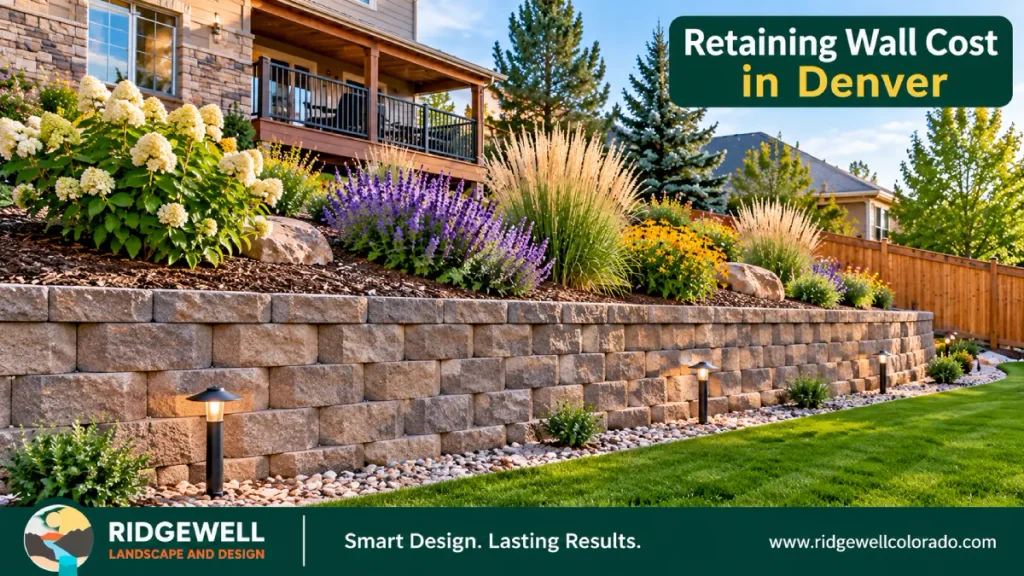
Retaining walls are priced by the square foot of wall face (length x height), not by the square foot of yard. That includes the buried part of the wall, which is usually 6 to 12 inches below grade.
- Small garden or planter walls (under 3 ft): $2,000 to $6,000 total
- Mid-size walls (3 to 4 ft): $5,000 to $15,000 total
- Large or engineered walls (over 4 ft): $15,000 to $50,000+
Most residential retaining wall projects in the Denver area land between $6,000 and $15,000. Prices include excavation, base, drainage, back fill and the wall itself, but usually not permits, engineering or new landscaping above the wall.
Retaining Wall Cost Per Square Foot by Material
| Wall type | Installed cost per sq ft of face | Typical lifespan | Best for |
|---|---|---|---|
| Segmental concrete block | $40 to $75 | 50+ years | Most residential walls; clean, uniform look |
| Boulder (stacked natural rock) | $35 to $70 | 50+ years | Natural, mountain-style landscapes |
| Natural stone (dry-stacked) | $45 to $95 | 50+ years | High-end garden walls |
| Poured concrete | $50 to $100 | 40 to 75 years | Tall walls, tight spaces, modern design |
| Timber or railroad ties | $25 to $45 | 10 to 20 years | Short-term, low-budget walls |
Block retaining wall cost
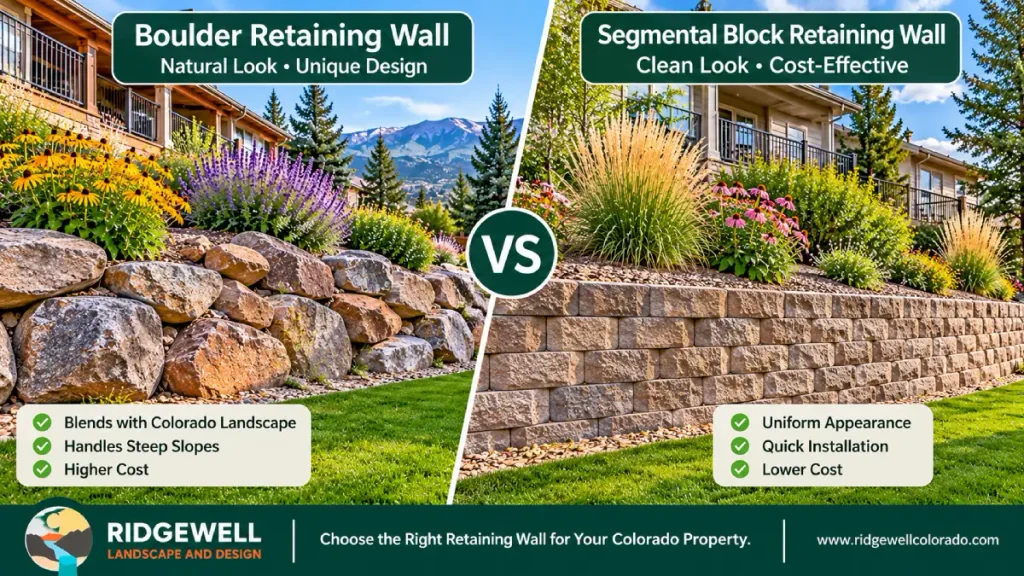
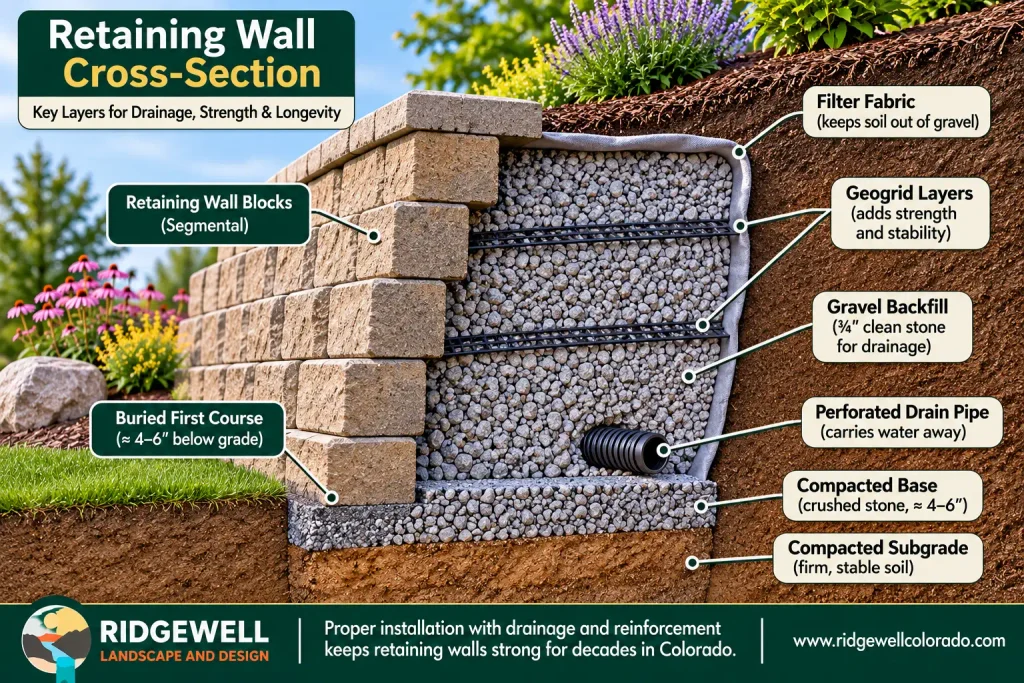
Segmental block walls from manufacturers such as Belgard, Allan Block and Versa-Lok are the most common choice in the Denver metro. The blocks lock together without mortar, so the wall can flex slightly as the ground moves, which suits our clay soil. Expect $40 to $75 per square foot installed. Taller block walls need geogrid, a mesh that ties the wall into the soil behind it, which adds cost.
Boulder retaining wall cost
A boulder retaining wall typically costs $35 to $70 per square foot of face. Price depends on boulder size, color and how far the stone travels. Boulder walls need heavy equipment to place, so access matters. They work well on larger slopes and blend into Colorado landscapes. For a detailed comparison, see boulder vs block retaining walls.
Retaining Wall Cost by Size
Here’s what common wall sizes cost using segmental block, the most popular option:
| Wall size (height x length) | Wall face | Typical installed cost |
|---|---|---|
| 2 ft x 20 ft | 40 sq ft | $2,000 to $3,500 |
| 3 ft x 30 ft | 90 sq ft | $3,600 to $6,800 |
| 4 ft x 40 ft | 160 sq ft | $6,400 to $12,000 |
| 4 ft x 60 ft | 240 sq ft | $9,600 to $18,000 |
| 6 ft x 50 ft (engineered) | 300 sq ft | $18,000 to $35,000+ |
Short walls cost more per square foot because setup, delivery and base work are spread over less wall.
What Affects Retaining Wall Cost in Denver?
1. Wall height
Height drives cost faster than length. A taller wall holds back far more soil pressure, so it needs a deeper base, more geogrid, more drainage stone and often an engineer. Doubling the height can more than double the price.
2. Clay soil and drainage
Most retaining wall failures are drainage failures. When water builds up behind a wall, the pressure pushes it forward. In Denver’s expansive clay, that pressure is even higher. A properly built wall includes a perforated drain pipe at the base, clean gravel back fill and filter fabric. Skipping these is how cheap walls become expensive repairs. Learn more in our guide to expansive clay soil in Denver.
3. What the wall is holding up
A wall with a “surcharge,” meaning a driveway, a patio, a building or a steep slope above it, carries extra load and needs more engineering. These walls cost more than simple garden walls of the same height.
4. Site access
Block, boulders and gravel are heavy. If equipment can’t reach the wall, crews move material by hand, which adds labor.
5. Curves, steps and corners
Straight walls are fastest to build. Curves, corners, built-in steps, caps and lighting all add time and material.
6. Removing an old wall
Tearing out a failing timber or railroad tie wall and hauling it away typically adds $15 to $30 per linear foot. Old railroad ties may need special disposal because of creosote.
Permits and Engineering for Retaining Walls in Denver
Permit rules are where many homeowners get caught off guard. In the City and County of Denver:
- Walls over 12 inches tall need a zoning permit from Denver Community Planning and Development.
- Taller walls also need a building permit and engineered plans. Denver’s guidance calls for engineering review and a building permit on retaining walls over six feet, and walls with a surcharge may need engineering at lower heights.
Rules differ in Aurora, Lakewood, Centennial, Littleton and other suburbs, and many HOAs require design approval too. Always confirm requirements for your address before work starts. Engineering for a residential wall typically adds $1,500 to $5,000. We cover this in more detail in when a retaining wall needs an engineer.
Example Retaining Wall Budgets
1. Raised garden bed wall: about $2,500 to $4,500
A 2-foot-tall, 30-foot-long segmental block wall with a cap, creating a level planting bed along a back fence.
2. Backyard terrace wall: about $7,000 to $13,000
A 3.5-foot-tall, 45-foot-long block wall that levels a sloped backyard for a lawn and patio, with drain pipe, gravel backfill and integrated steps.
3. Boulder slope wall: about $8,000 to $16,000
Two tiers of 3-foot boulder walls stepping up a 60-foot hillside, with planting pockets for native shrubs and grasses.
Signs Your Existing Wall Needs Replacement
- The wall leans forward or bulges in the middle
- Blocks or timbers are cracked, rotted or displaced
- Soil or water seeps through gaps or out the bottom
- The ground above the wall is sinking or cracking
- Water pools behind the wall after storms
Some walls can be repaired, while others need to be rebuilt with proper drainage. See how to fix a leaning retaining wall and timber retaining wall replacement.
What a Good Retaining Wall Quote Should Include
When you compare quotes, make sure each one lists:
- Wall material, height and length (or total square feet of face)
- Base depth and base material
- How deep the first course is buried
- Drain pipe, drainage gravel and filter fabric
- Geogrid, if the wall height calls for it
- Permits and engineering, or who is responsible for them
- Excavation, soil haul-off and cleanup
- Warranty terms
If a quote doesn’t mention drainage, ask. It’s the most common shortcut and the most common reason walls lean or bulge. For more tips, read how to choose a hardscape contractor in Denver.
Can You Build a Retaining Wall Yourself?
Short garden walls under 2 feet can be a reasonable DIY project, with materials costing roughly $15 to $30 per square foot of face. Anything taller, anything holding up a structure or driveway, and anything that needs a permit is best left to a professional. A failed wall can damage property, and rebuilding it costs more than doing it right the first time.
Frequently Asked Questions
Most retaining walls in Denver cost $40 to $75 per square foot of wall face for segmental block and $35 to $70 for boulders. Poured concrete and natural stone run higher.
Timber walls are cheapest up front at $25 to $45 per square foot, but they typically last only 10 to 20 years. Segmental block usually offers the best long-term value.
Yes, in most cases. Denver requires a zoning permit for walls over 12 inches tall, and taller walls also need a building permit and engineering. Suburbs and HOAs have their own rules.
A properly drained block, boulder or concrete wall can last 50 years or more. Timber walls typically last 10 to 20 years.
Most residential walls take 2 to 7 days to build once permits are approved. Larger engineered walls can take several weeks.
Get a Retaining Wall Estimate in the Denver Area
Ridgewell builds block and boulder retaining walls across Denver and the Greater Denver Metro, with the drainage and base that Front Range soil demands. Explore our retaining wall services or schedule a free consultation to get a clear, written quote.
Prices are typical installed ranges for the Denver metro area and vary by site. Rules and programs change, so confirm current details for your address. Last updated October 2026.