
Much of the Denver metro sits on expansive clay soil that swells when it gets wet and shrinks as it dries. That movement can crack concrete, sink pavers and push retaining walls out of line. To build patios and walls that last here, you need a deeper compacted gravel base, good drainage that moves water away from the soil, and flexible systems like pavers and segmental block that can handle small movements.
If you’ve seen a cracked driveway, a heaved sidewalk or a basement floor with a crack running across it, you’ve seen expansive soil at work. It’s one of the biggest reasons hardscapes fail early along the Front Range. Understanding it is the first step to building something that lasts.
What Is Expansive Clay Soil?
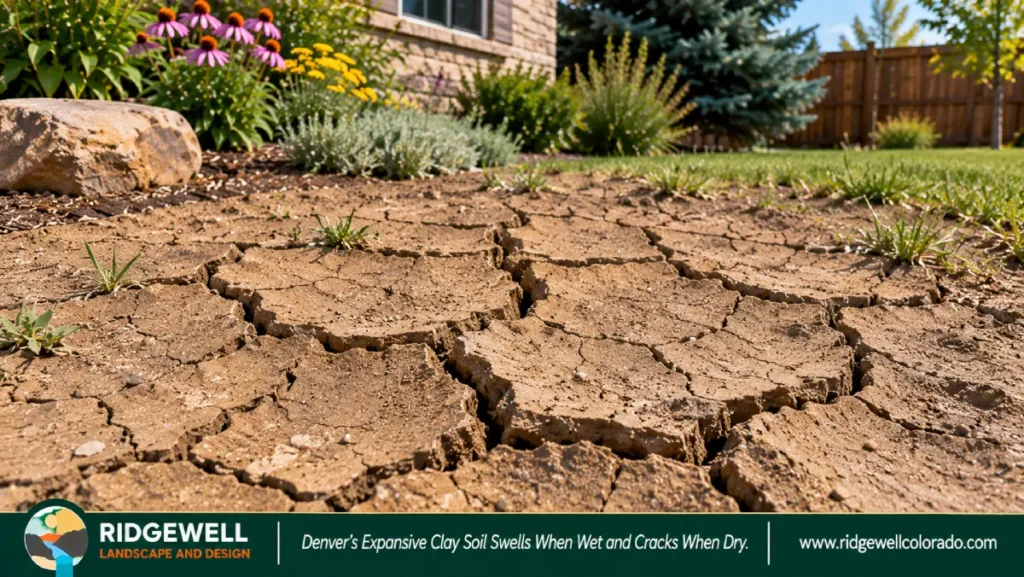
Expansive soil contains clay minerals, mainly smectite (often called montmorillonite or bentonite), that absorb water like a sponge. When the clay gets wet, it swells. When it dries, it shrinks and cracks. Some clays can change volume dramatically between wet and dry conditions.
The swelling creates strong upward pressure, enough to lift slabs, sidewalks and lightweight structures. The shrinking leaves gaps and voids underneath. Repeat that cycle through Colorado’s wet springs and dry summers, and you get uneven movement under anything built on top.
Why Denver Has So Much Clay Soil
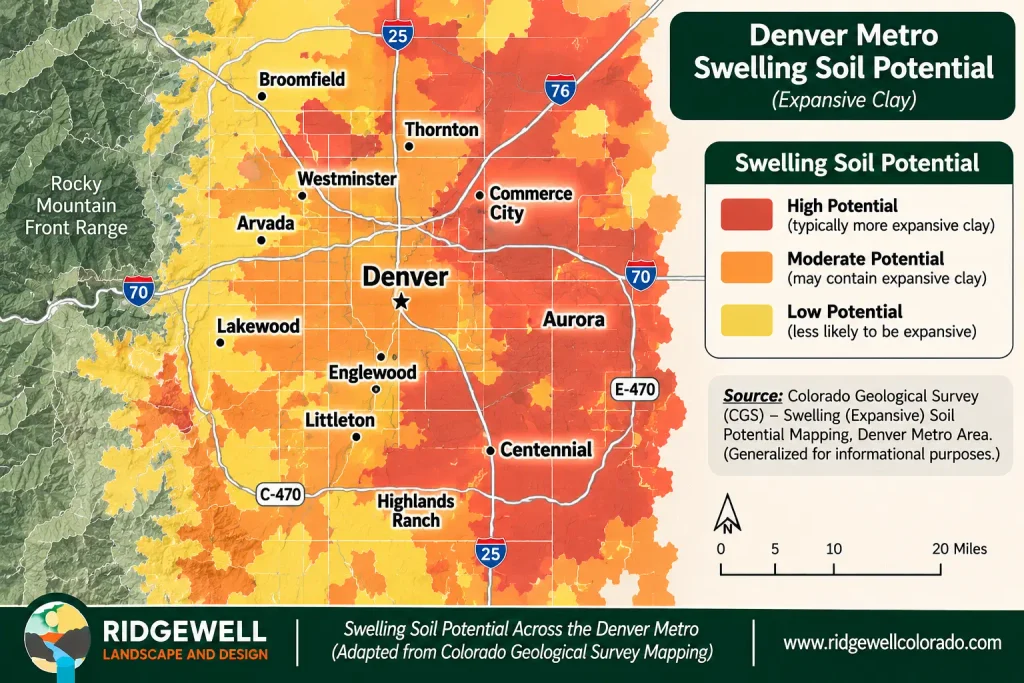
According to the Colorado Geological Survey, nearly every major population center along the Front Range is built at least partly on swelling soils or swelling bedrock. In the Denver area, the main sources are clay-rich bedrock formations, including the Denver Formation, the Laramie Formation and the Pierre Shale. The Pierre Shale contains thin layers of bentonite, formed from ancient volcanic ash, which is among the most expansive clay there is.
Swelling soil isn’t the same on every lot. Conditions can change within a single neighborhood or even across one yard, which is why soil testing matters for larger projects. Colorado law (C.R.S. 6-6.5-101) requires builders of new homes to give buyers a summary of the soils report at least 14 days before closing. If you have one, it’s worth reading before you plan a big hardscape project.
Signs You Have Expansive Clay Soil
- Wide cracks in the soil during dry spells
- Sticky, slick soil after rain that clings to boots and shovels
- Standing water that takes a long time to soak in
- Cracked or heaved driveways, sidewalks and patios
- Doors and windows that stick seasonally
- Gaps opening between a patio or walkway and the house
A simple test: squeeze a handful of moist soil. If it forms a smooth, sticky ribbon that holds together, it has a high clay content.
Clay Soil Patio Problems
Here’s how expansive clay affects common hardscapes:
| Hardscape | Common clay soil problem | How it’s prevented |
|---|---|---|
| Concrete patios and walks | Cracking and uneven heaving | Thicker gravel base, control joints, drainage |
| Paver patios | Sinking, waviness, edge spreading | Deeper compacted base, fabric, edge restraints |
| Retaining walls | Leaning, bulging, cracking | Drainage pipe, gravel backfill, geogrid |
| Pergolas and structures | Footings lifting or shifting | Deeper footings below the frost line, per engineering |
| Walkways near the house | Sloping back toward the foundation | Proper grade and base, downspout extensions |
Most of these problems come back to two things: water and base. Water triggers the swelling, and a thin base can’t bridge the movement.
How We Build Hardscapes on Colorado Clay
1. Go deeper with the base
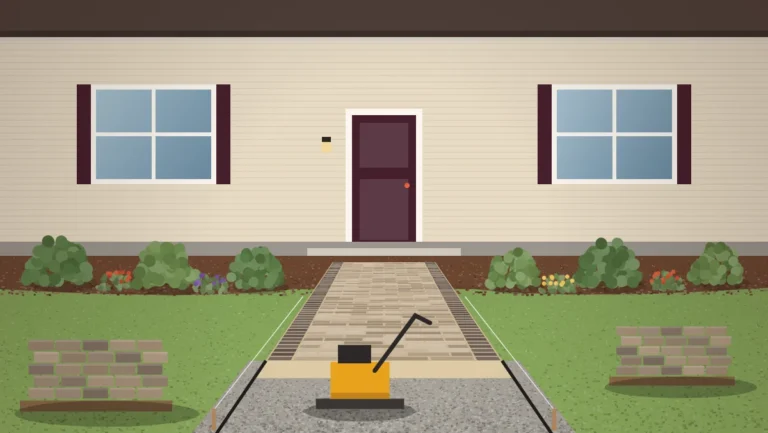
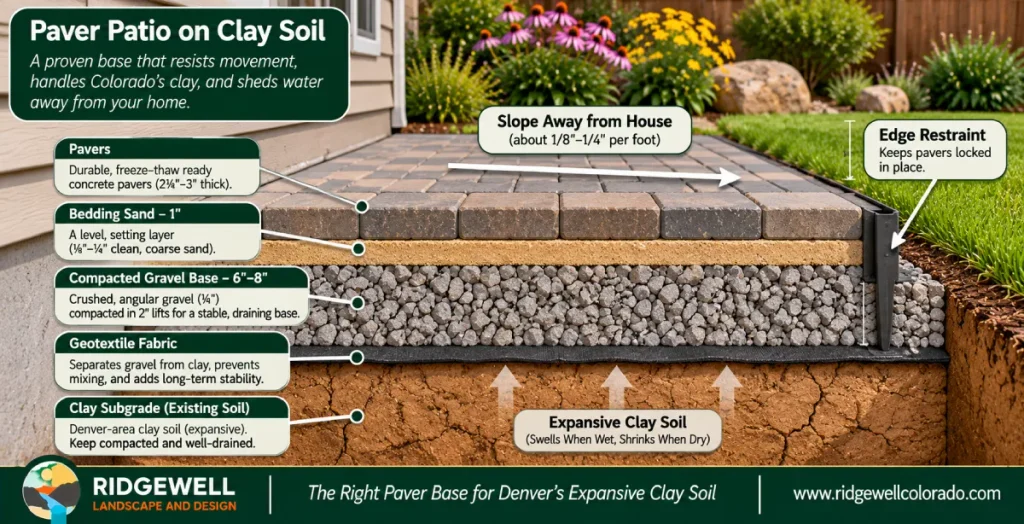
In sandy or gravelly soil, 4 inches of compacted base may be enough for a walkway or patio. On expansive clay, we typically use 6 to 8 inches of compacted crushed gravel for patios, and more for driveways. The base spreads loads and creates a buffer between the pavers and the moving clay, learn more in our complete guide on how deep a paver base should be in clay soil
.”
2. Separate the base from the clay
Geotextile fabric between the clay subgrade and the gravel base keeps the two layers from mixing. Without it, clay works up into the gravel and weakens it over time.
3. Control water
The best way to limit clay movement is to keep moisture levels steady. That means:
- Sloping patios and walks away from the house
- Extending downspouts away from hardscapes and foundations
- Keeping sprinklers from spraying hardscape edges and foundations
- Adding drains where water collects
4. Choose flexible systems
Interlocking pavers and segmental block walls are made of many separate pieces. They can handle small ground movements without cracking, and if a section settles, it can be lifted and reset. To weigh your options, check out our comparison of pavers vs concrete patios in Colorado.
5. Bring in an engineer when it matters
Tall retaining walls, walls holding up driveways, and structures attached to the house may need a soils report and engineered design. That’s not a sales pitch. In very expansive soil, it’s the difference between a 5-year wall and a 50-year wall.
What Homeowners Can Do
- Water consistently. Avoid cycles of flooding and drying near hardscapes and foundations.
- Keep downspouts extended at least several feet away from patios and the house.
- Watch for early signs like small dips, widening joints or edges pulling away.
- Fix drainage first before replacing a failed patio or wall, or it will fail again.
- Plant smart. Keep thirsty trees and heavily watered beds away from foundations and walls.
Already seeing problems? Check out our step-by-step guides on fixing sunken pavers and repairing a leaning retaining wall to restore your landscape.
Frequently Asked Questions
Much of the Denver metro has clay-rich soil, and a large share of it is expansive. Conditions vary from lot to lot, so some yards have sandier soil while others sit on highly expansive clay.
Yes. Pavers are one of the best patio choices on clay, as long as they’re installed on a deeper compacted gravel base, with geotextile fabric and good drainage.
For most residential paver patios on expansive clay, 6 to 8 inches of compacted crushed gravel is a common standard, plus about 1 inch of bedding sand. Driveways need more.
Clay soil itself isn’t the only cause, but trapped water behind a wall in clay soil creates high pressure. Proper drainage pipe, gravel backfill and geogrid prevent most failures.
Look for deep cracks when dry and sticky soil when wet. For an exact answer, review your home’s soils report or have a geotechnical engineer test the soil.
Build It Right for Denver Soil
Ridgewell Landscape and Design builds paver patios, walkways and retaining walls across Denver and the Greater Denver Metro with the base depth and drainage our clay demands. Explore our paver patio services and retaining wall services, or schedule a free consultation.