
To choose a hardscape contractor in Denver, check that they have liability insurance and workers’ comp, the right local license for your city, a portfolio of similar local projects and recent reviews. Then compare at least three written quotes that spell out base depth, drainage, materials, permits and warranty. The cheapest bid often hides a thin base, which is why so many Colorado patios and walls fail early.
A patio, retaining wall or outdoor kitchen is a big investment, and most of what makes it last is buried where you’ll never see it. That makes choosing the right contractor the most important decision in the whole project. This guide gives you a clear checklist for hiring a hardscape contractor in the Denver area.
What Does a Hardscape Contractor Do?
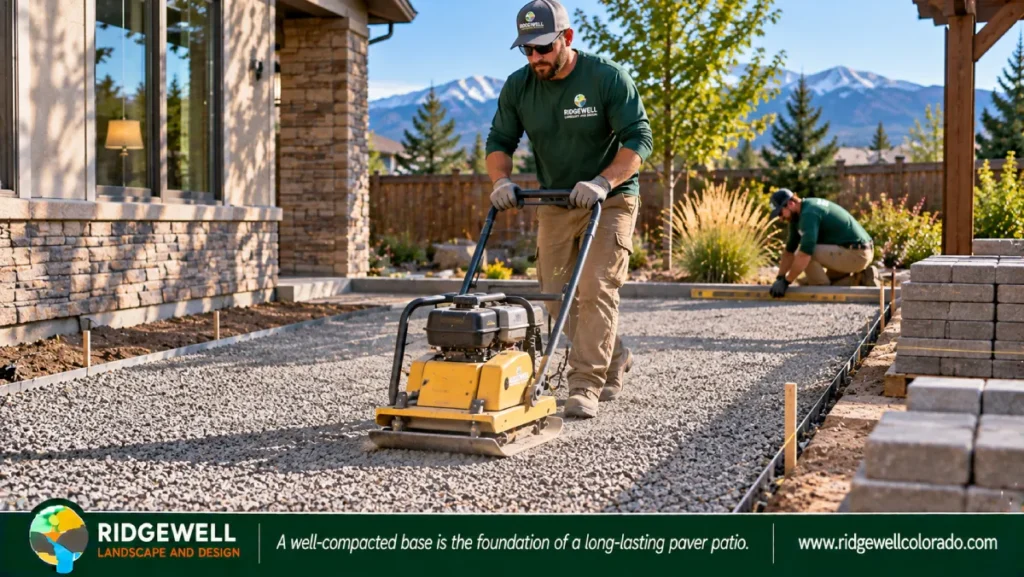
A hardscape contractor builds the non-living parts of your landscape: paver and flagstone patios, walkways, driveways, retaining walls, steps, fire pits, seat walls and outdoor kitchens. Some, like Ridgewell, are design-build firms that handle both design and installation. Others only install from someone else’s plans. Not sure which you need? See hardscape vs landscape and design-build vs separate designer and contractor.
Checklist to Follow before Choosing a Hardscape Contractor in Denver
Use this checklist when you talk to each contractor.
| Check | What to look for | Why it matters |
|---|---|---|
| Insurance | General liability and workers’ comp certificates | Protects you if property is damaged or a worker is hurt |
| Local licensing | License required by your city for the work | Needed to pull permits; shows accountability |
| Certifications | Hardscape installer training (e.g., CMHA, formerly ICPI) | Shows knowledge of industry installation standards |
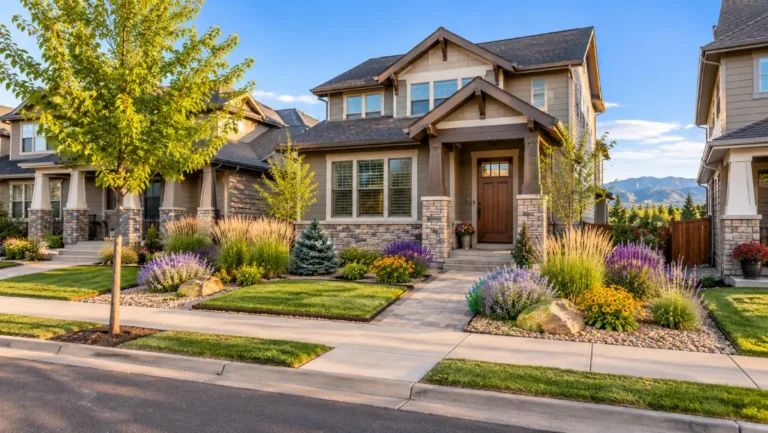
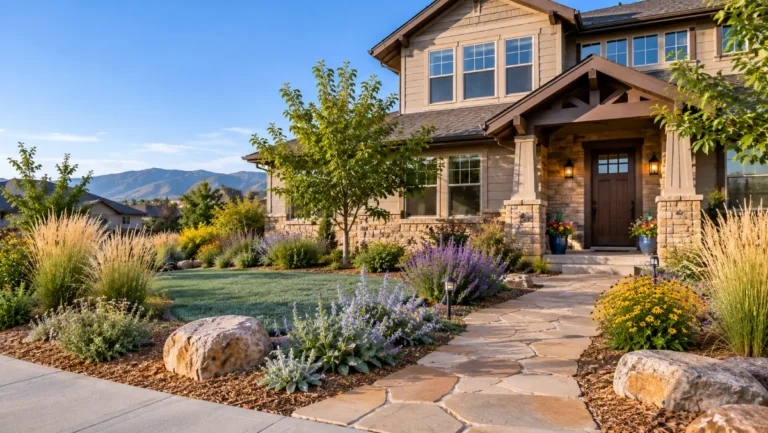
| Local portfolio | Photos of similar projects in the Denver area | Proves experience with local soil and climate |
| Reviews | Recent reviews on Google and other platforms | Shows how they treat customers and fix problems |
| Written quote | Itemized scope, materials, base depth, drainage | Lets you compare bids fairly |
| Warranty | Written workmanship warranty | Shows they stand behind their work |
1: Verify Insurance and Licensing
Insurance
Ask for certificates of insurance for general liability and workers’ compensation. Colorado requires most employers to carry workers’ comp. Without it, you could be on the hook if a worker is injured on your property. Call the insurer listed on the certificate to confirm the policy is active.
Licensing in Colorado
Colorado has no single statewide license for landscape or hardscape contractors. Licensing happens at the city level, and requirements vary across Denver, Aurora, Lakewood, Centennial and other cities. Specialty work has its own rules:
- Gas lines for fire pits and outdoor kitchens must be installed by a licensed plumber or gas fitter.
- Electrical work beyond low-voltage lighting needs a licensed electrician.
- Permitted structures such as pergolas and tall retaining walls need a contractor who can pull permits in your city.
Use your city’s contractor license lookup to confirm. Our guide on how to check a contractor’s license and insurance walks through it.
2: Look for Local Experience
Building in Denver is different from building in milder, sandier places. Front Range clay soil swells and shrinks, winters bring repeated freeze-thaw cycles, and spring storms dump heavy, wet snow. A contractor who builds here regularly will talk about base depth, drainage and soil without being asked.
Ask to see projects that are at least 3 to 5 years old. Fresh projects always look good. Older ones show whether the work holds up.

3: Read Reviews the Right Way
- Look for patterns, not one-off complaints.
- Pay attention to how the contractor responds to negative reviews.
- Look for mentions of communication, cleanup and staying on schedule.
- Ask for two or three recent references you can call.
4: Ask the Right Questions
These questions quickly show whether a contractor knows hardscaping:
- How deep will the compacted base be, and what material do you use?
- How do you compact the base, and in how many layers?
- How will you handle drainage and slope?
- Do you use edge restraints and geotextile fabric?
- Who handles permits and HOA approval?
- Who will be on site every day, and who is my main contact?
- What does your warranty cover, and for how long?
For a longer list, look at our list of questions to ask a landscape contractor before you hire.
5: Compare Quotes Fairly
Get at least three written quotes. Make sure they cover the same scope before you compare prices. Line up these items side by side:
- Square footage and materials (brand, product, color)
- Excavation depth and base depth
- Drainage work
- Edge restraints and joint sand type
- Demolition and haul-away
- Permits and engineering
- Payment schedule and warranty
A quote that’s far below the others is a warning sign, not a bargain. It usually means a thinner base, less drainage or uninsured labor. For typical prices, go through our paver patio cost guide and retaining wall cost guide.
Red Flags to Watch For
- Asks for a large cash deposit up front
- No written contract or a vague, one-line quote
- Can’t provide proof of insurance
- Pressures you to sign the same day
- Suggests skipping permits or HOA approval
- Showed up after a storm offering a “deal” on leftover materials
- No physical business address
See more in landscaping contract red flags.
What Your Contract Should Include
- Detailed scope of work and drawings
- Materials by brand, product and color
- Start date and estimated completion
- Payment schedule tied to project milestones
- Who handles permits, HOA approval and utility locates (Colorado 811)
- Change-order process
- Cleanup and site protection
- Written warranty terms
Frequently Asked Questions
Colorado has no statewide hardscape license. Licensing is handled by cities, so requirements vary. Gas and electrical work need state-licensed tradespeople.
Get at least three written, itemized quotes covering the same scope. That gives you a clear picture of fair pricing.
Deposits vary, but a reasonable deposit covers scheduling and early material costs. Be wary of anyone asking for most of the price before work starts, and tie later payments to completed milestones.
Look for a written workmanship warranty that covers settling and shifting caused by installation. Ridgewell offers a 5-year paver warranty. Material warranties from manufacturers are separate.
For a spring or early summer build, start talking to contractors in winter. Popular installers book up quickly once the weather warms.
Talk to Ridgewell Landscape and Design
We’re a design-build hardscape and landscape company serving Denver and the Greater Denver Metro. We’re happy to answer every question on this list, show you finished local projects and give you a detailed, itemized quote. Explore our services, read about our team or schedule a free consultation.