
A leaning or bulging retaining wall is a sign that soil and water pressure behind it are winning. Small, stable leans in short walls can sometimes be fixed by rebuilding the affected section with proper drainage and backfill. Walls that are tall, actively moving, cracked or holding up a driveway or structure usually need professional evaluation and often a full rebuild. Most failures trace back to poor drainage, a weak base or missing reinforcement.
Retaining walls rarely fail overnight. They give warning signs first. This guide explains what those signs mean, what causes them in Colorado, and your repair options.
Warning Signs of a Failing Retaining Wall
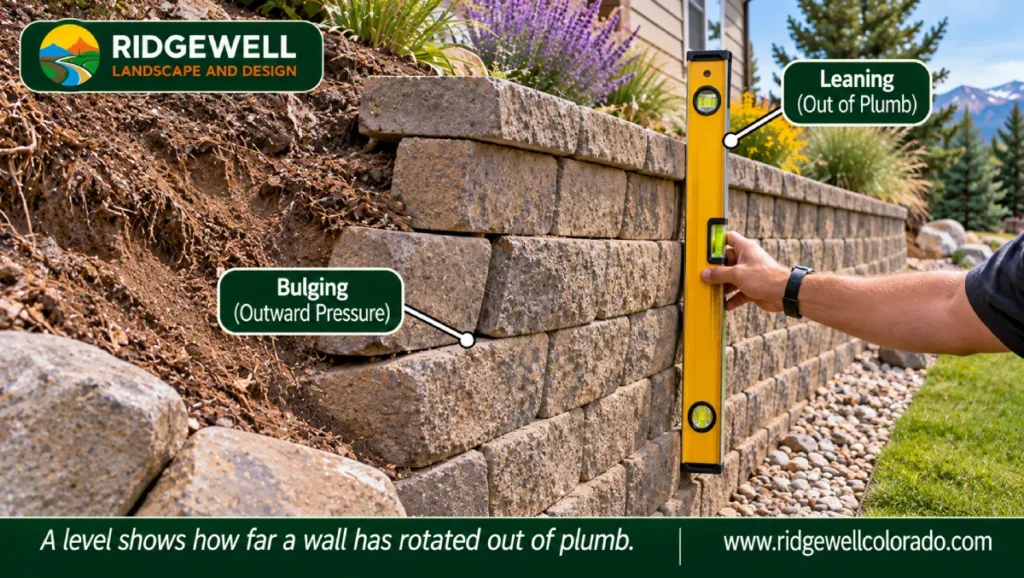
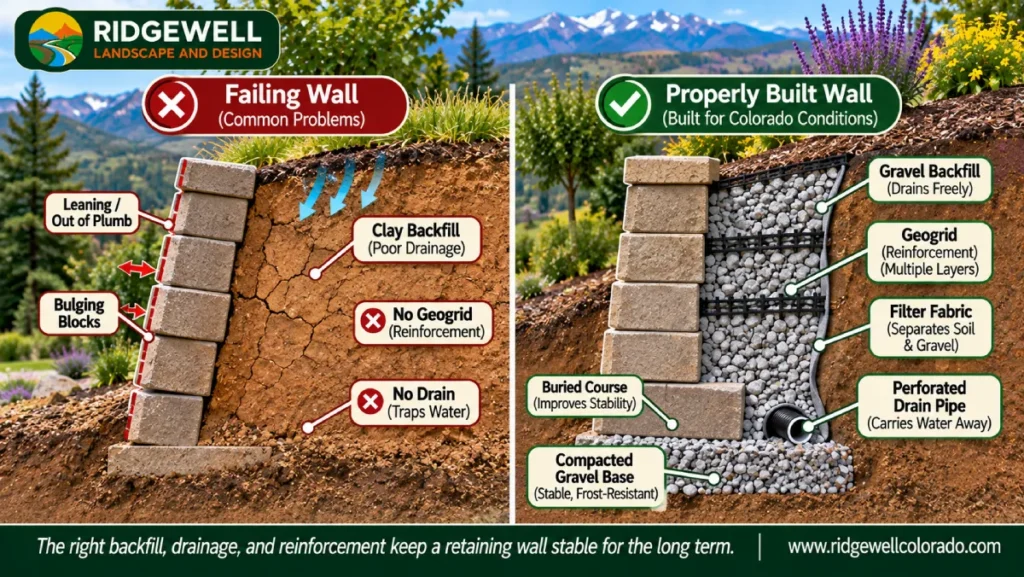
- Leaning: The wall tilts forward (away from the soil) more than its designed setback.
- Bulging: The middle of the wall pushes outward.
- Cracks: Stair-step cracks in block or cracks in concrete.
- Separated units: Gaps between blocks, timbers or caps.
- Soil or water seeping through joints or out of the base.
- Sinking or cracking ground behind the top of the wall.
- Rotted timbers in older railroad tie walls.
Note that segmental block walls are built with a slight backward lean (setback). A wall leaning back into the hill is normal; a wall leaning forward is not.
Why Retaining Walls Fail
1. Water pressure
Saturated soil weighs much more than dry soil and pushes harder on a wall. Without the proper pipe, clean gravel backfill, and outlets covered in retaining wall drainage explained, trapped water builds up behind the structure and causes the most common type of failure.
2. Expansive clay soil
Using expansive clay soil in Denver as backfill directly behind a wall is a common shortcut that leads to bulging, since Front Range clay swells when wet and adds significant pressure.
3. Frost
Water that freezes behind a wall expands and pushes it outward over many winters.
4. Weak base
A thin or poorly compacted leveling pad lets the wall settle unevenly and rotate.
5. Missing reinforcement
Taller segmental walls need geogrid layers tied into the soil to resist the load a key structural difference explained in gravity vs geogrid retaining walls.
6. Extra loads
Driveways, patios, sheds, pools or steep slopes above a wall add surcharge loads it may not have been designed for.
7. Aging materials
Timber and railroad tie walls rot from the inside and lose strength over 10 to 20 years, making timber retaining wall replacement the only lasting fix once decay sets in.
Leaning Retaining Wall Repair Options
| Situation | Typical repair |
|---|---|
| Short wall (under 3 ft), minor lean in one section | Dismantle the section, rebuild base, add drain and gravel backfill, relay blocks |
| Bulge caused by clay backfill and no drainage | Excavate behind the wall, add drainage system and clean backfill, rebuild affected courses |
| Wall missing geogrid at a height that needs it | Rebuild with engineered geogrid reinforcement |
| Rotting timber or railroad tie wall | Replace with segmental block, boulders or concrete |
| Tall wall, structure above, or active movement | Engineering evaluation; engineered repair or full rebuild |
Methods like anchors or tiebacks may be used on some engineered walls, but they require professional design. For most residential segmental and boulder walls, rebuilding the failing section correctly is the reliable fix.
What It Costs
Small section repairs on short walls may cost a few thousand dollars. Full rebuilds generally cost about the same as new walls, retaining wall costs typically $40 to $75 per square foot of face for segmental block in the Denver area, plus demolition. Engineered walls cost more.
When to Call a Professional Right Away
- The wall is taller than about 4 feet
- It supports a driveway, house, pool or other structure
- Movement is visible from week to week
- Large cracks are opening in the ground above
- It’s next to a sidewalk, street or neighbor’s property
Keep people and vehicles away from a wall that’s actively moving.
Frequently Asked Questions
Often, yes. Short walls with localized leaning can be rebuilt with proper drainage and backfill. Tall or structural walls may need an engineered repair or replacement.
Bulging is usually caused by water pressure from poor drainage, clay backfill, frost or missing reinforcement behind the wall.
No. Pushing the wall back doesn’t fix the cause. The wall needs to be rebuilt with a solid base, drainage and proper backfill.
It can be. Walls that are tall, holding up structures or moving quickly can collapse. Keep clear and get a professional evaluation.
It depends on your policy and the cause. Failures from poor construction or gradual deterioration are often excluded. Check with your insurer.
Get Your Wall Evaluated
Ridgewell Landscape and Design repairs and rebuilds retaining walls across Denver and the Greater Denver Metro with the drainage and reinforcement Colorado soils require. Explore our retaining wall services or schedule a free consultation.