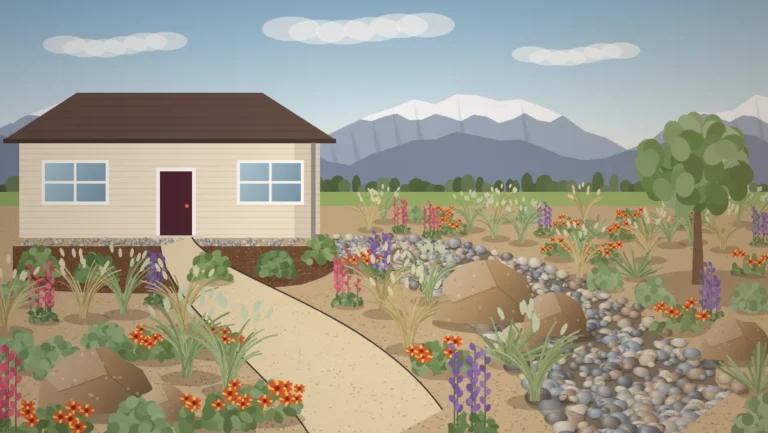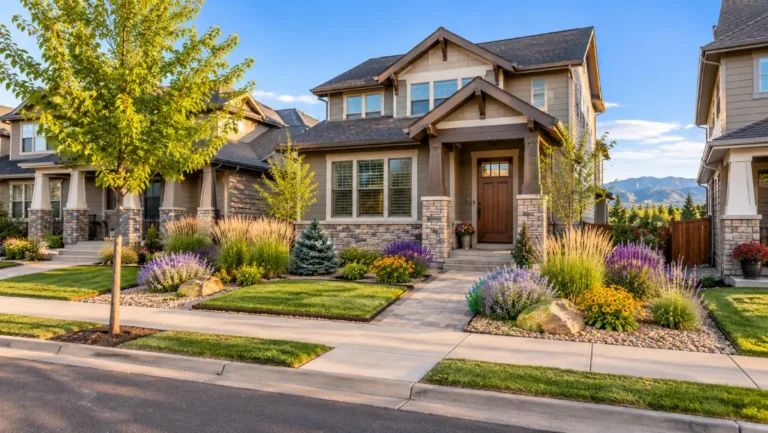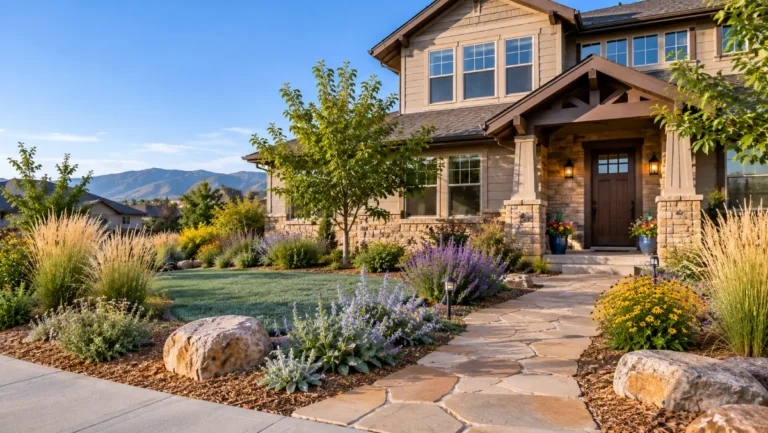

In Colorado, wood mulch is usually better for perennial and shrub beds because it keeps soil cooler, holds moisture, improves soil as it breaks down and helps plants establish. Landscape rock is better for hot, sunny areas near pavement, parkway strips, dry creek beds and spots where mulch would blow or wash away. Rock costs more up front (about $2 to $5 per square foot installed vs $1 to $2.50 for wood mulch) but lasts much longer. Many Denver yards use both.
Choosing between rock and mulch affects plant health, water use, heat, maintenance and looks. Here’s a clear comparison for Front Range yards.
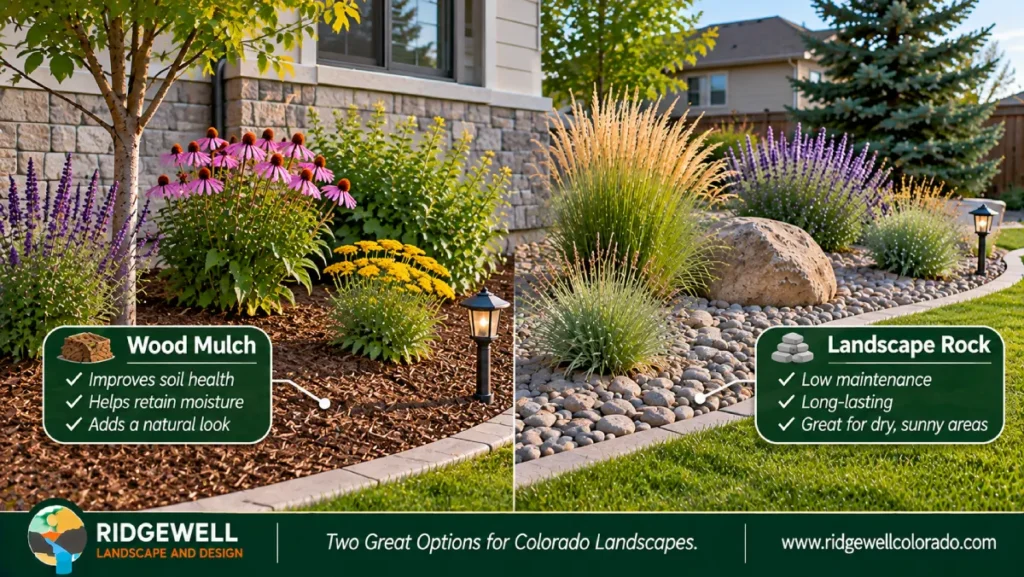
Quick view of Landscape Rock vs Wood Mulch
| Factor | Wood mulch | Landscape rock |
|---|---|---|
| Installed cost (Denver area) | $1 to $2.50 / sq ft | $2 to $5 / sq ft |
| Lifespan | Top up every 1 to 3 years | Many years; occasional cleaning |
| Soil temperature | Keeps soil cooler | Can heat soil and radiate heat |
| Moisture retention | Excellent | Good, but heat increases evaporation near plants |
| Soil health | Improves soil as it breaks down | No organic benefit |
| Weeds | Suppresses with 3 in depth | Weeds sprout in dust and debris over time |
| Wind and water | Shredded mulch stays put; chips can blow or float | Stays in place |
| Fire safety near house | Combustible; keep away from foundations in fire-prone areas | Non-combustible |
| Best for | Perennial and shrub beds, trees | Hot strips, dry creeks, near pavement, xeric beds |
When to Use Wood Mulch
- Around perennials, shrubs and trees
- In new plantings that need help establishing
- In vegetable and pollinator gardens
- Where you want a soft, natural look
Shredded cedar or hardwood mulch interlocks and resists Front Range wind better than large chips. Keep mulch a few inches away from stems and tree trunks.
When to Use Landscape Rock
- Parkway strips and areas next to driveways and sidewalks
- Dry creek beds and drainage swales
- Around very drought-tolerant plants that like lean, dry conditions
- Within 5 feet of the house in wildfire-prone areas to reduce fire risk around your foundation, see our breakdown of defensible space landscaping to safeguard your home.
- Steep areas where mulch would wash away

Common Rock Types in Colorado
- River rock (1 to 3 inch): Rounded, great for dry creeks and drainage.
- Crushed granite: Angular, locks in place, comes in many colors.
- Pea gravel: Small and smooth; best for paths with edging.
- Cobble and boulders: Larger accents and erosion control.
- Breeze or decomposed granite: Fine, compactable; for paths and patios.
To choose the right materials for your soil and slope, review our breakdown of xeriscape rock and mulch options.
Weed Fabric: Yes or No?
Under rock, a quality permeable fabric can help keep rock from sinking into soil. Under wood mulch, fabric is usually unnecessary and can mat and grow weeds on top as mulch breaks down. In either case, weeds eventually sprout in debris on top, so occasional weeding is still needed.
Combining Rock and Mulch
A popular Denver approach: rock in hot, high-traffic or drainage areas, wood mulch in planting beds, with steel edging separating them. It balances plant health, water savings and low maintenance.
Frequently Asked Questions
Wood mulch is usually better for plant beds; rock is better for hot strips, drainage areas and spots near pavement or the house in fire-prone areas.
Yes. Rock absorbs and radiates heat, which can stress plants that prefer cooler roots.
About 3 inches for wood mulch, and about 2 to 3 inches for rock, depending on size.
Mulch is cheaper up front, but rock lasts much longer, so lifetime costs can be closer.
Large chips can. Shredded mulch knits together and stays in place better.
A permeable fabric can help under rock to prevent sinking, but it won’t stop weeds that sprout in debris on top.
Plan Your Beds
Ridgewell Landscape and Design designs planting beds with the right mix of rock and mulch across Denver and the Greater Denver Metro. Explore our landscape design services or book a free consultation.