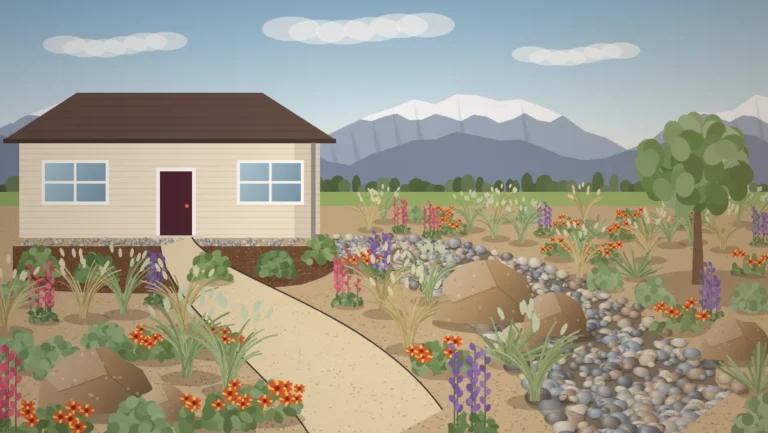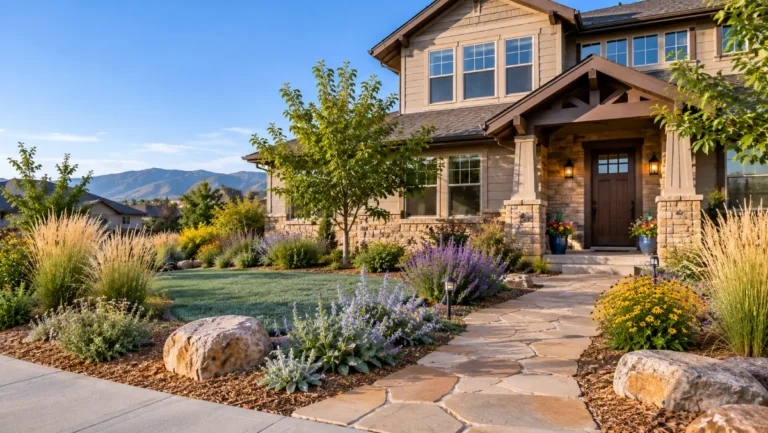

An HOA-friendly xeriscape looks intentional, tidy and in keeping with the neighborhood. The design moves that win approval are crisp edging, layered plantings that cover the ground, a clear walkway, one or two consistent rock colors, evergreen structure for winter and often a small lawn panel or turf alternative. Colorado law prevents HOAs from banning xeriscape or requiring turf, and HOAs must offer at least three pre-approved water-wise front yard designs, but they can still require approval and set reasonable guidelines.
In other words, your HOA can’t stop you from going water-wise, but it can absolutely send a plan back for changes. The homeowners who get approved quickly are the ones whose plans look like a finished garden on paper. Here’s how to design a xeriscape your HOA will sign off on and your neighbors will actually admire.
Know Your HOA Rights and Rules
Colorado has protected water-wise landscaping in HOAs for years, and Senate Bill 23-178, signed in 2023, made those protections much more specific. Here’s what it means for a homeowner planning a new front yard:
- No turf requirements: Your HOA can’t prohibit xeriscape or require your yard to be all or partly grass.
- Three pre-approved designs: HOAs must adopt at least three water-wise front yard designs that are pre-approved for installation. The law points to sources like Plant Select’s downloadable garden designs or a local water provider’s program.
- 80% drought-tolerant option: HOAs must allow an option made up of at least 80% drought-tolerant plantings.
- Hardscape limit: An HOA can’t unreasonably require hardscape on more than 20% of your landscaped area.
- Design review still applies: HOAs can require plans and set guidelines on plant types, rock colors, placement and upkeep.
For the full breakdown, including backyard turf and vegetable garden protections, read our guide to Colorado HOA xeriscape law. This article isn’t legal advice, so check your own covenants and design guidelines too, since every community words its rules a little differently.
Why HOAs Push Back on Xeriscape Plans
Most denials have nothing to do with xeriscape itself. They come down to a handful of design problems that make a yard look unfinished or hard to maintain:
- Too much bare rock. A sea of gravel with a few plants dotted around is the number one reason plans get sent back.
- Too many materials. Three rock colors, two mulches and mixed edging read as cluttered from the street.
- No defined edges. Rock that spills onto the sidewalk or lawn looks messy within a season.
- Sparse planting plans. Plants spaced for year one leave gaps for years, which reviewers notice.
- Tall plants in the wrong place. Many guidelines limit plant height near driveways, corners and sidewalks so drivers can see.
- No irrigation plan. Reviewers want to know new plants will actually establish.
- Artificial turf in the front yard. Backyard turf is protected, but front yard turf can still be regulated.
HOA-Friendly Xeriscape Design Principles
1. Make it look intentional
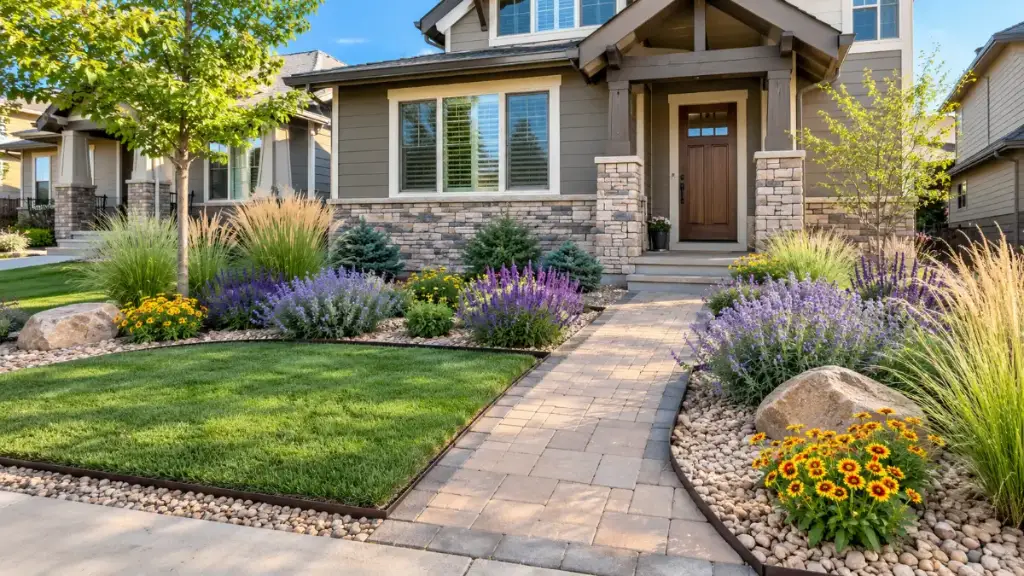
Clean lines are what separate a designed xeriscape from a neglected yard. Use steel, aluminum or concrete edging between beds, lawn and walks, and give beds smooth, confident curves or clean straight lines rather than wiggly outlines. A defined path to the front door tells everyone where to walk and ties the whole design together.
2. Cover the ground with plants
Aim for plants that cover most of each bed within two to three growing seasons. Space them based on their mature width, not their nursery pot size, and plant in groups of three or five so they knit together. Keep mulch at about 2 to 3 inches deep between plants to hold moisture and block weeds while everything fills in. Wondering which mulch to use? Our comparison of rock vs mulch in Colorado covers heat, water and upkeep.
3. Keep a consistent palette
Pick one main rock color, ideally one that picks up a tone from your house trim or stone, and use a second only as an accent. Repeat the same plants across the yard rather than using one of everything. Repetition is what makes a planting look calm and designed from the street.
4. Add evergreen structure
Colorado front yards spend a long stretch of the year dormant. Dwarf conifers, junipers, and evergreen grasses keep the yard looking cared for from November to April, which is exactly when HOA reviewers drive by and notice tan, cut-back beds.
5. Consider a small lawn or turf alternative
A small, well-defined lawn panel helps a xeriscape blend in on a street of traditional lawns. Low-water grasses like buffalograss and blue grama make that panel far less thirsty than bluegrass. If you’re weighing options, compare the most popular lawn alternatives for Colorado yards.
6. Frame the house and entry
Foundation shrubs soften the base of the house, and a generous walkway makes the entry feel welcoming. Upgrading a narrow concrete path to paver walkways is one of the easiest ways to make a new xeriscape look high-end. For more inspiration, browse these front walkway ideas.
A Simple HOA-Friendly Front Yard Layout
Thinking about the yard in zones makes both the design and the HOA submittal easier to explain:
| Zone | What goes there | Why HOAs like it |
|---|---|---|
| Foundation bed (along the house) | Dwarf evergreens, compact shrubs, a few perennials | Frames the home and stays green in winter |
| Entry and walkway | Pavers or flagstone, low plantings on both sides | Clear, welcoming path to the door |
| Lawn panel (optional) | Small buffalograss, blue grama or low-water turf area | Blends with neighbors’ lawns |
| Street-side beds | Grasses, flowering perennials, one or two boulders | Color and texture at curb level |
| Driveway and corner edges | Low groundcovers and plants that stay short | Keeps sightlines open for drivers |

How to Get Your Xeriscape Approved
- Get the rules first. Request your HOA’s design guidelines, application form and its pre-approved water-wise designs.
- Start from a pre-approved design if one fits. Using one can make approval much simpler.
- Draw a plan. Show the house, beds, lawn, paths and plant locations to scale, with a plant legend.
- Choose materials and get samples. Photos of your rock, mulch and edging help reviewers picture the result.
- Submit and keep a copy. Note the date and any response timeline in your governing documents.
- Wait for written approval. Don’t remove turf or start digging until it arrives, and keep it with your records.
The same process works for patios and pergolas, too. Our guide on getting HOA approval for a patio, pergola or retaining wall walks through it step by step, and local guides cover Centennial HOA landscaping rules and Highlands Ranch HOA approval.
What to Include in Your HOA Submittal
- A scaled site plan with bed outlines, lawn areas and paths
- A plant list with names, sizes at planting and quantities
- Rock and mulch types and colors, with photos
- Edging material and color
- Irrigation changes, such as converting spray heads to drip
- Boulders, lighting and other features
- Planting, lawn and hardscape percentages if your guidelines reference them
Plants That Work Well in HOA Xeriscapes
Choose plants that look full most of the year and don’t flop over sidewalks. These are reliable picks for Denver-area front yards:
| Role | Good choices | Why they work |
|---|---|---|
| Structure | Dwarf conifers, potentilla, serviceberry, fernbush | Year-round shape; tidy habit |
| Grasses | Blue grama, little bluestem, blue avena, prairie dropseed | Movement and texture; winter interest |
| Color | Penstemon, catmint, salvia, blanket flower, agastache | Long bloom season; pollinator-friendly |
| Groundcovers | Creeping thyme, sedum, hardy ice plant | Fill gaps and edges; low height |
For a longer list sorted by sun, height and bloom time, see the best xeriscape plants for Colorado. If your yard has heavy clay, these tips on xeriscaping in clay soil will help plants establish faster.
Water, Rebates and Timing
A xeriscape still needs water while it establishes. Converting old spray zones to drip irrigation puts water at the roots and is something many HOAs like to see on the plan. Before you remove any grass, check whether your water provider offers a turf replacement rebate. Programs like Denver Water’s turf replacement program and Aurora Water’s rebates often require approval before work starts, so line up the HOA and the rebate at the same time.
Spring and early fall are the best times to plant in the Denver area, when temperatures are mild and plants can root in before summer heat or winter cold. Since HOA review can take several weeks, it’s smart to submit your plan a month or two before you want to start.
Maintenance That Keeps HOAs Happy
- Spring: Cut back grasses and perennials, top up mulch and check drip lines.
- Summer: Pull weeds while they’re small and deadhead spent flowers.
- Fall: Leave seed heads for winter interest, but keep walkways and sightlines clear.
- Year-round: Keep rock out of the lawn and off sidewalks, and prune shrubs back from paths.
Want a month-by-month plan? Follow our xeriscape maintenance calendar.
Frequently Asked Questions
HOAs can’t ban xeriscape in Colorado, but they can deny a specific plan that doesn’t meet reasonable guidelines. Ask what needs to change and resubmit.
Clean edges, full planting coverage, consistent materials, evergreen structure and a clear walkway.
Under SB 23-178, HOAs must develop at least three pre-approved water-wise front yard designs. Ask your HOA for them.
Yes. A small lawn panel is a common, HOA-friendly hybrid approach.
HOAs can regulate plant types and placement within reason, but they can’t require turf grass.
Many Denver-area HOAs respond within 30 to 45 days, depending on governing documents.
Design an HOA-Friendly Xeriscape
Ridgewell Landscape and Design creates HOA-ready xeriscape designs and submittal plans for homeowners across Denver and the Greater Denver Metro. From the plan and plant list to installation, our xeriscape landscaping team handles the details so your yard gets approved the first time. Book a free consultation to get started.