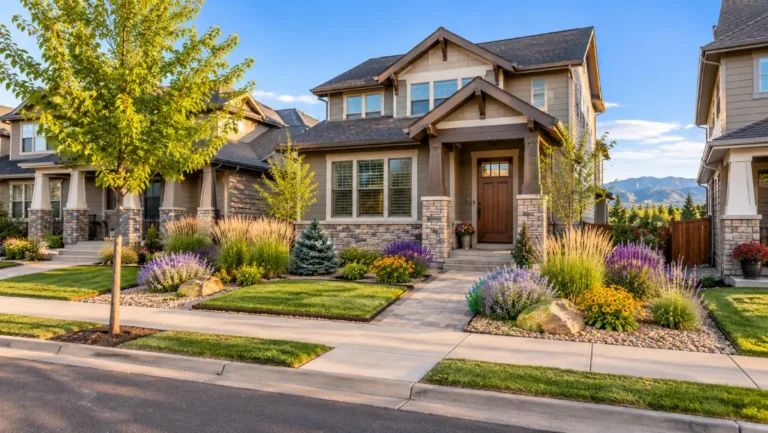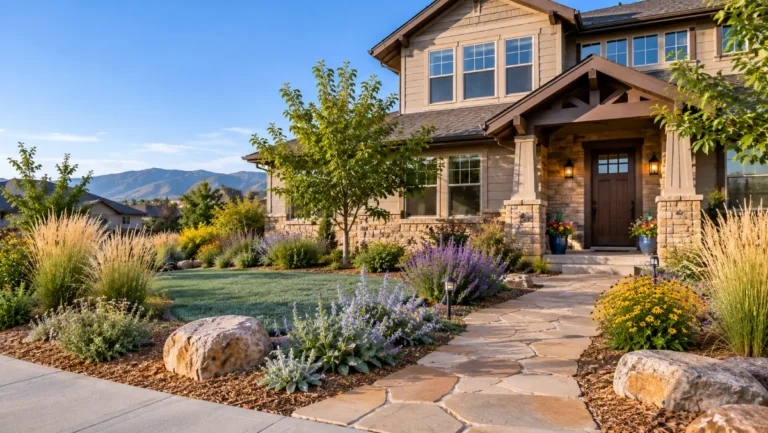

In Denver, a ground-level, uncovered patio usually doesn’t need a building permit, but many related projects do. According to the City and County of Denver, all covered patios, porches and pergolas require both a zoning and a building permit, retaining walls over 12 inches tall require a zoning permit (walls over 6 feet also need engineering and a building permit), and uncovered decks 12 inches or more off the ground need a zoning permit, with a building permit at 30 inches. Gas lines, electrical circuits and plumbing for fire pits and outdoor kitchens require trade permits. HOA approval is separate.
Permits protect you, your home’s value and your neighbors. Skipping them can lead to stop-work orders, fines or problems when you sell. Here’s a project-by-project guide for Denver homeowners.
Denver Permit Requirements by Project
| Project | Typical Denver requirement |
|---|---|
| Paver or flagstone patio at grade, uncovered | Usually no building permit; must still meet zoning rules such as setbacks; HOA approval may apply |
| Covered patio or patio cover | Zoning permit and building permit |
| Pergola | Zoning permit and building permit |
| Uncovered deck 12 in. or more above grade | Zoning permit (building permit at 30 in. or more) |
| Retaining wall over 12 in. tall | Zoning permit |
| Retaining wall over 6 ft | Building permit and engineering review |
| Gas fire pit or fire table | Plumbing/gas permit for the gas line |
| Outdoor kitchen | Gas, electrical and plumbing permits as applicable; building permit if covered |
| Landscape lighting (low-voltage, plug-in) | Usually none; new outdoor circuits or outlets need an electrical permit |
| Work in the public right-of-way (curb cuts, tree lawn trees) | Separate city right-of-way and forestry permits |
Always confirm current requirements for your specific address with Denver Community Planning and Development (CPD) before you start. Rules can change, and site conditions such as easements, historic districts or floodplains add requirements.
Denver Patio Permit Basics
A simple paver or flagstone patio laid at ground level is generally treated as flatwork. Even without a building permit, it should respect zoning rules like setbacks, drainage that doesn’t send water onto neighbors and any easements. Once you add a roof, raise the surface into a deck, or build walls and steps, permit requirements change.
Denver Pergola Permit
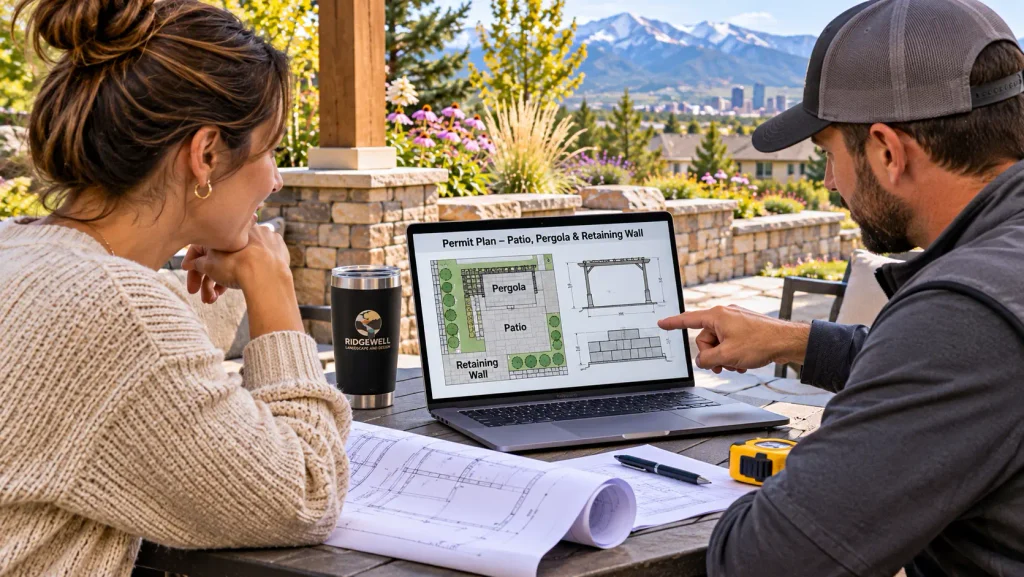
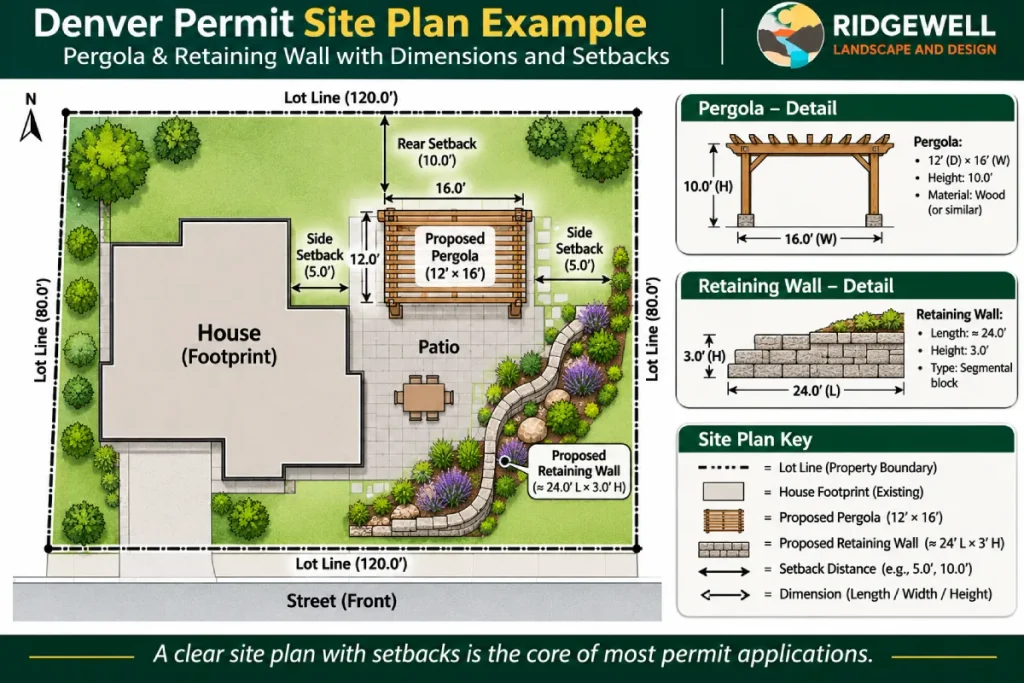
Denver’s guidance states that all covered patios, porches, pergolas and carports require both zoning and building permits. Expect to provide a site plan showing location and setbacks, plus structural details such as footing depth (commonly about 36 inches for frost protection), post and beam sizes and connections. See pergola snow load and footings in Colorado.
Denver Retaining Wall Permit
Any wall over 12 inches tall, including retaining walls, needs a zoning permit in Denver. Walls over 6 feet need engineering and a building permit, and walls supporting driveways, structures or steep slopes may need engineering at lower heights. Learn when a retaining wall needs an engineer and what is the retaining wall cost.
Denver Fire Pit Regulations
- Gas fire pits: The gas line must be installed by a licensed plumber with a permit and inspection.
- Wood-burning fire pits: Subject to fire code rules on location, size and attendance, plus any burn restrictions or air quality limits. Many fire codes require recreational wood fires to be 25 feet from structures.
- HOAs: Many prohibit wood-burning fire pits.
Check with the Denver Fire Department for current recreational fire rules.
Outdoor Kitchen Permit
Outdoor kitchens typically involve gas lines, electrical outlets and sometimes water and drain lines, all of which require permits and licensed trades. Adding a roof or pavilion over the kitchen brings zoning and building permits. See outdoor kitchen cost in Colorado.
How to Apply for a Permit in Denver
- Confirm requirements for your project and address with Denver CPD.
- Prepare documents: Site plan with setbacks, drawings, structural details and engineering where required.
- Apply online through Denver’s e-permits system.
- Respond to review comments and pay fees.
- Schedule inspections at required stages, such as footings and final.
- Keep approved plans and final inspection records for your files and future sale.
Most homeowners let their contractor handle permits. Make sure your contract says who is responsible.
What About the Suburbs?
Aurora, Lakewood, Centennial, Littleton, Arvada, Broomfield, Parker and Brighton each set their own rules, and thresholds can differ from Denver’s. HOA approval is also required in most planned communities. See how to get HOA approval and Centennial landscaping and HOA rules.
Frequently Asked Questions
A ground-level, uncovered paver or flagstone patio usually doesn’t need a building permit, but it must meet zoning rules. Covered patios need zoning and building permits.
Yes. Denver requires both a zoning permit and a building permit for pergolas.
Yes, for walls over 12 inches tall, which need a zoning permit. Walls over 6 feet also need engineering and a building permit.
Gas fire pits need a permit for the gas line. Wood-burning fire pits are governed by fire code rules and burn restrictions, and many HOAs restrict them.
Usually, yes, for gas, electrical and plumbing work, and a building permit if the kitchen is covered.
You could face stop-work orders, fines, required removal or problems during a home sale or inspection.
Let Us Handle the Paperwork
Ridgewell Landscape helps homeowners across Denver and the Greater Denver Metro navigate permits and HOA approvals for patios, pergolas, walls and outdoor kitchens. Explore our services or book a free consultation.
Rules and programs change, so confirm current details for your address. Last updated October 2026.