
For most Colorado homeowners, yes, xeriscaping is worth it. A well-designed xeriscape can cut outdoor water use by up to about 60% compared with a bluegrass lawn, according to Resource Central. It needs no mowing, fertilizing or aerating, it stays attractive under watering restrictions like Denver Water’s 2026 two-day schedule, and it may qualify for rebates. The trade-offs are a higher upfront cost (typically $10 to $20 per square foot installed), one to two seasons for plants to fill in, and the need for good design so the yard doesn’t look sparse, rocky or weedy.
Whether it pays off for your yard depends on how you use the space, how long you plan to stay and how the project is designed. Here’s an honest look at the pros, the cons, the long-term math and the situations where keeping some lawn still makes sense.
Xeriscape Pros and Cons
| Pros | Cons |
|---|---|
| Much lower outdoor water use | Higher upfront cost than sod |
| No mowing, fertilizing or aerating | Plants need 1 to 2 seasons to fill in |
| Holds up under watering restrictions | Poor designs can look sparse or rocky |
| Supports pollinators and birds | Some weeding, especially early on |
| Rebates may lower cost | Less space for active play than lawn |
| Protected by Colorado HOA law | HOAs can still require design approval |
The biggest benefits
Water savings. Kentucky bluegrass is one of the thirstiest things most Front Range homeowners grow. Replacing it with water-wise plants on drip irrigation is the single biggest way to shrink a summer water bill.
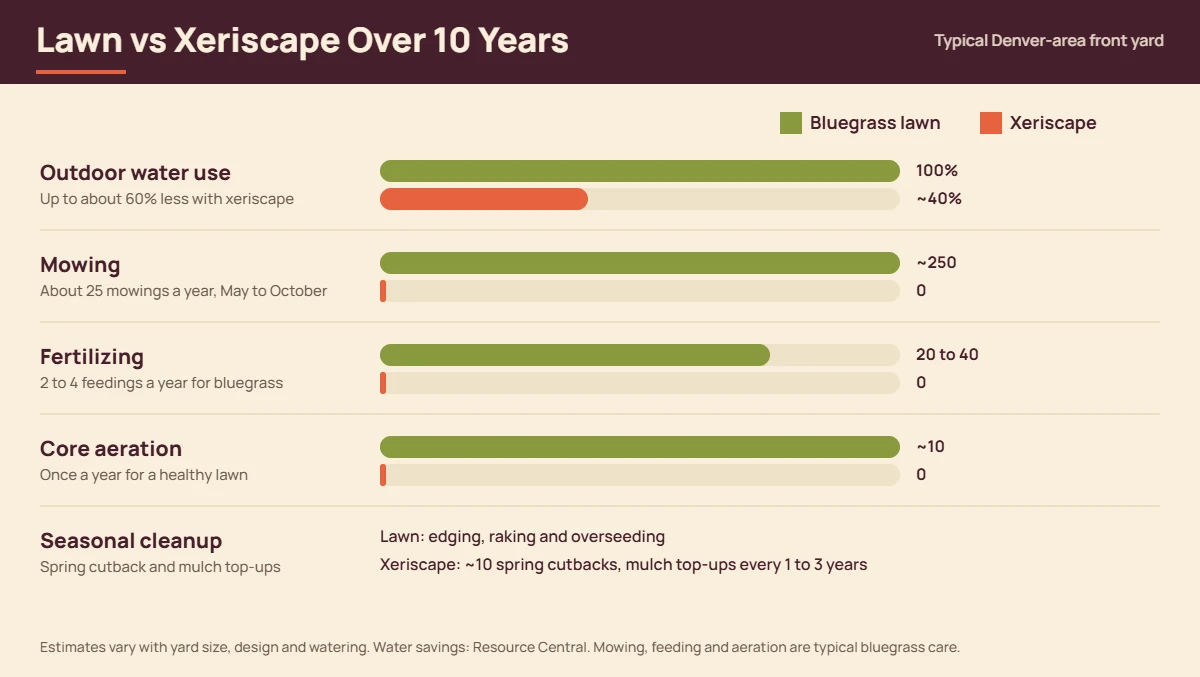
Less weekly work. No mowing from May to October, no fertilizer schedule and no annual aeration. An established xeriscape mostly needs a spring cleanup, some weeding and a mulch top-up every few years. Our xeriscape maintenance calendar shows what the year really looks like.
Drought resilience. When watering days are cut, lawns brown out first. Drip-watered beds can be watered any day under Denver’s current rules, so a xeriscape keeps its color when lawns around it struggle.
Habitat. Native and regionally adapted plants feed bees, butterflies and birds in a way turf never will. Our guide to Colorado native plants for landscaping lists reliable choices.
The real downsides
Upfront cost. A professionally installed xeriscape costs more than new sod because it includes design, soil prep, drip irrigation, plants, mulch and edging. Patience. New plantings look thin the first summer and usually fill in by the second or third. Design risk. The xeriscapes people regret are almost always too much rock and too few plants, which makes a yard hotter and harder to love.
Why Xeriscaping Makes Sense in Colorado Now
- Drought rules: Denver Water declared a Stage 1 drought in March 2026, limiting single-family lawn watering to two assigned days a week, while trees, shrubs and perennials on drip or a handheld hose can be watered any day. Our guide to Denver watering restrictions has the full schedule.
- Water costs: Rising rates and drought pricing make keeping a large lawn green more expensive every summer.
- Rebates: Denver Water offers turf replacement discounts of up to $750, though 2026 funds were fully allocated by late March, and Aurora Water rebates have paid per square foot for converted lawn.
- HOA protections: Colorado law bars HOAs from banning xeriscape or requiring turf, and a 2023 law added required pre-approved water-wise designs. Our article on Colorado HOA xeriscape law explains your rights.
Is Xeriscaping Worth It Financially?
Up front, sod is cheaper. Over time, the gap narrows because a xeriscape saves money every season on water, mowing, fertilizer and aeration, whether you do the work yourself or pay a lawn service.
| Cost | Bluegrass lawn | Xeriscape |
|---|---|---|
| Installation (Denver area) | Lower | About $10 to $20 per sq ft; basic conversions from about $6 |
| Outdoor water | High; frequent summer watering | Up to about 60% less once established |
| Mowing | Weekly from about May to October | None |
| Fertilizer and aeration | Several times a year | None |
| Ongoing upkeep | Edging, raking, overseeding | Spring cutback, weeding, mulch every 1 to 3 years |
| Rebates | None | May offset part of the cost |
The payback is fastest when you’re converting a large, thirsty lawn, paying for lawn care, or planning to stay in the home for several years. Our breakdowns of xeriscape cost in Colorado and xeriscape vs lawn cost over time run the numbers in more detail.
When Xeriscaping Is Most Worth It
- Front yards and parkway strips you rarely use for play
- Slopes that are hard to mow and water evenly
- Hot south- or west-facing areas where lawn burns out
- Homeowners who pay for lawn care or have high summer water bills
- Anyone tired of watching grass brown during restrictions
- Clay-soil yards where water runs off instead of soaking in; our guide to xeriscaping on clay soil explains how to prep it
When to Keep Some Lawn
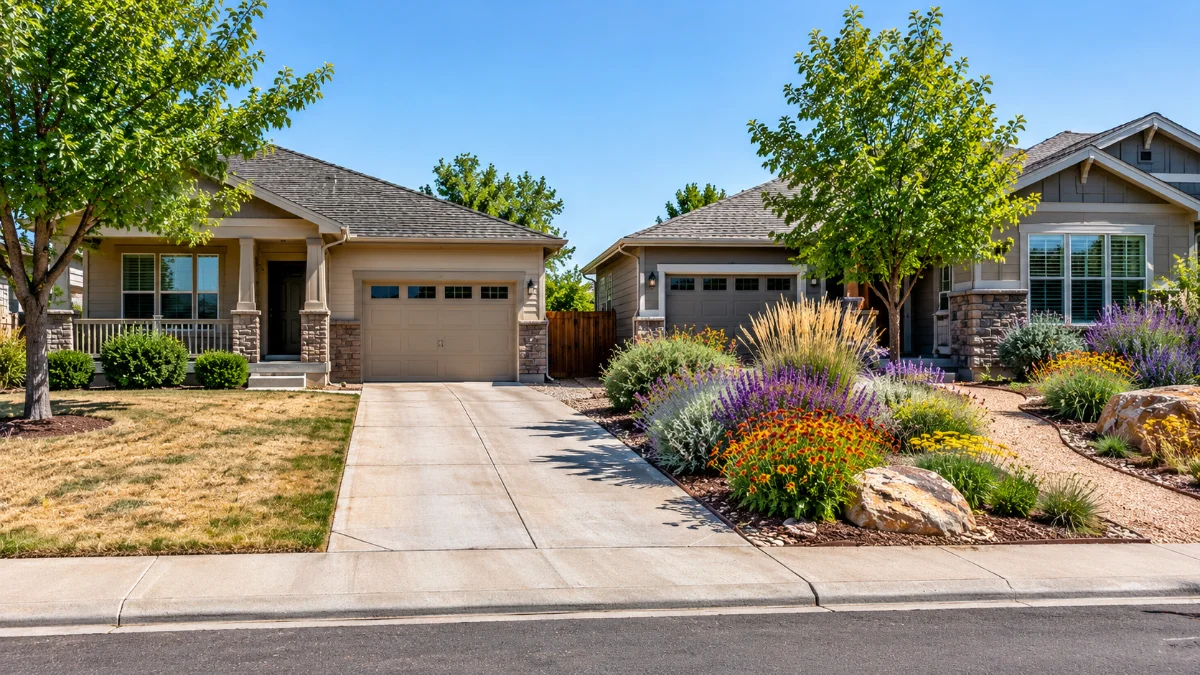
Lawn still earns its place for kids’ play areas, pet zones and small, efficiently watered panels where you actually sit or play. A hybrid approach often gives the best balance: convert most of the front yard and parkway, keep a modest backyard lawn, and water it efficiently. If you want something soft underfoot without bluegrass, our guide to lawn alternatives for Colorado covers buffalograss, clover mixes and groundcovers.
Does Xeriscaping Increase Home Value?
There’s no single number for this, but a well-designed, low-maintenance yard is a selling point, especially as watering restrictions become routine along the Front Range. Curb appeal is what matters. A full, layered xeriscape with paths and focal points reads as an upgrade. A yard of bare rock with a few plants can do the opposite. Our front yard landscaping ideas show what looks finished from the street.
How to Make Sure Your Xeriscape Is Worth It
- Apply for rebates first. Most programs require approval before you remove any turf.
- Start with a design that groups plants by water needs and includes paths, seating and focal points.
- Use enough plants. Aim for plants to cover at least half of each bed at maturity. Our list of the best xeriscape plants for Colorado is a good starting point.
- Prep the soil. Remove turf completely and loosen compacted clay where you plant.
- Install drip irrigation and water consistently through the first two seasons; our guide to drip irrigation in Colorado explains how.
- Balance rock and mulch. Use rock in hot strips and drainage areas and wood mulch in planting beds. These xeriscape rock ideas show how to keep rock from taking over.
- Plan for year-one weeding. Pull weeds while they’re small and the yard will need much less attention later.
For a step-by-step conversion plan, see our guide on how to replace your lawn with xeriscape.
Frequently Asked Questions
For most homeowners, yes. It saves water and maintenance, holds up during drought restrictions and can qualify for rebates.
Well-designed, low-maintenance landscaping appeals to buyers, especially as water restrictions become common. Poorly designed rock yards can have the opposite effect.
Resource Central estimates a well-designed, well-maintained xeriscape can cut outdoor water use by up to about 60% compared with a traditional lawn.
Higher upfront cost, an establishment period and the need for good design to avoid a sparse or weedy look.
No. Good xeriscapes are full of plants, with rock and mulch used as accents and ground cover.
Most plants fill in within two to three growing seasons, with good coverage often visible by the second summer.
Start Your Xeriscape
Ridgewell Landscape and Design designs and installs xeriscapes across Denver and the Greater Denver Metro, with plant-rich designs that look good from the first season. Explore our xeriscape landscaping services or book a free consultation.
Sources
Prices are typical installed ranges for the Denver metro area in 2026 and vary by site. Rules and programs change, so confirm current details for your address. Last updated November 2026.