
An attached pergola connects to your house with a ledger board on one side and posts on the other, extending your indoor living space outdoors and using fewer posts. A freestanding pergola stands on its own four (or more) posts anywhere in the yard. Attached pergolas are great for shading patios right off the house but require careful flashing, structural checks and usually a permit. Freestanding pergolas offer more placement flexibility and avoid connecting to the house, but need more posts and footings.
Both can be beautiful. The right choice depends on where you want shade, your home’s construction and your budget. Here’s a side-by-side comparison.
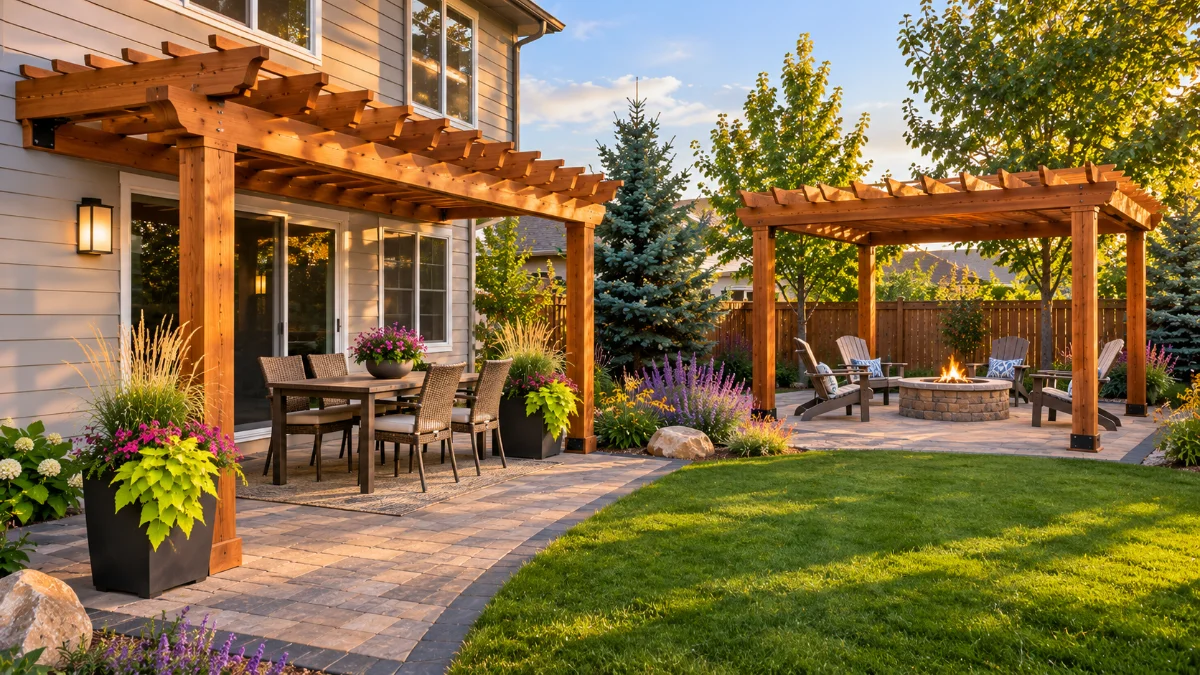
Attached vs Freestanding Pergola at a Glance
| Factor | Attached pergola | Freestanding pergola |
|---|---|---|
| Support | Ledger on house plus posts | Four or more posts |
| Location | Next to the house | Anywhere in the yard |
| Cost | Often similar or slightly less (fewer posts) | Slightly more posts and footings |
| Installation complexity | Ledger attachment, flashing, roofline and siding details | Simpler connection; all footings in the ground |
| Leak and rot risk | Ledger must be flashed properly | No connection to house |
| Snow and drainage | Must manage roof runoff and snow sliding from the house | Independent of house roof |
| Permits | Typically required | Typically required in Denver |
| Best for | Shading patio doors, dining off the kitchen | Fire pits, hot tubs, garden rooms, pool areas |
Pergola Attached to House: What to Know
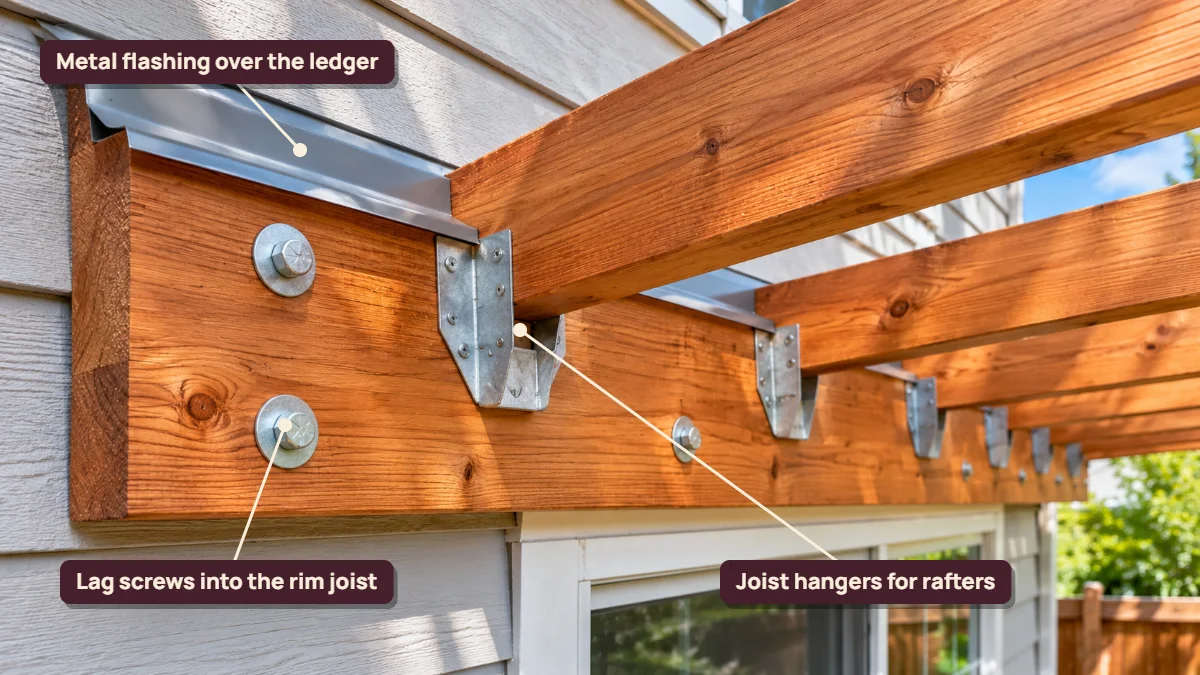
- Ledger connection: The ledger must be bolted into the house’s structural framing, not just siding or brick veneer.
- Flashing: Proper flashing above the ledger prevents water from getting behind siding, which can cause rot.
- Roofline: Check eave height, gutters and roof snow that may slide onto the pergola.
- Windows and doors: Plan beam heights so they don’t block views or door swings.
- House structure: Some homes, especially those with certain siding, stucco or cantilevered floors, may need a freestanding design placed close to the house instead.
Freestanding Pergola: What to Know
- Flexible placement: Define an outdoor room anywhere: over a fire pit, a hot tub or a garden seating area.
- Footings: Each post needs a footing, commonly about 36 inches deep in Denver for frost protection.
- Stability: Freestanding pergolas need bracing or rigid connections to resist wind.
- Near-house option: A freestanding pergola can sit right next to the house without touching it, avoiding ledger issues.
Colorado Considerations
- Snow: Roof snow can slide onto attached pergolas; design for added loads or avoid placing covers under steep roof edges; our guide to pergola snow load in Colorado explains the risks.
- Wind: Both types need proper connections and footings for Front Range wind.
- Sun angle: Orient rafters and slats to block afternoon western sun.
- Permits: Denver requires zoning and building permits for pergolas, as our guide to Denver patio and pergola permits explains.
- HOAs: Usually require design approval for both types.
Which Should You Choose? Attached or Freestanding Pergola
Choose attached if you want shade right outside your patio door, a seamless extension of the house and your home’s framing can support a ledger.
Choose freestanding if you want a destination in the yard, want to avoid any connection to the house, or your home’s construction makes attachment difficult.
Our pergola cost guide breaks down budgets for both, and our comparisons of wood vs aluminum vs steel pergolas and the best wood for a pergola help with materials. Planning a freestanding pergola on an existing patio? Here’s how to build a pergola on pavers with proper footings.
Frequently Asked Questions
Attached pergolas are best for shading areas right off the house. Freestanding pergolas are more flexible and avoid connecting to the home.
Not always. The ledger must connect to structural framing with proper flashing. Some homes are better suited to a freestanding design placed nearby.
It can be slightly cheaper because it uses fewer posts, but ledger work and flashing add labor.
Yes. Denver requires zoning and building permits for pergolas, attached or freestanding.
If the ledger isn’t flashed correctly, water can get behind siding. Proper flashing and installation prevent this.
In Denver, footings are commonly required to extend about 36 inches below grade for frost protection.
Build the Right Pergola with Ridgewell Colorado
Ridgewell Landscape and Design builds attached and freestanding pergolas across Denver and the Greater Denver Metro. Explore our pergola services or book a free consultation.