

Hail-resistant plants for Colorado are usually those with small, fine, narrow, waxy or fuzzy leaves and flexible stems that shed hailstones instead of shredding. Good choices include ornamental grasses (blue grama, little bluestem, feather reed grass), conifers (junipers, pines), succulents (sedum, ice plant, yucca), and tough perennials and shrubs like yarrow, Russian sage, catmint, penstemon, potentilla, rabbitbrush and Apache plume. No plant is hail-proof, but these recover quickly. Large, soft-leaved plants like hostas, cannas and big-leaf hydrangeas suffer the most.
The Front Range sits in the heart of “Hail Alley.” Hail season usually runs from about mid-April into September, and Colorado State University’s climate data shows severe hail days peaking in early to mid-June. One storm can strip a garden in minutes, so plant choice and layout matter. Here’s how to pick plants that bounce back and design beds that still look good the morning after.
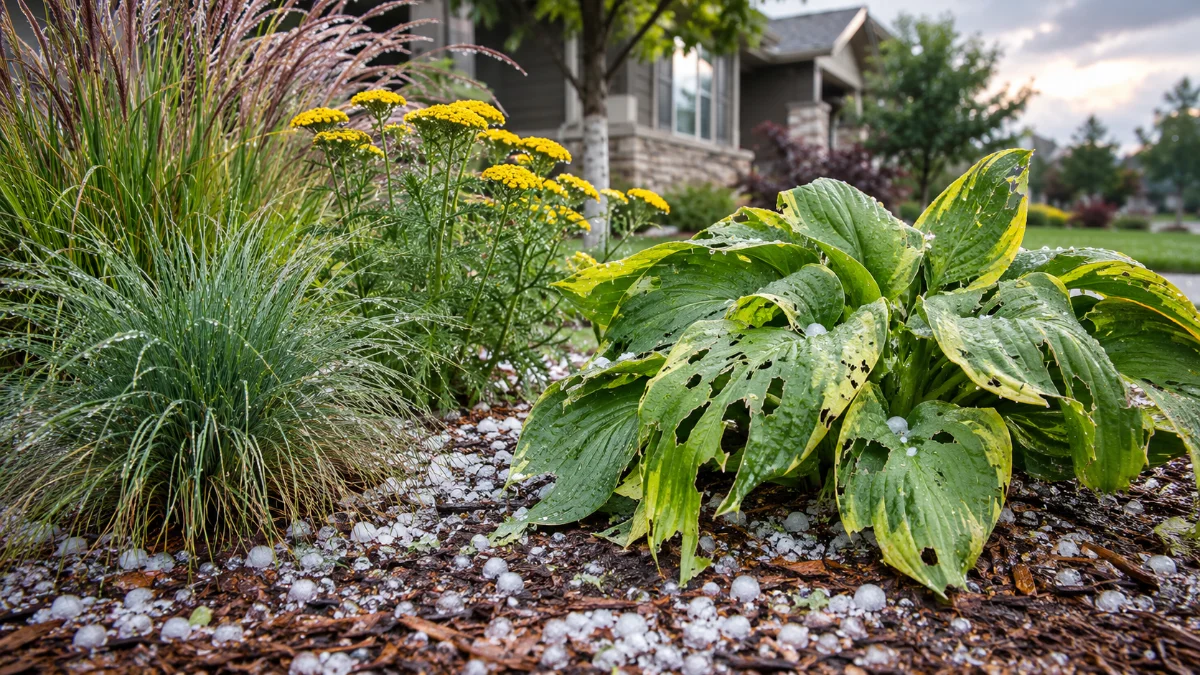
What Makes a Plant Hail-Resistant?
- Fine or narrow leaves: Smaller targets that bend and let hail pass through.
- Flexible stems: They bend under impact instead of snapping.
- Succulent or waxy leaves: Thick, smooth leaves resist tearing.
- Fuzzy or silver foliage: Often tougher, and usually drought tolerant too.
- Ability to regrow: Plants that resprout from the base recover within weeks.
Many of these traits are the same ones that help plants handle Colorado’s sun, wind and dry air, which is why so many Colorado native plants hold up well in hail.
Best Hail-Resistant Plants for Colorado
| Plant | Type | Why it handles hail | Sun and water |
|---|---|---|---|
| Blue grama | Native grass | Fine blades bend; regrows quickly | Full sun, low |
| Little bluestem | Native grass | Upright, fine stems shed hail | Full sun, low |
| Feather reed grass | Ornamental grass | Stiff, narrow stems spring back | Full sun, moderate |
| Switchgrass | Native grass | Narrow leaves, sturdy stems | Full sun, low to moderate |
| Yarrow | Perennial | Finely divided leaves; resprouts from the base | Full sun, low |
| Russian sage | Perennial | Small silvery leaves on wiry stems | Full sun, low |
| Catmint | Perennial | Small leaves; reblooms after shearing | Full sun, low |
| Penstemon | Perennial | Narrow leaves, flexible flower spikes | Full sun, low |
| Agastache and blanket flower | Perennials | Fine foliage; quick to rebloom | Full sun, low |
| Sedum and hardy ice plant | Succulents | Thick leaves resist tearing | Full sun, low |
| Yucca | Succulent shrub | Stiff, leathery leaves | Full sun, very low |
| Potentilla | Shrub | Small, dense leaves | Sun to part shade, low to moderate |
| Rabbitbrush and Apache plume | Native shrubs | Tiny or narrow leaves | Full sun, very low |
| Junipers and pines | Conifers | Needles let hail slide off | Full sun, low |
| Honeylocust | Shade tree | Tiny leaflets instead of broad leaves | Full sun, moderate |
For more options, see our guides to Colorado perennials and the best xeriscape plants for Colorado. If you’re choosing a shade tree, our list of the best trees for Denver covers hardiness and mature size as well.
Plants That Struggle With Hail
- Hostas and other large, soft-leaved shade plants
- Cannas, elephant ears and other tropicals
- Big-leaf hydrangeas
- Large-leaved vegetables like squash and leafy greens
- Delicate annuals with soft stems
You can still grow these. Just plant them in sheltered spots or be ready to cover them when storms are in the forecast.
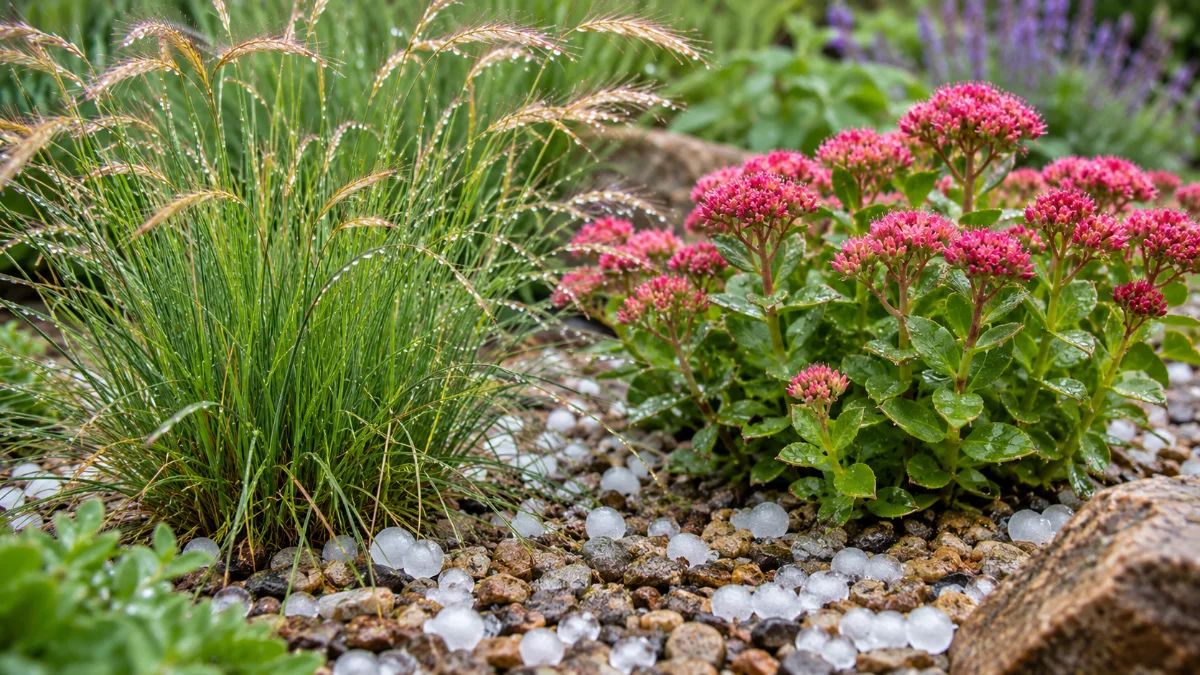
Designing a Hail-Resilient Garden
- Mix in grasses and conifers so the garden keeps its structure after a storm.
- Layer plants so tougher, fine-leaved plants surround more delicate ones and take the first hit.
- Use shelter: Put tender plants under eaves, beside walls or beneath tree canopies where they get some cover.
- Protect vegetables with hail cloth over hoops or frames you can cover quickly.
- Choose shredded mulch that knits together and won’t wash away in storm downpours; our rock vs mulch comparison explains the options.
- Plan for regrowth: Many perennials rebloom after being cut back, so a June storm doesn’t have to end the season.
- Shelter outdoor living spaces: A solid-roof or louvered pergola protects patio furniture and outdoor kitchens. Our guide to covered outdoor kitchens covers options.
How to Protect Plants When Hail Is Forecast
- Watch for severe thunderstorm warnings on spring and summer afternoons, when most Front Range hail falls.
- Cover small plants with buckets, plastic pots or laundry baskets weighted with a rock.
- Drape row covers, old sheets or hail cloth over vegetable beds and raised planters, supported so the fabric doesn’t crush plants.
- Move containers and hanging baskets under a porch or into the garage.
- Remove covers once the storm passes so plants don’t overheat.
What to Do After a Hailstorm
- Wait for the storm to pass completely and check for safety hazards like downed branches.
- Remove broken stems and shredded leaves to reduce disease.
- Cut back badly damaged perennials; most established plants regrow within a few weeks.
- Check trees for broken branches and torn bark, and prune cleanly back to healthy wood.
- Water if the soil is dry, and hold off on heavy fertilizing while plants recover.
- Check sprinkler heads and drip irrigation lines for damage.
Our xeriscape maintenance calendar covers the rest of the seasonal care that keeps beds healthy enough to recover quickly.
Frequently Asked Questions
Ornamental grasses, conifers, succulents and fine-leaved perennials like yarrow, Russian sage and catmint handle hail best.
No plant is completely hail-proof, but fine-leaved, flexible and succulent plants recover much faster.
Most established perennials regrow after hail. Cut back damaged stems and keep them watered.
Use hail cloth, row covers or buckets for small plants, and plant tender species in sheltered spots.
Pines, junipers and fine-leaved trees like honeylocust tend to hold up better than large-leaved trees.
Along the Front Range, hail season usually runs from about mid-April into September, with severe hail peaking in early to mid-June.
Design a Resilient Landscape
Ridgewell Landscape and Design creates planting plans that stand up to Colorado hail, drought and snow across Denver and the Greater Denver Metro. Explore our landscape design services or book a free consultation.