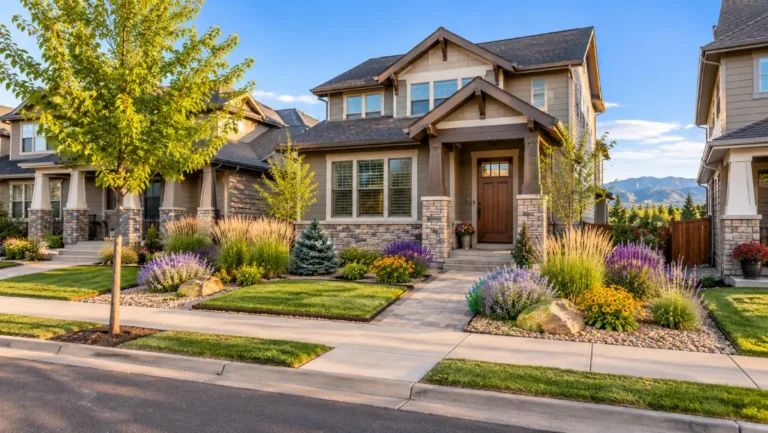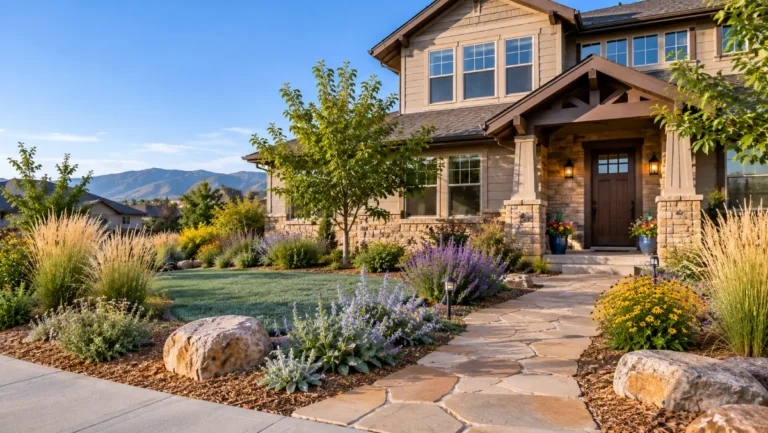

The best xeriscape rock ideas treat stone as the supporting cast, not the whole show. A river rock dry creek bed, a few well-placed boulders, a crushed granite path and a gravel garden packed with drought-tolerant plants all look at home along the Front Range. For xeriscape mulch, put rock where heat, wind and runoff are strongest, and use shredded wood mulch around perennials, shrubs and trees that like cooler roots. Lay rock about 2 to 3 inches deep and wood mulch about 3 inches deep.
Rock is one of the most useful materials in a Colorado xeriscape, but it’s also where many yards go wrong. A front yard covered wall to wall in white rock gets hot, glares in the afternoon sun and rarely looks finished. Below are 12 ideas we use to get the balance right, plus how to choose the right stone, when wood mulch is the better call, how to install rock so it lasts, and what it typically costs in the Denver area.
How Much Rock Is Too Much?
A good rule of thumb: once plants reach their mature size, they should cover at least half of each planting bed. Rock fills the gaps between them, frames paths and handles the hot or wet spots where plants struggle. If you can see more stone than foliage from the street, the design usually needs more plants, a few boulders for structure or a change in rock size and color.
Planting density matters for more than looks. Plants shade the ground and cool the air, so a well-planted bed stays noticeably cooler than bare rock on a July afternoon. Picking tough, water-wise species is the first step, and our list of the best xeriscape plants for Colorado is a good place to start.
12 Xeriscape Rock Ideas for Colorado Yards
1. Dry creek bed
A dry creek bed is a shallow, winding channel lined with river rock and cobble. It carries water from downspouts and storms away from the house, then looks like a natural streambed the rest of the year. Dig the channel 6 to 12 inches deep and make it wider at the curves, set larger cobble along the edges and smaller river rock in the bottom, and finish with a few boulders on the banks. If you have a soggy corner or water pooling near the foundation, pair the creek with other backyard drainage solutions.
2. Boulder groupings
Boulders give a xeriscape its bones. Group them in odd numbers, usually three in different sizes, and bury each one a third of the way so it looks like it has always been there. Colorado moss rock and weathered granite in warm buff and rust tones blend with the foothills and with most home exteriors.
3. Crushed granite paths
Angular crushed granite, or finer breeze (decomposed granite), compacts into a firm walking surface that drains well and costs far less than pavers. Lay it 3 to 4 inches deep over a compacted base and hold the edges with steel edging so it doesn’t spread into planting beds. For more layouts, browse our garden path ideas.
4. Gravel garden
A gravel garden plants low-water perennials, grasses and shrubs directly through a layer of gravel mulch. The idea comes from European dry gardens and high-desert landscapes, and it suits Colorado because many native plants prefer lean soil and a dry crown. Choose a crushed rock about 3/8 to 3/4 inch, keep it about 2 inches deep around plants and plant densely so the gravel reads as a background.

5. Flagstone stepping stones
Stepping stones through gravel or low groundcover let you reach every part of a bed without compacting the soil. Set Colorado flagstone about 2 feet apart, center to center, so the spacing matches a comfortable stride, and bed each stone in a few inches of sand or fine gravel so it doesn’t rock.
6. Rock garden on a slope
Sunny slopes are hard to water and hard to mow, which makes them ideal for a rock garden. Bury stones on their sides so they act like small terraces that hold soil, then tuck alpine and rock garden plants such as hens and chicks, creeping phlox and ice plant in between. On steeper ground, read our guide to landscaping a steep slope before you start.
7. Parkway strip with rock mulch
The strip between the sidewalk and street gets road salt, reflected heat and foot traffic, and lawn there rarely looks good. Rock mulch with low, tough plants like blue grama, creeping thyme and pussytoes handles all of it. Keep plants under about 2 feet so drivers can see, and check city rules first. If you’re replacing lawn, find out whether Denver Water turf replacement incentives can help cover the cost.
8. Contrasting rock bands
Two rock colors or sizes side by side can mark different areas, such as a path, a dry creek and a planting bed, and add pattern to a large space. Keep the palette simple. Two or three stones in related earth tones look intentional, while five or six start to look busy.
9. Rock and wood mulch combination
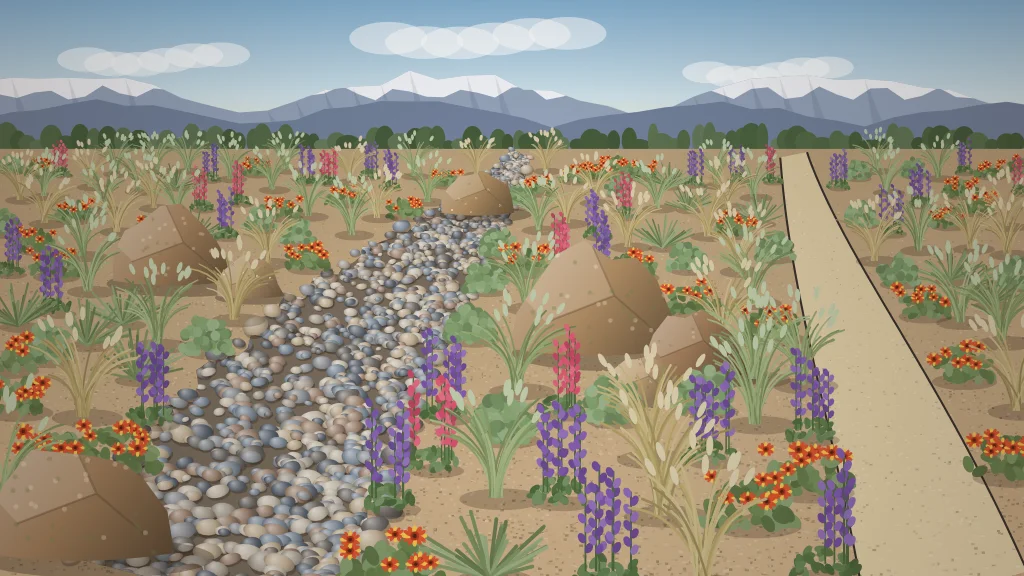
Most of our xeriscapes use both. Rock goes next to pavement, in drainage areas and in the first 5 feet around the house, and wood mulch goes in planting pockets and around trees. Steel or stone edging between them keeps the materials from mixing. The diagram below shows a typical layout.
10. Boulder seating
A flat-topped boulder at the edge of a path or under a tree makes an informal seat that never needs maintenance. Look for stones about 16 to 20 inches tall with a broad, level top, and set them on compacted base so they don’t settle unevenly.
11. Rock around the foundation in wildfire areas
In foothills and grassland neighborhoods, the Colorado State Forest Service recommends non-combustible materials such as rock, gravel and pavers in the first 5 feet around the house, with no wood mulch. Our guide to defensible space landscaping in Colorado explains all three home ignition zones.
12. Stone edging
Cobble or flagstone edging gives a natural border between beds, lawn and paths. Set the stones into the soil rather than on top of it so mowers and foot traffic don’t knock them loose, and use steel edging behind them where rock mulch meets lawn.
Choosing the Right Rock for Your Xeriscape
Rock size and shape matter as much as color. Round rock rolls underfoot, angular rock locks together, and fine rock compacts. Here’s how the common landscape rocks around Denver compare.
| Rock type | Typical size | Best for | Keep in mind |
|---|---|---|---|
| River rock | 1 to 3 in | Dry creek beds, drainage swales, accents | Rounded, so it shifts underfoot; not for paths |
| Crushed granite | 3/8 to 1.5 in | Gravel gardens, mulch in beds, parkway strips | Angular pieces lock together and stay put |
| Breeze (decomposed granite) | 1/4 in and smaller | Paths and small patios | Compacts firm; needs edging and a good base |
| Cobble | 3 to 8 in | Creek edges, borders, erosion control | Heavier to move; great on slopes |
| Boulders | 18 in and up | Focal points, seating, slope retention | Usually placed by machine; plan access |
| Flagstone | 1 to 2 in thick slabs | Stepping stones, paths, edging | Sandstone types can flake if poorly drained |
For color, warm tans, buffs and rose tones match Colorado’s natural stone and most brick and stucco homes. Very light or white rock reflects heat and glare onto plants, windows and siding, which is the same reason light vs dark patio materials behave so differently in the sun.
Xeriscape Mulch: Rock vs Wood
Rock and wood mulch both cut evaporation and weeds, but they work differently. Rock lasts for years and stays put in wind and runoff, while wood mulch keeps soil cooler and adds organic matter as it breaks down. Our full comparison of rock vs mulch in Colorado covers lifespan and soil health in more detail.
| Use rock mulch for | Use wood mulch for |
|---|---|
| Hot strips next to driveways and sidewalks | Perennial and shrub beds |
| Dry creeks and drainage swales | Around trees, kept a few inches off the trunk |
| Plants that prefer lean, dry soil, like many penstemons, yuccas and cacti | Plants that prefer cooler roots |
| Windy, exposed spots and slopes | New plantings that need help getting established |
| The first 5 feet around the house in wildfire areas | Vegetable and pollinator gardens |

How to Install Rock Mulch the Right Way
Good installation is the difference between rock that looks clean for a decade and rock that sinks, spreads and fills with weeds in two seasons.
- Remove turf and weeds completely. Strip sod and dig out perennial weeds like bindweed by the roots. Anything left alive will push through the rock.
- Grade the soil away from the house. The ground should fall about 6 inches over the first 10 feet from the foundation. This is especially important on the expansive clay soil common around Denver.
- Install drip irrigation before the rock. Plants in rock still need water to establish. Run drip irrigation lines and emitters first so you’re not digging through stone later.
- Set edging. Steel or stone edging between rock, lawn, wood mulch and paths keeps every material where it belongs.
- Add fabric only where it helps. A permeable landscape fabric under rock keeps stone from sinking into soil. It won’t stop weeds that sprout in dust and debris on top, and it isn’t needed under wood mulch.
- Plant, then spread rock 2 to 3 inches deep. Use the shallower end for small gravel and the deeper end for larger stone. Pull rock back a few inches from plant crowns and stems.
- Leave a gap at the siding. Keep rock below the bottom of the siding and away from weep holes and vents so it doesn’t trap moisture or splash debris onto the house.
Common Mistakes to Avoid
- Too much rock, too few plants: It creates heat and glare and looks barren. Aim for plants to cover at least half of each bed at maturity.
- White or very light rock everywhere: It reflects heat onto plants and the house and shows dirt quickly.
- Round river rock on paths: It rolls underfoot. Use crushed granite or breeze where people walk.
- No edging: Rock migrates into lawn, paths and beds, and it’s hard on mowers.
- Rock against siding: It can trap moisture or splash debris; leave a small gap.
- Skipping irrigation: Plants in rock still need drip water for the first two or three seasons.
- Wood mulch next to the house in fire-prone areas: Keep the first 5 feet non-combustible.
How Much Does Xeriscape Rock Cost?
Prices vary with stone type, delivery distance and how easy your yard is to reach, but these are typical installed costs around the Denver metro.
| Item | Typical installed cost |
|---|---|
| Rock mulch (crushed granite, river rock) | $2 to $5 per sq ft |
| Wood mulch | $1 to $2.50 per sq ft |
| Steel or stone edging | $8 to $20 per linear ft |
| Boulders, placed | $150 to $800 or more each |
| Flagstone path | $20 to $35 per sq ft |
Rock costs more up front than wood mulch, but it rarely needs replacing, while wood mulch usually needs a top-up every one to three years. For whole-project budgets, including design, plants and irrigation, see our breakdown of xeriscape cost in Colorado.
Keeping Rock Areas Looking Clean
Rock isn’t maintenance-free, but it’s close. Blow leaves and debris off rock areas in spring and fall before they break down into soil where weeds can sprout. Pull weeds while they’re small, rake stone back into place after heavy storms and top up thin spots every few years. Wood mulch areas need a fresh layer every one to three years. Our seasonal xeriscape maintenance calendar walks through each task month by month.
Want to see these ideas in a real yard? Our hillside flagstone path and rock garden project turned a steep, dry backyard below a deck into curving flagstone paths, circular rock gardens and low-water planting, with boulders placed to hold the grade.
Frequently Asked Questions
Crushed granite, river rock and cobble are popular. Choose sizes and colors that suit your design and avoid heat-reflective white rock near plants.
Both have a place. Rock suits hot, dry areas; wood mulch suits perennial and shrub beds.
About 2 to 3 inches, depending on rock size.
A permeable fabric can help keep rock from sinking into soil, but it won’t stop weeds that sprout in debris on top.
Use plenty of plants, boulders for structure, varied rock sizes and some wood mulch areas.
Yes, rock absorbs and radiates heat. Balance it with plants, shade and wood mulch.
Design Your Xeriscape
Ridgewell Landscape and Design builds xeriscapes with the right balance of plants, rock and mulch across Denver and the Greater Denver Metro. Explore our xeriscape landscaping services, see how we approach landscape design, or book a free consultation.