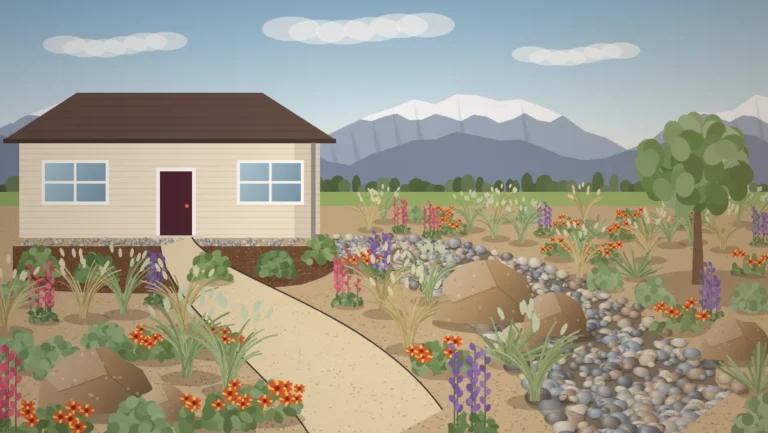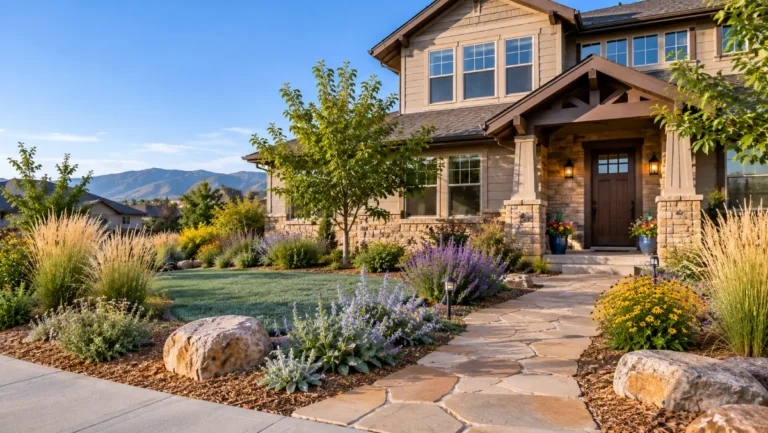

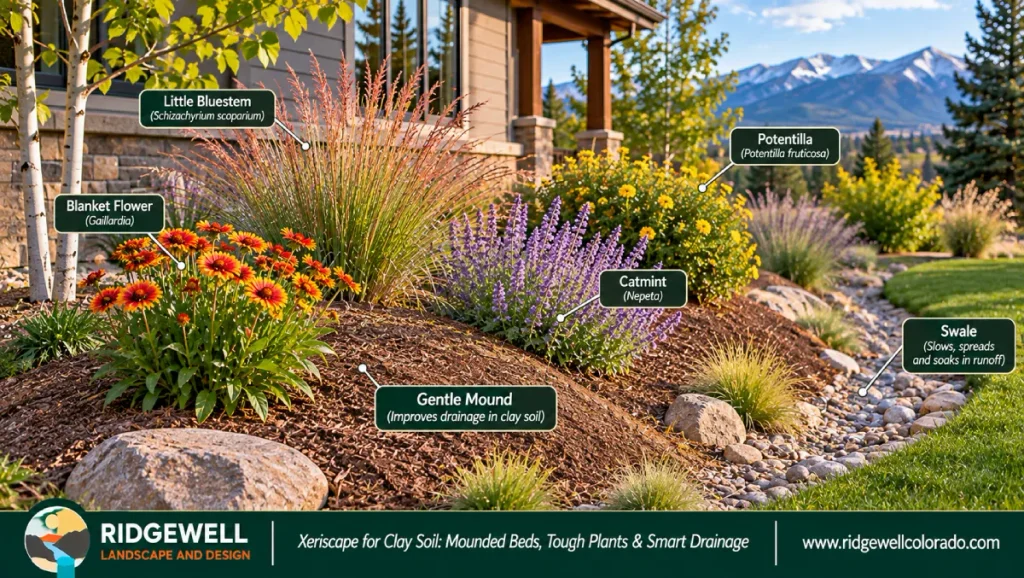
You can absolutely xeriscape in clay soil. The keys are to choose plants that tolerate clay, improve drainage with grading and mounds or berms rather than heavy amendment, water deeply but infrequently with drip irrigation, and avoid over watering, which is the most common cause of xeriscape plant failure in clay. Good plants for clay soil in Colorado include blanket flower, yarrow, cone flower, catmint, Russian sage, little bluestem, switch grass, blue grama, potentilla, rabbitbrush, three-leaf sumac and serviceberry.
Much of the Denver metro sits on clay that drains slowly and can swell when wet. This guide will help you to make it work for a water-wise landscape.
Challenges of Clay Soil for Xeriscape
- Slow drainage: Water sits around roots, which many xeric plants dislike.
- Compaction: Construction and foot traffic make clay dense and hard.
- Swelling and shrinking: Expansive clay moves as moisture levels change, learn how this impacts landscape stability in our guide to expansive clay soil in Denver.
- Cracking when dry: Clay can bake hard in summer.
How to Xeriscape in Clay Soil
1. Choose clay-tolerant plants
Many prairie natives and adapted plants handle clay well. Save plants that demand sharp drainage, like some penstemons and hardy ice plants, for mounds or gravel areas.
2. Improve drainage with grading
Create gentle mounds or berms so roots sit above wetter soil, and slope beds so water moves away from the house. Swales can carry excess water.
3. Amend modestly and broadly
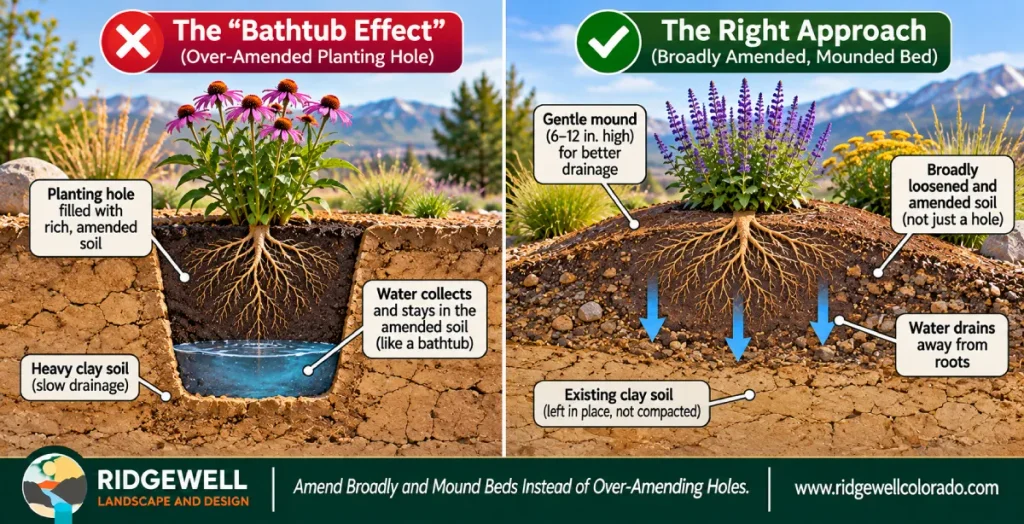
Loosen compacted soil and work in a modest amount of compost across the whole bed, not just in planting holes. Heavily amending only the hole can create a “bathtub” that holds water.
4. Water deeply and less often
Clay holds water longer than sandy soil. Use drip irrigation with longer, slower run times and fewer watering days, Learn how to set up an efficient schedule in our guide to drip irrigation in Colorado.
5. Mulch
Mulch evens out soil moisture and temperature and keeps clay from crusting.
6. Avoid working wet clay
Digging or walking on wet clay compacts it. Wait until it’s moist but crumbly.
Plants for Clay Soil in Colorado
| Type | Clay-tolerant choices |
|---|---|
| Perennials | Blanket flower, yarrow, purple coneflower, catmint, Russian sage, coreopsis, prairie coneflower, salvia |
| Grasses | Little bluestem, switchgrass, blue grama, feather reed grass |
| Shrubs | Potentilla, rabbitbrush, three-leaf sumac, serviceberry, ninebark, lilac |
| Trees | Bur oak, swamp white oak, hackberry, Kentucky coffeetree |
Expand your garden plan with our detailed overviews of the best xeriscape plants for Colorado
along with the best trees for Denver.
Common Mistakes
- Overwatering on a lawn-style schedule
- Planting drainage-loving plants in low, wet spots
- Over-amending individual planting holes
- Rock mulch over poorly drained clay around plants that need dry roots
- Grading beds toward the foundation
Frequently Asked Questions
Yes. Choose clay-tolerant plants, improve drainage with grading and mounds, water deeply but infrequently and mulch.
Blanket flower, yarrow, coneflower, catmint, Russian sage, little bluestem, switchgrass, potentilla and rabbitbrush do well in clay.
Modestly. Loosen soil and add a little compost across the bed, but avoid heavily amending individual holes.
Less often than in sandy soil. Water deeply and let soil dry somewhat between waterings, adjusting by plant needs and season.
Overwatering and poor drainage are the most common causes. Reduce watering frequency and improve drainage.
Gypsum generally doesn’t improve the structure of Colorado’s typical clay soils much. Organic matter and good grading are more effective.
Build a Xeriscape That Works on Clay
Ridgewell Landscape and Design helps transform yards across Denver and the surrounding Greater Denver Metro into water-wise outdoor spaces. Check out our xeriscape landscaping services today, or book a free consultation with our team.