
The best pavers for Colorado are dense, manufactured concrete pavers that meet the ASTM C936 standard, along with high-quality clay brick and porcelain rated for freezing climates. These materials absorb very little water, so they hold up to freeze-thaw cycles, snow shovels and de-icing salt. Soft natural stones and low-density pavers tend to crack, flake or spall here.
Choosing a paver for the Front Range isn’t only about looks. Our winters can swing above and below freezing day after day, and any material that soaks up water will eventually break down. This guide compares the main paver materials and explains what to look for on a spec sheet.
Why Freeze-Thaw Matters for Pavers
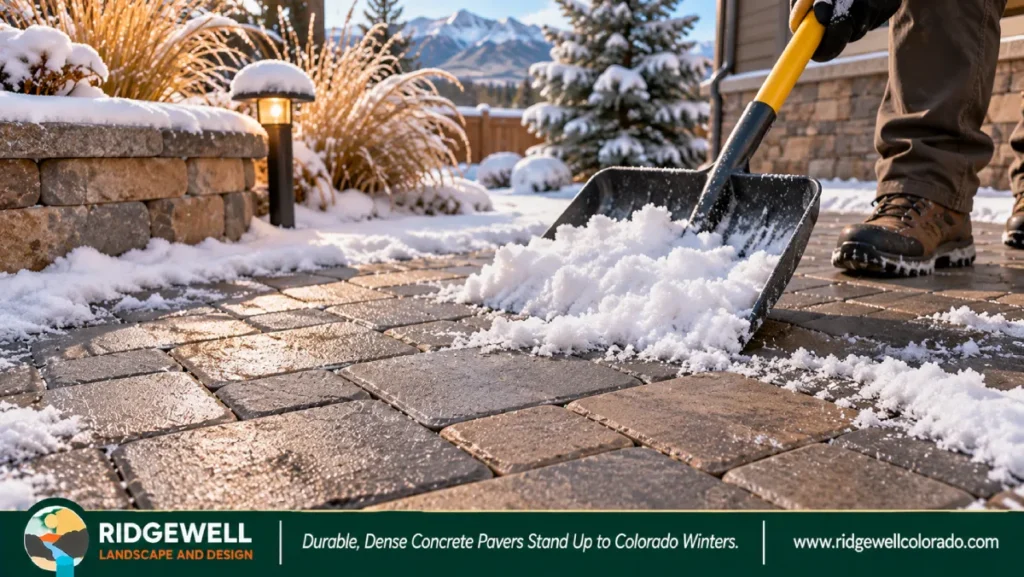
When water soaks into a paver and then freezes, it expands by about 9%. That expansion pushes outward from inside the material. Repeat it dozens of times each winter, and weak or porous pavers start to crack, chip or flake on the surface.
Two properties decide how well a paver survives this:
- Low water absorption: Less water in the paver means less damage when it freezes.
- High compressive strength: Denser, stronger pavers resist cracking from ice pressure and heavy loads.
Best Paver Materials for Cold Climates
| Material | Freeze-thaw performance | Salt resistance | Cost (installed) | Verdict for Colorado |
|---|---|---|---|---|
| Concrete pavers (ASTM C936) | Excellent | Very good | $18 to $38 / sq ft | Best all-around choice |
| Clay brick pavers (ASTM C902, SX class) | Excellent | Excellent | $28 to $42 / sq ft | Great for classic looks |
| Porcelain pavers (2 cm) | Excellent | Excellent | $35 to $60 / sq ft | Great for modern designs |
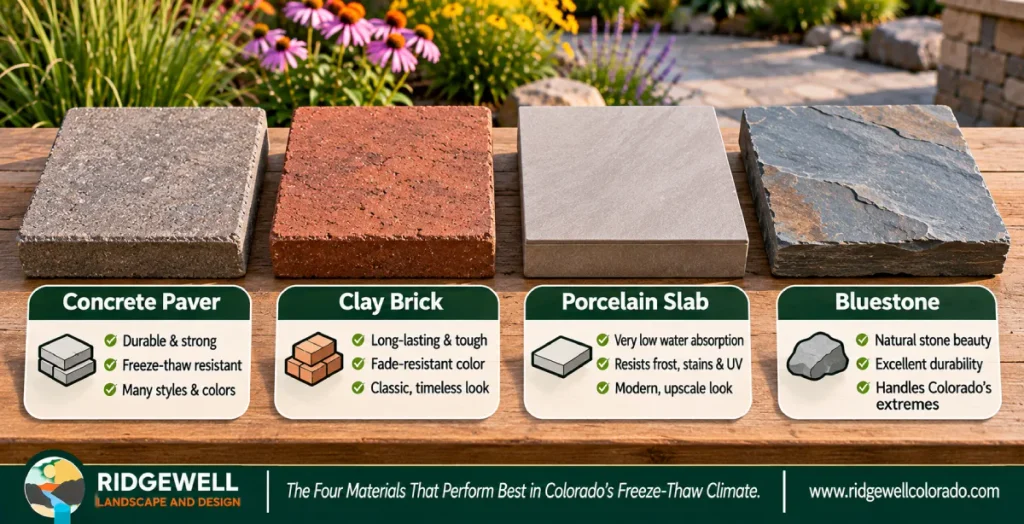
| Granite and bluestone | Very good | Good | $35 to $60 / sq ft | Good, choose dense stone |
| Travertine | Fair to good | Fair | $35 to $60 / sq ft | Use only freeze-rated, filled stone |
| Soft sandstone and limestone | Poor to fair | Poor | Varies | Prone to flaking |
| Low-cost cast “patio stones” | Poor | Poor | Low | Avoid for patios |
1. Concrete pavers
Interlocking concrete pavers are the workhorse of Colorado hardscaping. Pavers that meet ASTM C936 must reach an average compressive strength of at least 8,000 psi and absorb no more than about 5% water by weight. They also must pass freeze-thaw durability testing. That’s well beyond a typical poured concrete patio. Brands such as Belgard, Pavestone and Unilock make pavers to this standard.
2. Clay brick pavers
True clay brick pavers are fired in a kiln, so their color never fades. For Colorado, look for bricks rated SX (severe exposure) under ASTM C902 or C1272. They’re more expensive than concrete but last for generations.
3. Porcelain pavers
Two-centimeter outdoor porcelain absorbs almost no water, which makes it very freeze-resistant. It stays stain-resistant and doesn’t need sealing. It’s best installed on a well-built base by an experienced crew, because the thin slabs can crack if the base isn’t flat and solid.
4. Natural stone
Dense stones like granite and many bluestones handle winter moisture well, whereas softer stones can flake. Always ask your supplier for absorption ratings and explore Colorado flagstone types explained to ensure your flagstone lasts.
What to Look for on a Paver Spec Sheet
- Standard: ASTM C936 for concrete pavers, ASTM C902 SX or C1272 for clay.
- Compressive strength: 8,000 psi average or higher for concrete pavers.
- Absorption: 5% or less for concrete pavers.
- Freeze-thaw testing: Passed ASTM C1645 testing with de-icing salt.
- Thickness: About 2 3/8 inches (60 mm) for patios and walkways; 3 1/8 inches (80 mm) for driveways.
Best Pavers by Use
- Patios: 60 mm concrete pavers or porcelain on a deep base.
- Driveways: 80 mm concrete pavers in a herringbone pattern, which prevents interlock shifting as detailed in our guide on paver driveways.
- Walkways and steps: Textured concrete pavers or brick for grip in snow and ice.
- Pool decks: Light-colored, textured pavers or porcelain that stay cooler and less slippery.
- Wet areas: Permeable concrete pavers that let water drain through.
The Paver Is Only Half the Story
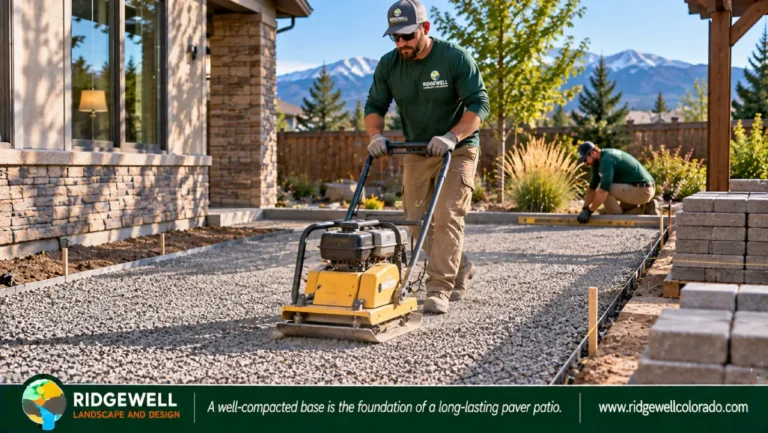
ven the best paver fails on a poor base. In Colorado, a durable patio also needs edge restraints, polymeric joint sand, efficient drainage, and a deep compacted gravel base, learn how to calculate proper excavation in our guide on paver base depth in clay soil and discover how proper installation protects against frost heave and freeze-thaw damage.
Winter Care Tips
- Use a plastic shovel or a snow blower with the blade set slightly high.
- Choose de-icers labeled safe for pavers, and use them sparingly.
- Avoid rock salt on new pavers or natural stone.
- Keep joints full of polymeric sand to limit water getting under the pavers.
Want to see one finished? Take a look at our backyard paver patio with fire pit project.
Frequently Asked Questions
Dense concrete pavers that meet ASTM C936 are the best all-around choice. Clay brick rated SX and outdoor porcelain also perform very well in freeze-thaw climates.
Yes. High-quality concrete pavers have low water absorption and high strength, so they resist freeze-thaw cracking and de-icing salt better than poured concrete.
Travertine can work if it’s dense, filled and rated for freezing climates, but it’s riskier than concrete, brick or porcelain. Many homeowners choose a travertine-look concrete paver instead.
Quality pavers on a proper base rarely crack. Cracking usually comes from porous, low-strength materials or a weak base that lets pavers rock and flex.
Use 60 mm (about 2 3/8 inches) pavers for patios and walkways. Driveways need 80 mm (about 3 1/8 inches) pavers to handle vehicle loads.
Get Expert Help Choosing Pavers
Ridgewell Landscape and Design installs freeze-thaw rated pavers across Denver and the Greater Denver Metro, and every paver installation is backed by our 5-year paver warranty. Visit our paver patio services page or book a free consultation to see samples in person.
Prices are typical installed ranges for the Denver metro area and vary by site. Rules and programs change, so confirm current details for your address. Last updated November 2026.