
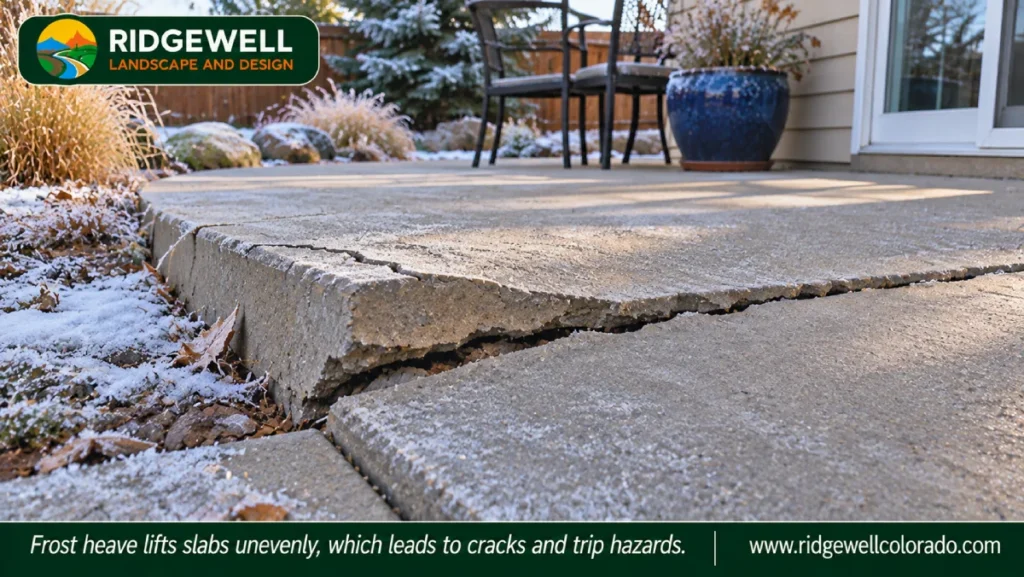
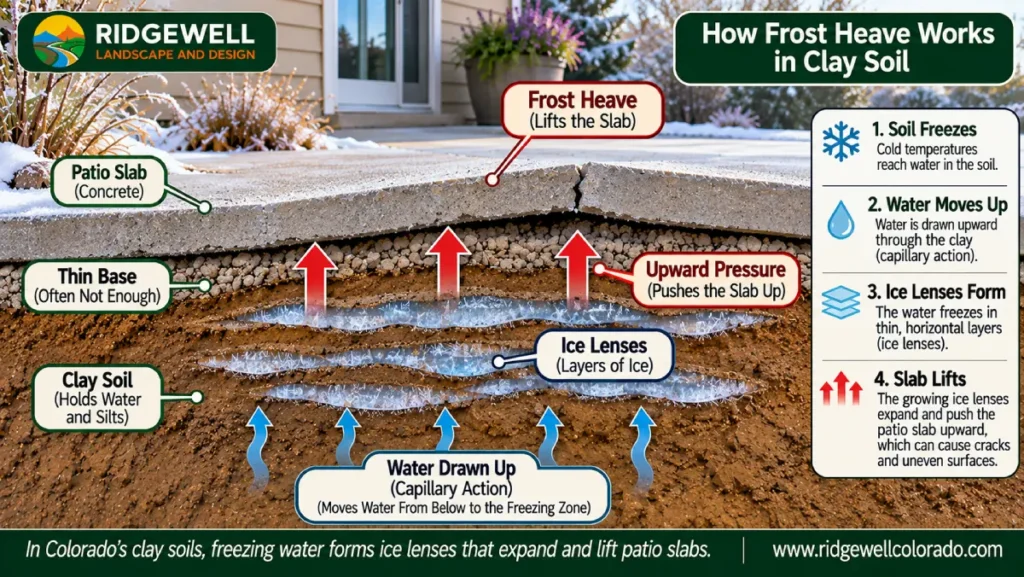
Frost heave happens when water in the soil under a patio freezes, expands and forms ice layers that push the surface upward. When it thaws, the ground settles back unevenly. Over Colorado’s many freeze-thaw cycles, this lifts and cracks concrete, tilts pavers and pushes walls out of line. The fix is prevention: keep water out from under hardscapes with good drainage, use a deep, well-draining gravel base and choose flexible materials like pavers.
Winter in the Denver area isn’t one long freeze. Temperatures swing above and below 32 degrees again and again, which is exactly what drives frost damage. Here’s how it works and how to protect your patio, walkways and walls.
What Is Frost Heave?
Frost heave needs three things at once:
- Freezing temperatures reaching into the soil
- Frost-susceptible soil, such as silts and clays that pull water upward
- A supply of water in or under the soil
As the ground freezes, fine-grained soils draw water up toward the freezing zone, where it builds into ice layers called ice lenses. These layers can lift the surface far more than water’s normal 9% expansion would suggest. Remove any one of the three ingredients, and frost heave stops.
Freeze-Thaw Damage vs Frost Heave
| Freeze-thaw damage | Frost heave | |
|---|---|---|
| Where it happens | Inside the material (paver, stone, concrete) | In the soil under the hardscape |
| What you see | Flaking, chipping, surface scaling | Lifting, tilting, cracking, uneven surfaces |
| Main cause | Water absorbed into porous material | Water in frost-susceptible soil |
| Prevention | Dense, low-absorption materials | Drainage, deep gravel base, proper footings |
Why Colorado Hardscapes Are at Risk
- Frequent freeze-thaw cycles: Sunny days and cold nights mean the ground can freeze and thaw repeatedly.
- Clay and silty soils: Much of the Front Range has fine-grained soils that hold water and support ice lens growth.
- Snowmelt: Melting snow piles soak the soil right next to patios and walks.
- Downspouts and sprinklers: Extra water near hardscape edges feeds the problem.
How Frost Heave Affects Different Hardscapes
Concrete patios and walkways
Rigid slabs can’t flex, so uneven lifting causes cracks and offset edges. Sections near downspouts and snow piles are most affected.
Paver patios
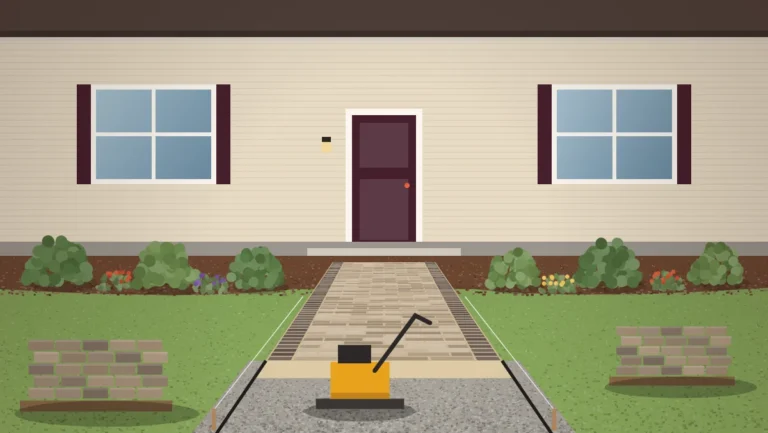
Pavers can move slightly without cracking, which makes them more forgiving. Heave can still cause waviness or raised edges if the base holds water. The good news is that pavers can be lifted and reset, which is a major advantage when comparing pavers vs concrete.
Retaining walls
Frozen, saturated soil behind a wall adds pressure and can push it forward. A proper drainage system with clean gravel and a drain pipe behind the wall is essential.
Pergolas, decks and structures
Post footings that are too shallow can be lifted by frost. In Denver, structural footings are commonly required to reach about 36 inches below grade, below typical frost depth, which is a core requirement when planning pergola snow load and footings in Colorado under local building codes.
How to Prevent Frost Heave Under a Patio
- Control water first. Slope patios away from the house, extend downspouts and keep sprinklers off hardscape edges.
- Build a deep, free-draining base. Using the proper paver base depth in clay soil with compacted crushed gravel keeps frost-susceptible soil farther from the surface and lets water drain away.
- Separate soil and base. Geotextile fabric stops fine soil from migrating into the gravel.
- Add drainage where water collects. Drains or regrading may be needed in low spots where poor paver patio drainage and slope lets water pool and freeze.
- Choose flexible surfaces. Interlocking pavers tolerate small movement and can be repaired.
- Manage snow piles. Pile shoveled snow where meltwater drains away from hardscapes.
What to Do If Your Patio Has Heaved
- Wait for the thaw. Some movement settles back in spring. Assess damage once the ground fully thaws.
- Find the water source. Look at downspouts, slope and sprinkler spray.
- Pavers: Lift, correct the base, and reset uneven sections—the same step-by-step repair process used in fixing sunken pavers.
- Concrete: Minor offsets can sometimes be ground down; severe heaving usually means replacement.
Frequently Asked Questions
Frost heave is caused by water in fine-grained soil freezing and forming ice layers that push the patio upward. It needs freezing temperatures, frost-susceptible soil and a water supply.
Pavers don’t stop frost from forming, but they handle movement better than concrete. Combined with a deep gravel base and good drainage, they greatly reduce frost damage.
Denver-area building codes commonly require structural footings about 36 inches deep for frost protection. Confirm the requirement with your local building department.
Sometimes, partly. Soil often settles as it thaws, but the surface rarely returns to exactly the same position, which leaves uneven spots.
Yes. Saturated, frozen soil behind a wall adds pressure. Proper drainage gravel and a drain pipe help prevent this.
Build Hardscapes for Colorado Winters
Ridgewell Landscape and Design builds patios, walkways and walls across Denver and the Greater Denver Metro with the drainage and base depth that resist frost damage, backed by our 5-year paver warranty. Explore our paver patio services or schedule a free consultation.