
Landscaping at high altitude in Colorado means planning for intense UV, low humidity, big day-to-night temperature swings, a shorter growing season, drying winds, hail and lean or clay soils.
Denver sits at about 5,280 feet, and most of the metro falls in USDA hardiness zones around 5b to 6b depending on location. Success comes from choosing plants proven for the Rocky Mountain region, watering deeply but efficiently, mulching, providing afternoon shade for sensitive plants and building hardscape that handles freeze-thaw cycles.
Gardening advice written for humid, low-elevation climates often fails here. Let’s explore what’s different about Colorado gardening at altitude and how to adapt.
How Altitude Affects Your Landscape
| Factor | Effect | What to do |
|---|---|---|
| Intense UV | Leaf scorch, faded finishes, fast-drying soil | Afternoon shade for sensitive plants; UV-resistant materials |
| Low humidity | Plants and soil lose moisture quickly | Mulch, drip irrigation, drought-tolerant plants |
| Temperature swings | Stress on plants; freeze-thaw on hardscape | Hardy plants; deep hardscape bases |
| Short season and late frosts | Frost damage to early plantings | Plant tender annuals after the last frost; choose hardy perennials |
| Wind | Drying and breakage | Windbreaks, sturdy plants, shredded mulch |
| Hail | Shredded leaves | Fine-leaved, resilient plants |
| Alkaline, clay or lean soils | Nutrient issues, drainage challenges | Adapted plants; modest amendment; good grading |
Colorado Gardening at Altitude: Key Tips
1. Choose regionally proven plants
Native and adapted plants, including those promoted by the Plant Select program, are tested for Rocky Mountain conditions.
2. Know your frost dates
The Denver area’s last spring frost often falls in early to mid May and first fall frost around early October, but late snowstorms are common. Wait to plant tender annuals and vegetables until frost danger passes.
3. Check your hardiness zone
Zones vary across the metro with elevation and microclimate. Look up your address on the USDA Plant Hardiness Zone Map and choose plants rated at least to your zone.
4. Water deeply and efficiently
Dry air and sun dry soil quickly, but frequent shallow watering creates weak roots. Use drip irrigation and water deeply, following local watering rules.
5. Water in winter
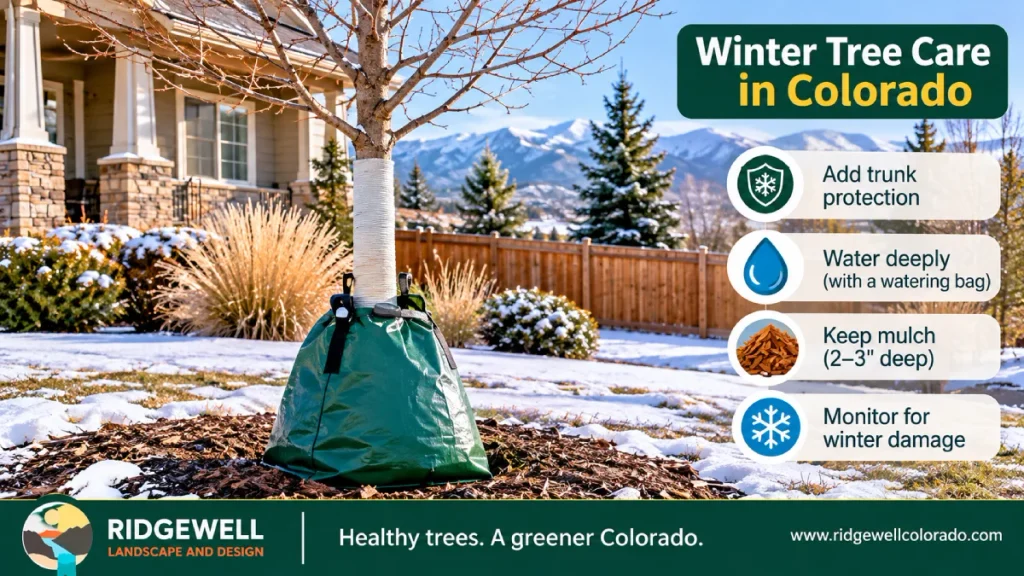
Colorado’s dry winters dehydrate trees and shrubs. Water monthly on mild days when the ground isn’t frozen.
6. Protect from sun and wind
Afternoon shade helps plants like columbine and hydrangeas. Thin-barked young trees can suffer sunscald; consider trunk protection.
7. Mulch
Mulch keeps soil cooler and moister and protects roots from temperature swings. See rock vs mulch in Colorado.
Hardscape at Altitude
Intense UV fades finishes and dries wood, and dozens of freeze-thaw cycles stress pavers, walls and concrete. Use freeze-thaw rated pavers, deep compacted bases, good drainage and UV-resistant finishes. See best patio materials for Colorado and frost heave and freeze-thaw damage.
Frequently Asked Questions
Higher altitude means stronger UV, lower humidity, bigger temperature swings, a shorter season and more wind, so plants need to be tough and water-efficient.
Most of the Denver metro falls around USDA zones 5b to 6b depending on location. Check your address on the USDA Plant Hardiness Zone Map.
The last spring frost often falls in early to mid May, but late snowstorms are common, so watch the forecast before planting tender plants.
Soil dries faster due to sun, wind and low humidity, but efficient deep watering and drought-tolerant plants reduce overall water needs.
Yes. Water trees and shrubs monthly during dry winter spells on mild days when the ground isn’t frozen.
Native and adapted plants such as blue grama, penstemon, yarrow, rabbitbrush, pines and junipers handle high-altitude conditions well.
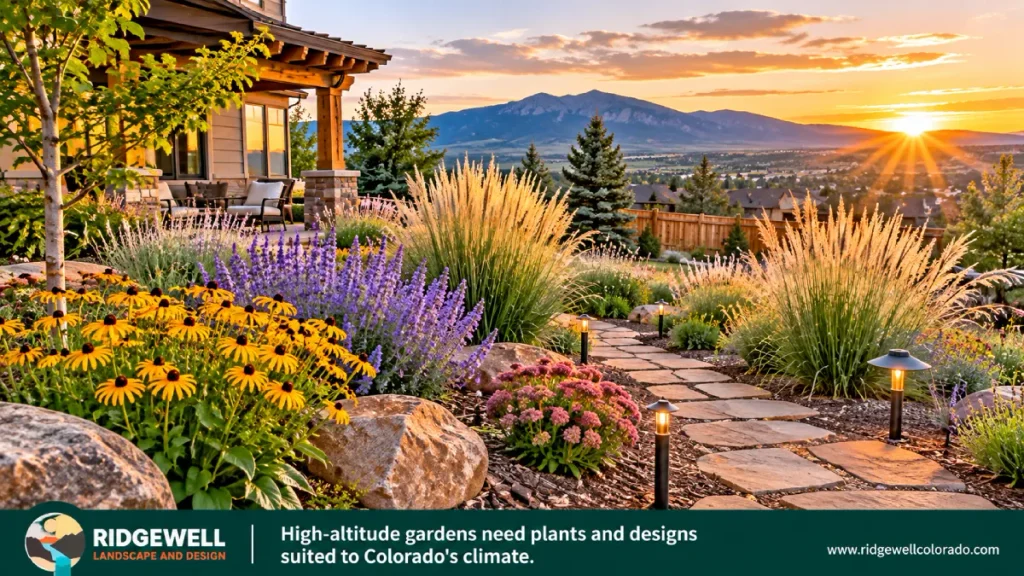
Landscape for Colorado’s Climate
Ridgewell Landscape and Design designs landscapes built for high-altitude conditions across Denver and the Greater Denver Metro. Explore our landscape design services or book a free consultation.
Rules and programs change, so confirm current details for your address. Last updated October 2026.