- Get A Free Consultation.
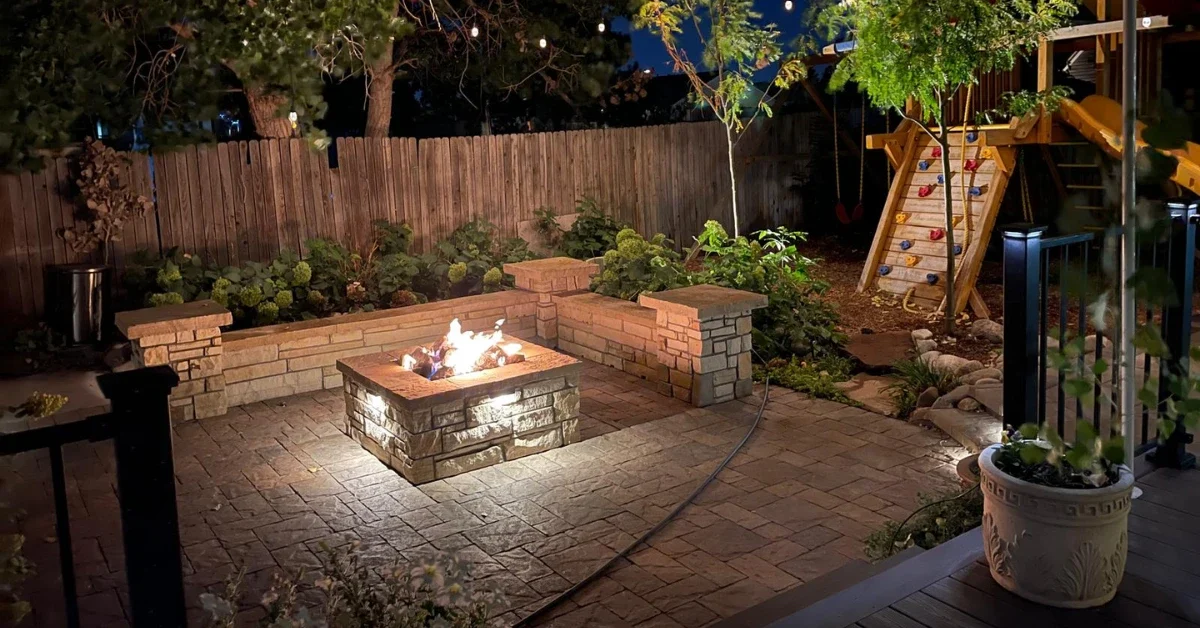
A paver patio with a fire pit typically costs between $6,000 and $22,000+ in most U.S. markets, including Denver, depending on size, materials, and design complexity. Smaller, basic setups can start around $3,500–$6,000, while larger custom outdoor living spaces with upgraded pavers, gas fire pits, seating walls, and lighting can exceed $25,000.
In Colorado, pricing is often influenced by additional factors such as freeze–thaw resistant base preparation, drainage requirements, and soil conditions, which can slightly increase installation costs compared to milder climates. However, this added investment is essential to ensure long-term durability and prevent shifting or cracking over time.
A paver patio in Colorado combined with a fire pit is considered a high-value outdoor upgrade because it transforms a simple backyard into a functional living space. Homeowners use it for entertaining, cooking, and year-round enjoyment, which increases both lifestyle value and resale appeal. The fire pit itself can range from a few hundred dollars for basic kits to several thousand for custom-built gas fire features, depending on design and installation complexity.
This article will break down the full cost structure, including material choices, labor pricing, fire pit types (wood vs gas), design upgrades, and how each factor impacts the total budget. You’ll also learn how to balance cost with long-term value so you can plan a durable, attractive outdoor space that fits your budget and enhances your home’s overall worth.
The average cost of a paver patio with a fire pit typically ranges from $6,000 to $25,000+, depending on the size of the patio, material quality, and the type of fire feature included. While online estimates often provide broad ranges, real-world pricing varies significantly based on site conditions, design choices, and labor requirements—especially in regions like Colorado where installation conditions are more demanding.
For a small project, usually around 200–300 sq ft with a basic fire pit kit, homeowners typically spend $6,000 to $10,000. These setups often use standard concrete pavers and simple layouts designed for functionality rather than customization.
A medium-sized patio, which may include upgraded pavers, a built-in or semi-custom fire pit, and basic seating space, generally falls between $10,000 and $18,000. This range reflects more detailed design work, better materials, and improved durability features.
For large or high-end outdoor living spaces, costs can easily exceed $18,000 to $25,000+, especially when incorporating features like gas fire pits, seating walls, lighting, multi-level layouts, or premium natural stone materials.
Many online estimates can be misleading because they do not account for important variables such as excavation depth, drainage needs, or regional labor costs. In Colorado, these factors are especially important due to freeze–thaw cycles, clay-heavy soils, and strict base preparation requirements, all of which can increase both labor time and material needs.
Understanding these real-world differences helps homeowners set more accurate budgets and avoid underestimating the true cost of a durable, long-lasting paver patio with a fire pit—particularly in demanding climates like Denver and surrounding areas.
Paver patio costs in Colorado vary more than national averages because of local labor rates, material transport distances, seasonal demand, and challenging soil and weather conditions. While national installation prices often range from $10 to $40 per square foot, Colorado projects typically fall in a similar but slightly higher range due to added preparation requirements like deeper excavation, stronger base layers, and freeze–thaw resistant construction standards.
One major cost driver is regional labor rates in Colorado, especially in Denver and surrounding metro areas. Skilled installation often requires more time for grading, compaction, and drainage correction, which increases labor hours and overall project pricing. Contractors also factor in expertise needed for clay-heavy soils that can shift if not properly stabilized.
Material delivery and transportation costs also affect pricing. Many premium paver brands and base materials are shipped into Colorado, and fuel, freight distance, and supply chain factors can increase final project costs compared to regions closer to manufacturing hubs.
Seasonal timing plays a role as well. Spring and peak summer seasons usually come with higher demand and longer scheduling delays, while late fall or winter projects may offer better pricing but can be limited by weather conditions such as frozen ground or snow interruptions.
Colorado’s soil and freeze–thaw climate conditions significantly impact installation requirements. Extra excavation depth, thicker gravel bases, and enhanced drainage systems are often necessary to prevent shifting and cracking over time, which increases both labor and material costs. Overall, local contractors like Ridgewell Colorado add value by understanding these regional challenges and building patios designed specifically for long-term durability in Colorado’s demanding environment.
A fire pit can range widely in cost depending on size, materials, fuel type, and whether it is a simple portable unit or a fully custom-built feature integrated into a paver patio. On average, homeowners spend anywhere from $300 to $8,000+, with most mid-range installations falling between $1,500 and $5,000 for a durable, built-in setup.
Basic portable fire pits are on the lower end of the cost spectrum, while custom masonry fire pits with gas lines, stone surrounds, and integrated seating can reach the higher end of the range. Industry data shows most installed fire pits average around $800–$3,000 depending on complexity.
These are the most affordable option, typically ranging from $75 to $500. They require no installation and are ideal for flexible backyard use.
These usually cost between $1,000 and $3,000 installed and include stacked stone or concrete kits that are partially customized but still relatively simple to assemble.
Fully built fire pits using stone, brick, or concrete can cost $3,000 to $8,000+ depending on design, labor, and integration with patios or seating walls.
Wood-burning fire pits are generally cheaper to install but require ongoing fuel management and produce smoke. Gas fire pits cost more upfront but offer cleaner, easier operation with instant ignition and low maintenance. Gas installations also often require additional safety and utility work.
Installing a natural gas line can add several hundred to several thousand dollars depending on distance from the main supply line. Permits and inspections may also be required, especially for permanent installations.
Wood-burning pits require ongoing firewood purchases, while gas systems involve lower day-to-day maintenance but may increase utility usage over time. Gas systems are generally more cost-efficient for frequent use.
Proper clearance, fire-resistant materials, and local code compliance are essential. Poor placement or installation can create safety risks, especially in dense residential areas.
Overall, the total cost depends heavily on whether you want a simple backyard feature or a fully integrated outdoor living focal point combined with a paver patio design.
The overall cost of a paver patio with a fire pit is heavily influenced by design and layout decisions. While materials and fire features play a major role, the shape, pattern, and structural complexity of the patio can significantly increase or reduce both labor time and total project cost.
Straight-edge patios are generally more affordable because they require fewer cuts, simpler layout planning, and faster installation. Curved designs, while visually appealing, increase labor time due to precision cutting and additional measuring, which raises overall costs.
Basic running bond patterns are the most cost-efficient. More advanced designs like herringbone or basket weave require more cuts, tighter alignment, and extra installation time. Custom patterns further increase labor intensity, making them a premium option.
Adding contrasting borders or decorative edging enhances visual appeal but also increases material use and installation time. Strong edge restraints are essential for long-term durability, especially in freeze–thaw climates like Colorado.
Split-level patios, retaining walls, and built-in steps add structural complexity. These features require additional excavation, engineering, and materials, which significantly increase both cost and timeline.
More complex designs require more skilled labor, precise measurements, and longer installation periods. This directly impacts labor costs, which are often one of the largest portions of the total project budget. Overall, simpler layouts keep costs lower, while intricate designs create a more premium outdoor living space but require a higher investment in both materials and labor.
A paver patio with a fire pit generally does increase home value, especially in outdoor-focused markets like Colorado. Real estate and landscaping studies consistently show that well-designed outdoor living spaces improve curb appeal, functionality, and buyer interest—often translating into measurable ROI when selling a home. In many cases, homeowners can recoup around 50% to 80% of their investment, depending on design quality, materials, and market conditions. Fire features and patios are also known to significantly improve overall property desirability, which can indirectly boost final sale prices.
One of the biggest drivers of value is buyer demand for outdoor living spaces. Modern buyers increasingly want homes that feel “move-in ready” outdoors as well as indoors. A patio with a fire pit creates a defined gathering area for entertaining, relaxing, and year-round use—especially valuable in Colorado’s climate where outdoor enjoyment extends across multiple seasons. Studies show outdoor living areas are among the most sought-after home features in competitive real estate markets.
Fire features further improve resale appeal by adding lifestyle value. A fire pit creates a focal point that makes the backyard feel like an extension of the home, increasing emotional appeal during showings. Buyers often associate fire pits with comfort, entertainment, and higher-end outdoor living, which can help properties stand out in listings and attract stronger offers.
In Colorado specifically, outdoor upgrades perform even better because of sunny weather, mountain views, and lifestyle-driven buyers. Patios and fire pits effectively expand usable living space, which is a major selling advantage in regions where outdoor living is a priority.
Overall, a paver patio with a fire pit is considered a high-value improvement, combining lifestyle benefits with strong resale potential—making it one of the most effective outdoor investments for homeowners planning to stay or sell.
Building a patio with a fire pit typically costs between $3,000 and $12,000+, depending on size, materials, design complexity, and site conditions. A simple paver patio with a basic fire pit sits on the lower end, while custom designs with natural stone, built-in seating, and gas fire features can significantly increase the price. Combining both elements in one project is often more cost-effective than building them separately and also creates a more cohesive outdoor living space.
A fire pit does not automatically increase homeowners insurance, but it can affect your risk profile depending on installation and usage. Insurance providers mainly consider safety factors such as proper clearance from structures, adherence to local fire codes, and whether the fire pit is wood-burning or gas. Poor installation or unsafe use may increase liability risk, while a properly built and maintained fire feature typically does not impact premiums.
A fire pit does not have a fixed resale value, but it can significantly boost a home’s outdoor appeal and buyer interest. Many buyers view fire pits as desirable lifestyle features that enhance entertaining spaces. While ROI varies by market and design quality, well-built outdoor living upgrades like fire pits can contribute to stronger resale performance and faster property sales when combined with a well-designed patio.
Fire pits come with several disadvantages, including ongoing maintenance, fuel costs, and safety concerns. Wood-burning fire pits can produce smoke, ash, and sparks, which may be inconvenient or restricted in certain areas. They also require careful placement to avoid damage to landscaping or nearby structures. Without proper installation and supervision, fire pits can pose fire hazards and may be subject to local regulations or seasonal burn restrictions.
A paver patio with a fire pit is a valuable outdoor upgrade, but understanding real cost expectations is essential before starting the project. Most homeowners in Colorado can expect total pricing to range from budget-friendly small installations to higher-end custom builds, depending on size, materials, fire feature type, and site conditions. Instead of focusing on the lowest advertised estimates, it’s important to plan for a realistic budget that reflects proper excavation, base preparation, and quality installation.
As discussed throughout this guide, design choices, material selection, and local conditions all play a major role in determining the final cost. Simple layouts with standard concrete pavers keep budgets lower, while custom patterns, premium stone, and built-in fire features naturally increase both material and labor expenses. In Colorado, additional factors like clay soil, drainage needs, and freeze–thaw protection also influence overall pricing and construction requirements.
Ultimately, professional installation is what ensures long-term durability and value. A properly built base, correct grading, and expert-level installation prevent common issues such as shifting, cracking, and drainage problems—helping protect your investment for years to come.
If you’re ready to transform your outdoor space, contact Ridgewell Colorado for expert paver patio and fire pit installation. Our team can help you design a durable, beautiful outdoor living area tailored to your budget, lifestyle, and Colorado’s demanding climate conditions.
Fresh Ideas From our experts
What Your Neighbors Are Saying
"They are the best. We have a small backyard and needed it to reflect a relaxing and enjoyable space. Chris used our ideas and came up with the perfect design. Then Francisco came with the cost projections and worked to accommodate our budget. He and his team then used their considerable construction expertise to create a space that’s an extension of our home where we spend a lot of time. Thank you for creating such a welcoming space."
"I am new to Colorado and hired Chris and Francisco to design and implement a plan for my new build house. From design to finish and followup they were beyond my expectations. They are in constant contact throughout the project and their crew is very hardworking. They followup when the project is finished and are always available for whatever questions you may have. I would highly recommend them, and I get many complements on the work they have done for me."
"We were thrilled with the end result of our brick paver patio refurbishment. We hired Chris, Francisco and their team to fix our sinking brick paver patio. It had been installed by a different landscaper, and after only 2 years it was collapsing. Boo hiss! Ridgewell Landscape and Design came in and saved the day! They discovered the original installation was done incorrectly, and that’s why it was collapsing. Their team worked hard and got the project done quickly and professionally. We are thrilled with the look and finish of the job! Bravo!!"