- Get A Free Consultation.
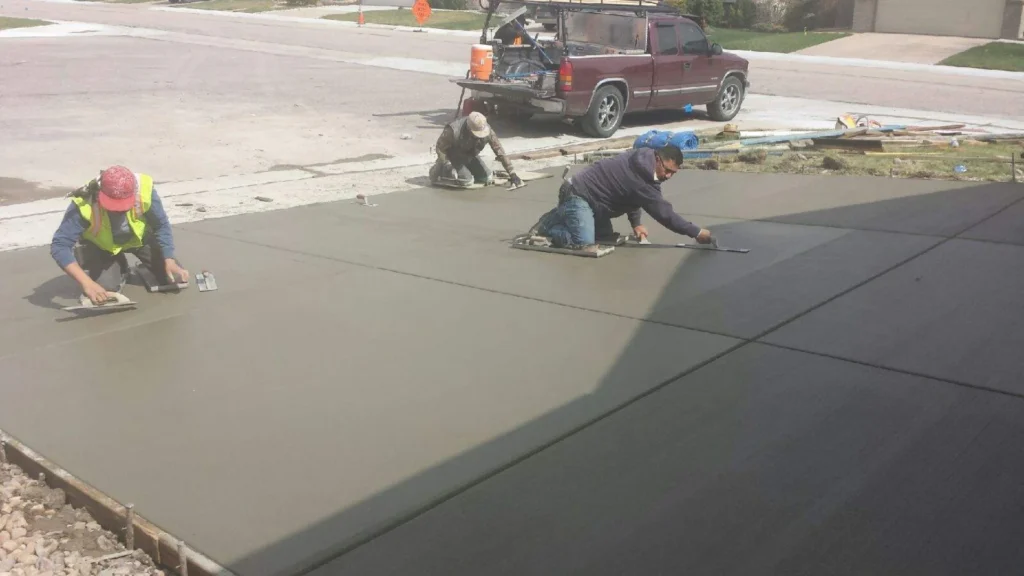
Yes, professionals do seal cracks in driveways and patios, but it’s important to know this upfront: sealing is usually a temporary fix, not a permanent solution. It can slow down further damage and buy time, but if the crack came from a deeper issue, like an aging surface or a poorly built base, sealing alone won’t stop it from coming back.
At Ridgewell Landscape and Design, crack sealing and repair is part of what we do across the Denver area, including Broomfield, Parker, and surrounding communities. Here’s an honest look at when sealing makes sense, when it doesn’t, and what actually solves the problem long-term.
| Question | Answer |
| Do professionals seal cracks? | Yes, it’s a standard service |
| Is sealing a permanent fix? | No, it’s more of a stopgap |
| Most common causes of cracks? | Age/normal wear and poor original base/installation |
| What actually solves the problem? | Addressing the base or replacing the damaged section |
Before jumping into sealing, it helps to understand why cracks show up. In our experience, two causes come up more than anything else.
Age and normal wear. Every driveway and patio has a lifespan. Years of temperature swings, sun exposure, and everyday use gradually wear down the surface, and cracking is often just a sign that a surface is reaching the end of its usable life.
Poor original base or installation. This is the bigger issue, because it means the cracking isn’t really about the surface material at all, it’s about what’s underneath. A driveway or patio built on a shallow, poorly compacted base is far more likely to crack early, regardless of how nice the concrete, stone, or pavers on top look. This is why getting proper base depth right from the start matters so much, whether you’re building a new patio or a driveway.
Sealing a crack does exactly what it sounds like: it fills the gap and creates a barrier against water and debris. That barrier matters because water getting into a crack is what turns a small problem into a bigger one, especially with Colorado’s freeze-thaw cycles, where water expands as it freezes and widens the crack from the inside.
So sealing isn’t pointless. It genuinely slows down deterioration and protects the surrounding area from getting worse. What it doesn’t do is fix whatever caused the crack to form in the first place.
Here’s the honest reality: a sealed crack is still a crack. If the underlying cause was a weak base, ongoing settling, or age-related wear, that same stress is still there after sealing, the crack is just temporarily covered. Over time, especially through another freeze-thaw season, it’s common for a sealed crack to reopen or for new cracks to form nearby.
This is why we’re upfront with clients: sealing buys time and prevents faster damage, but it’s not the same as solving the problem.
| Situation | Best Approach |
| Small, surface-level crack on an otherwise solid base | Sealing works well as a protective measure |
| Cracking spread across a large area | Points to a base issue, sealing won’t hold |
| Crack keeps reappearing after sealing | Underlying base likely needs repair |
| Surface is old and worn overall | Sealing is a short-term patch, not a fix |
If a crack is isolated and the rest of the surface is in good shape, sealing is a smart, low-cost way to protect it. If cracks are widespread or keep coming back, that’s usually a sign the base needs attention, not just the surface.
When sealing isn’t enough, the actual solution usually involves one of two things:
Neither of these is as quick or cheap as sealing, which is exactly why sealing gets recommended so often, it’s the fastest, most affordable option. But it’s worth knowing the difference between “this will hold for a while” and “this actually solves the problem.” In many cases, a section that’s failed repeatedly is a good candidate for a full paver patio installation rather than another repair cycle, since pavers handle Colorado’s ground movement better than a single poured slab. You can read more about why in our guide on what hardscaping actually means and how it holds up over time.
Yes, in the right situation. Sealing slows water damage and protects a crack from getting worse, which can meaningfully extend the life of a driveway or patio, even if it’s not a permanent fix.
A small, isolated crack on an otherwise solid surface is usually fine with sealing. Widespread cracking, sinking, or cracks that keep coming back point to a base issue that needs real repair.
Because sealing addresses the crack itself, not the cause. If the base underneath is weak or poorly installed, the same pressure that caused the first crack is still there.
Yes. Freeze-thaw cycles push water into small cracks, where it expands as it freezes, gradually making them bigger. This is part of why timely sealing matters for smaller cracks.
Small, simple cracks can sometimes be handled with DIY sealant products, but professionals are better equipped to tell whether a crack is surface-level or a sign of a bigger base problem underneath.
If you’re noticing cracks that keep coming back, or you’re not sure whether sealing will actually solve the problem, Ridgewell Landscape and Design can take a look and give you an honest read on what’s going on underneath. We serve the Denver area, including Broomfield, Parker, and surrounding communities. Explore our paver patio services or contact us to get it assessed properly.
Fresh Ideas From our experts
What Your Neighbors Are Saying
"They are the best. We have a small backyard and needed it to reflect a relaxing and enjoyable space. Chris used our ideas and came up with the perfect design. Then Francisco came with the cost projections and worked to accommodate our budget. He and his team then used their considerable construction expertise to create a space that’s an extension of our home where we spend a lot of time. Thank you for creating such a welcoming space."
"I am new to Colorado and hired Chris and Francisco to design and implement a plan for my new build house. From design to finish and followup they were beyond my expectations. They are in constant contact throughout the project and their crew is very hardworking. They followup when the project is finished and are always available for whatever questions you may have. I would highly recommend them, and I get many complements on the work they have done for me."
"We were thrilled with the end result of our brick paver patio refurbishment. We hired Chris, Francisco and their team to fix our sinking brick paver patio. It had been installed by a different landscaper, and after only 2 years it was collapsing. Boo hiss! Ridgewell Landscape and Design came in and saved the day! They discovered the original installation was done incorrectly, and that’s why it was collapsing. Their team worked hard and got the project done quickly and professionally. We are thrilled with the look and finish of the job! Bravo!!"