- Get A Free Consultation.
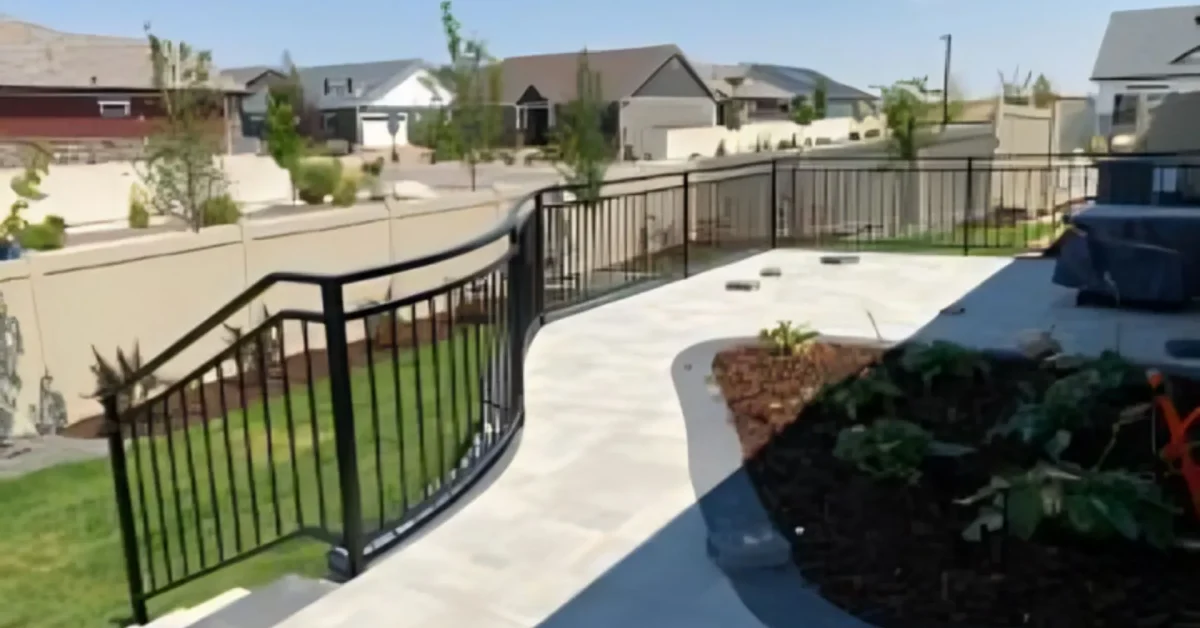
The base for a paver walkway should generally be 4 to 6 inches of compacted gravel, plus about 1 inch of bedding sand on top, bringing the total sub-paver depth to roughly 5 to 7 inches before the pavers themselves go down. That range holds for most well-drained soil, but it shifts depending on your soil type, and it’s noticeably less than what a patio or driveway needs, since a walkway carries far less weight.
At Ridgewell Landscape and Design, base depth is one of the first things we assess on every walkway project across the Denver area, including Broomfield, Parker, and the surrounding communities, since it’s the single factor that determines whether a walkway holds up for decades or starts shifting within a year or two. This guide breaks down exactly how thick your base should be, how soil type changes that number, and how walkways compare to patios and driveways in this regard.
| Layer | Typical Depth | Purpose |
| Compacted gravel base | 4 to 6 inches | Provides structural support and drainage |
| Bedding sand | 1 inch | Creates a level surface for pavers to sit on |
| Pavers | 1.5 to 2.5 inches (varies by product) | Walking surface |
| Total sub-paver depth | 5 to 7 inches | Combined gravel and sand before pavers |
This is a starting point rather than a fixed number for every yard. Soil conditions, drainage, and how the walkway will actually be used all push this number up or down.
This is the structural layer doing most of the work. Crushed gravel or road base, compacted in layers rather than all at once, distributes weight evenly and allows water to drain through rather than pooling under the pavers. Skipping proper compaction here, even with the right depth of material, is one of the most common reasons walkways settle unevenly within the first year.
A thin, roughly 1 inch layer of coarse sand sits on top of the compacted gravel, providing a level, adjustable surface for pavers to be set into. This layer is not meant to add structural strength, that’s the gravel’s job, it’s purely there to allow for fine leveling adjustments as pavers are placed.
Paver thickness varies by product, typically between 1.5 and 2.5 inches for standard concrete pavers used on walkways. This adds to the overall height of the finished walkway but isn’t part of the base thickness conversation in the same way the gravel and sand layers are, since the paver itself doesn’t compact or settle the way base materials do.
Sandy soil drains well naturally, which means it doesn’t hold as much water against the base during freeze and thaw cycles. A standard 4 inch gravel base is often sufficient in these conditions, since the soil itself isn’t adding much additional moisture-related movement.
Most residential yards fall somewhere in this middle range, soil that drains reasonably well but isn’t as loose as pure sand. A base depth of 4 to 5 inches typically works well here, matching the general standard range without needing to push toward the upper end.
Clay soil holds water and expands significantly during freeze and thaw cycles, which puts more pressure on the base and any structure sitting above it. In clay-heavy yards, common across parts of the Denver area, we typically recommend pushing base depth to the full 6 inches, sometimes slightly more, to give the walkway enough of a buffer against that seasonal ground movement.
If a section of yard tends to stay damp or hold standing water after rain, even briefly, the base underneath a walkway there needs extra attention beyond just adding depth. In these spots, it’s often worth adding a layer of larger, more open-graded stone at the very bottom of the excavation before the standard compacted gravel base, to help water move through rather than sitting against the walkway’s foundation. Our guide on how to build a paver walkway on a slope covers a related situation, where water movement through the base becomes a central design consideration rather than an afterthought.
| Application | Typical Base Depth | Why It Differs |
| Walkway | 4 to 6 inches | Foot traffic only, minimal weight load |
| Patio | 4 to 6 inches | Similar to walkways, occasional furniture weight |
| Driveway | 8 to 12 inches | Must support vehicle weight, repeated heavy loads |
Walkways and patios generally use similar base depths, since both are designed for foot traffic and light furniture rather than vehicles. Driveways need a noticeably deeper base, often double a walkway’s depth, because they have to support the sustained weight of vehicles without the base compressing or shifting under that load over time. If a walkway will ever see occasional vehicle traffic, for example, a path that doubles as an overflow parking area, it needs to be built closer to driveway specifications rather than standard walkway depth. Our guide on proper paver base depth for patios covers this topic in more detail for patio-specific applications, which largely mirrors what’s needed for a standard walkway.
It’s tempting to think of base depth as a minor technical detail buried under the more visible parts of a walkway project, choosing pavers, picking a pattern, deciding on a layout. In practice, base thickness and compaction quality are the single biggest factors determining whether a walkway looks the same in ten years as it did on installation day. A walkway with beautiful pavers laid in a precise pattern will still develop dips, shifting, or cracking if the base underneath wasn’t built to the right depth for the soil it’s sitting on. This is also why base depth isn’t really a place to trim cost, the material difference between 4 inches and 6 inches of gravel is relatively small compared to the cost of redoing a walkway that’s failed within a few years due to inadequate base.
If you’re dealing with an older or previously installed walkway rather than planning a new one, a few signs point to inadequate base depth as the root cause of visible problems. Noticeable dips or low spots that have developed over time, pavers that rock slightly underfoot even though they were originally level, and visible gaps opening up at the joints are all common symptoms of a base that either wasn’t deep enough or wasn’t properly compacted for the soil conditions underneath.
Once your gravel base is compacted and before bedding sand goes down, it’s worth double-checking actual depth at a few points along the walkway using a tape measure against the excavation edge. This is a quick step that catches inconsistent depth before it becomes a permanent, hidden problem once pavers are in place and the walkway looks finished from the surface.
The ranges above cover most situations well, but soil conditions can vary meaningfully even within a single yard, one section might drain well while another holds water longer after rain. An experienced team can assess your specific soil and layout to confirm the right depth for your project, rather than applying a single generic number across the whole property.
With over 15 years of building walkways across a wide range of soil conditions in the Denver area, our team at Ridgewell Landscape and Design has a strong sense of how different sections of a property might need slightly different base treatment, even within the same project. Explore our paver patio services to see the kind of properly based, long-lasting work that comes from getting this step right from the start.
A minimum of 4 inches of compacted gravel is generally recommended, even in favorable, well-drained soil conditions, plus about 1 inch of bedding sand on top.
Yes. Clay soil expands and contracts significantly during freeze and thaw cycles, so a base depth closer to 6 inches is typically recommended in clay-heavy areas.
Generally yes, both walkways and patios use a similar 4 to 6 inch base range, since both handle foot traffic and light furniture rather than vehicle weight.
Driveways support sustained vehicle weight, which requires a deeper, more robust base, typically 8 to 12 inches, to prevent compression and shifting under that heavier, repeated load.
A base that’s too thin for the soil conditions can lead to settling, shifting, uneven surfaces, and joint gaps opening up over time, particularly through freeze and thaw cycles.
Yes, and in some cases an additional layer of larger, open-graded stone at the bottom of the excavation helps manage water movement in these spots beyond what standard base depth alone would address.
Getting base depth right is one of the least visible but most important parts of a paver walkway, and the correct number depends on your specific soil and site conditions rather than a single fixed rule.
Ridgewell Landscape and Design has been building properly based, long-lasting paver walkways across Denver, Broomfield, Parker, and the surrounding communities for over 15 years. If you’d like your soil and layout assessed before starting your project, reach out for a free quote and consultation.
Fresh Ideas From our experts
What Your Neighbors Are Saying
"They are the best. We have a small backyard and needed it to reflect a relaxing and enjoyable space. Chris used our ideas and came up with the perfect design. Then Francisco came with the cost projections and worked to accommodate our budget. He and his team then used their considerable construction expertise to create a space that’s an extension of our home where we spend a lot of time. Thank you for creating such a welcoming space."
"I am new to Colorado and hired Chris and Francisco to design and implement a plan for my new build house. From design to finish and followup they were beyond my expectations. They are in constant contact throughout the project and their crew is very hardworking. They followup when the project is finished and are always available for whatever questions you may have. I would highly recommend them, and I get many complements on the work they have done for me."
"We were thrilled with the end result of our brick paver patio refurbishment. We hired Chris, Francisco and their team to fix our sinking brick paver patio. It had been installed by a different landscaper, and after only 2 years it was collapsing. Boo hiss! Ridgewell Landscape and Design came in and saved the day! They discovered the original installation was done incorrectly, and that’s why it was collapsing. Their team worked hard and got the project done quickly and professionally. We are thrilled with the look and finish of the job! Bravo!!"