

To protect pavers in a Colorado winter, keep joints full and drainage working before the first freeze, shovel with a plastic or rubber-edged blade, set snow blower and plow blades slightly high, and use de-icers sparingly. Calcium magnesium acetate (CMA) and calcium chloride are generally gentler choices for pavers than rock salt, and sand adds traction without chemicals. Avoid de-icers containing ammonium nitrate or ammonium sulfate, which attack concrete.
Quality pavers handle Colorado winters well, but how you remove snow and ice makes a real difference over the years. Learn to keep pavers and natural stone looking good through dozens of freeze-thaw cycles.
Before Winter: Fall Prep
- Top up joint sand. Keeping joints full with polymeric sand for pavers prevents water from seeping underneath and freezing over winter.
- Fix low spots. Puddles turn into ice patches. Reset sunken pavers before winter.
- Check downspouts. Make sure they drain away from walks and patios so meltwater doesn’t refreeze on them.
- Clear leaves. Wet leaves stain pavers and trap moisture.
- Consider sealing. A breathable sealer applied in early fall can help repel water and stains. Read our guide on should you seal your pavers to weigh the pros and cons for your patio.
- Mark edges. Snow stakes along driveways and walks help you avoid catching edges with a blower or plow.
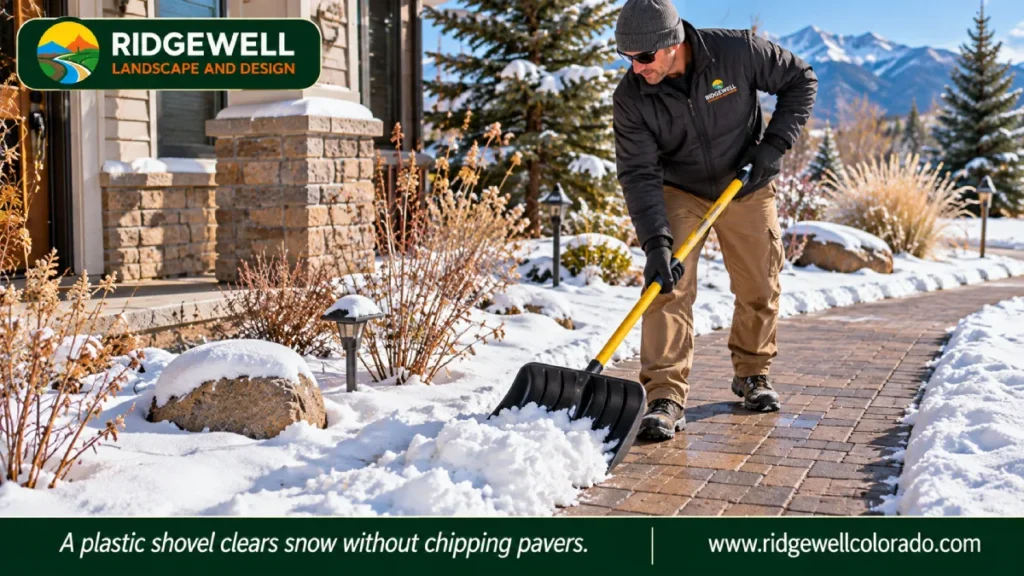
Can You Shovel Pavers?
Yes. Pavers are made for it. A few tips:
- Use a plastic shovel or one with a rubber or poly edge.
- Push in the direction of the paver pattern when possible to avoid catching edges.
- Shovel soon after snowfall, before foot traffic packs snow into ice.
- Set snow blower skid shoes so the auger housing rides slightly above the surface.
- Plow blades should have a rubber or poly cutting edge, or be set slightly high.
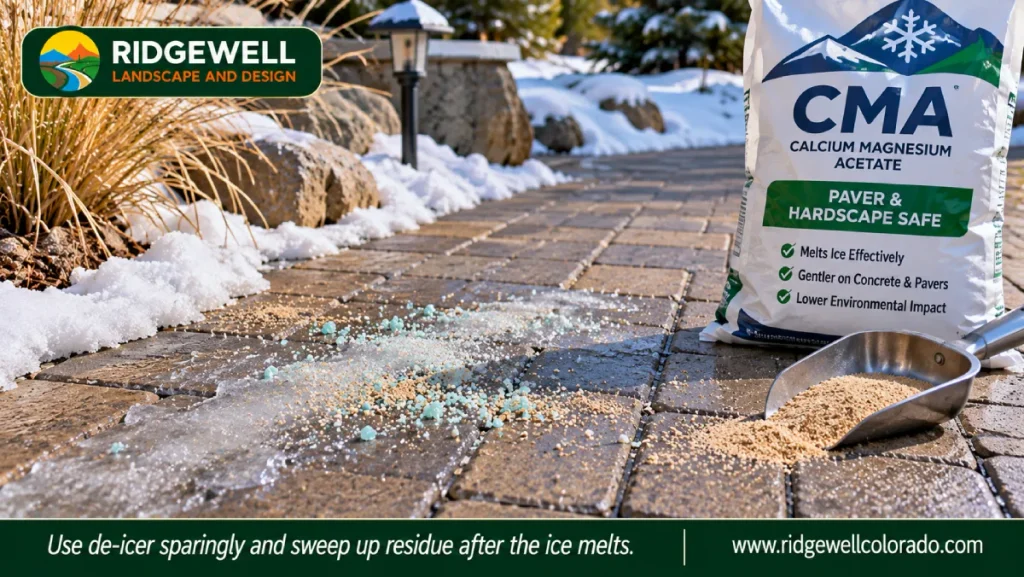
Ice Melt for Pavers
| De-icer | Works down to about | Notes for pavers |
|---|---|---|
| Calcium magnesium acetate (CMA) | About 20°F | Gentlest on concrete, plants and pets; slower acting; more expensive |
| Calcium chloride | Very low temperatures | Works fast in deep cold; use sparingly and sweep up residue |
| Magnesium chloride | Low temperatures | Commonly used; use sparingly |
| Potassium chloride | About 20°F | Less effective in deep cold |
| Sodium chloride (rock salt) | About 15 to 20°F | Hardest on concrete, metal and plants; avoid on pavers and stone |
| Ammonium nitrate or sulfate | Varies | Avoid; chemically attacks concrete |
| Sand or traction grit | Any temperature | No melting, but adds traction safely |
Temperatures are approximate effective ranges; check product labels. Whatever you use, apply only what you need, follow paver manufacturer guidance, and sweep up leftover granules once the ice melts.
Protecting Natural Stone and Flagstone
Natural stone, especially softer sandstones, can be more sensitive to de-icers and freeze-thaw than dense concrete pavers. Use sand for traction, choose the gentlest de-icer when needed, shovel promptly and keep water from pooling. For year-round care tips, learn how to seal and maintain flagstone before harsh winter weather arrives.
Snow Piles and Melt
- Pile snow where meltwater drains away from patios, walks and foundations.
- Avoid piling salted snow on planting beds and lawn.
- Don’t pile snow against retaining walls or pergola posts.
Winter Problems to Watch For
- Heaving or lifting: Often from water under the patio freezing.
- White haze: Efflorescence can appear on pavers after wet winters.
- Surface flaking: Can result from harsh de-icers or low-quality pavers.
- Loose joint sand: Check and refill in spring.
Frequently Asked Questions
Yes. Use a plastic shovel or one with a rubber edge, and set snow blower and plow blades slightly high to avoid catching paver edges.
Calcium magnesium acetate (CMA) is among the gentlest. Calcium chloride works in deep cold when used sparingly. Avoid rock salt and anything with ammonium nitrate or ammonium sulfate.
Rock salt can contribute to surface damage over time, especially on lower-quality pavers and natural stone. Use it sparingly or choose a gentler de-icer.
Sealing is optional. A breathable sealer applied in dry early-fall weather can help resist water and stains, but quality pavers do fine unsealed.
Yes. Adjust the skid shoes so the housing rides slightly above the surface, and use a blower with a rubber or poly scraper bar if possible.
Fix drainage and low spots, route downspouts away, shovel promptly and use sand or a gentle de-icer when needed.
Keep Your Pavers in Great Shape
Ridgewell Landscape and Design builds and maintains paver patios, walkways and driveways across Denver and the Greater Denver Metro. Explore our paver patio services or get in touch.