
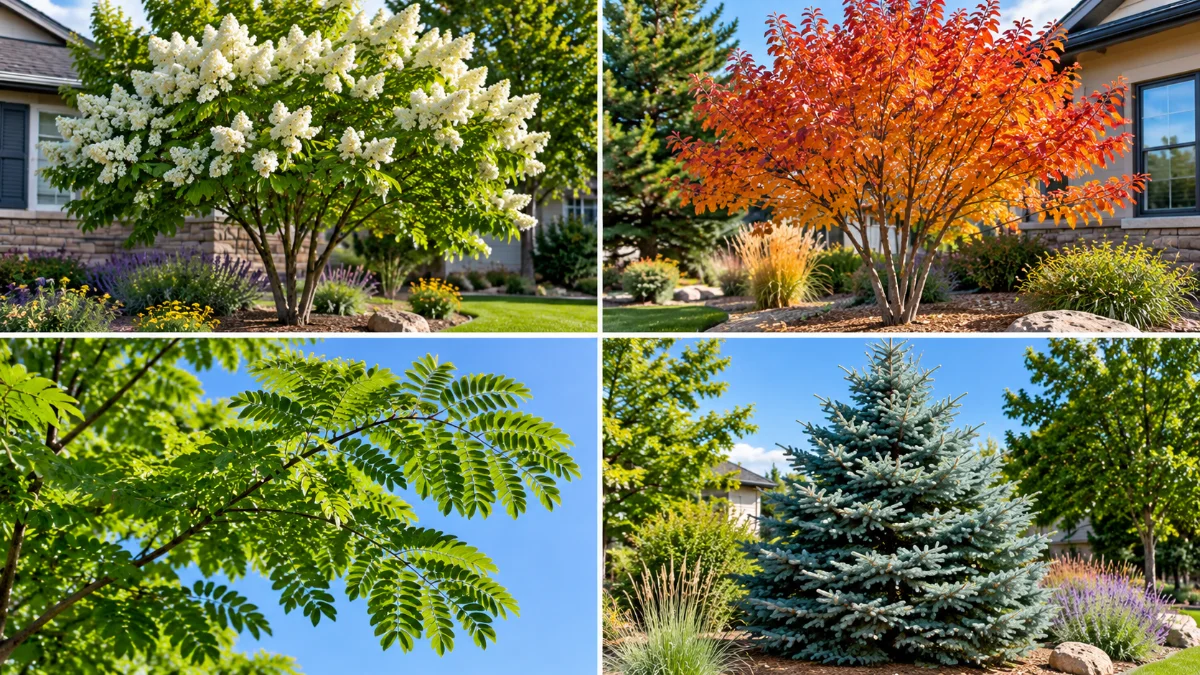
The best trees for Denver yards are tough, adaptable species that handle alkaline clay soil, dry air, intense sun, wind, hail and heavy spring snow. Reliable shade trees include bur oak, swamp white oak, Kentucky coffeetree, hackberry, thornless honeylocust, linden and catalpa. Good small and ornamental trees include Japanese tree lilac, hawthorn, serviceberry, crabapple and Amur maple. Hardy evergreens include Colorado blue spruce, pinyon pine, Rocky Mountain juniper and bristlecone pine. Avoid planting new ash trees, since emerald ash borer has spread along the Front Range.
Trees are the longest-lasting investment in your landscape, and the right one in the right spot can shade a patio, frame the house and boost curb appeal for decades. Here’s how to choose trees that thrive in Denver-area front and backyards.
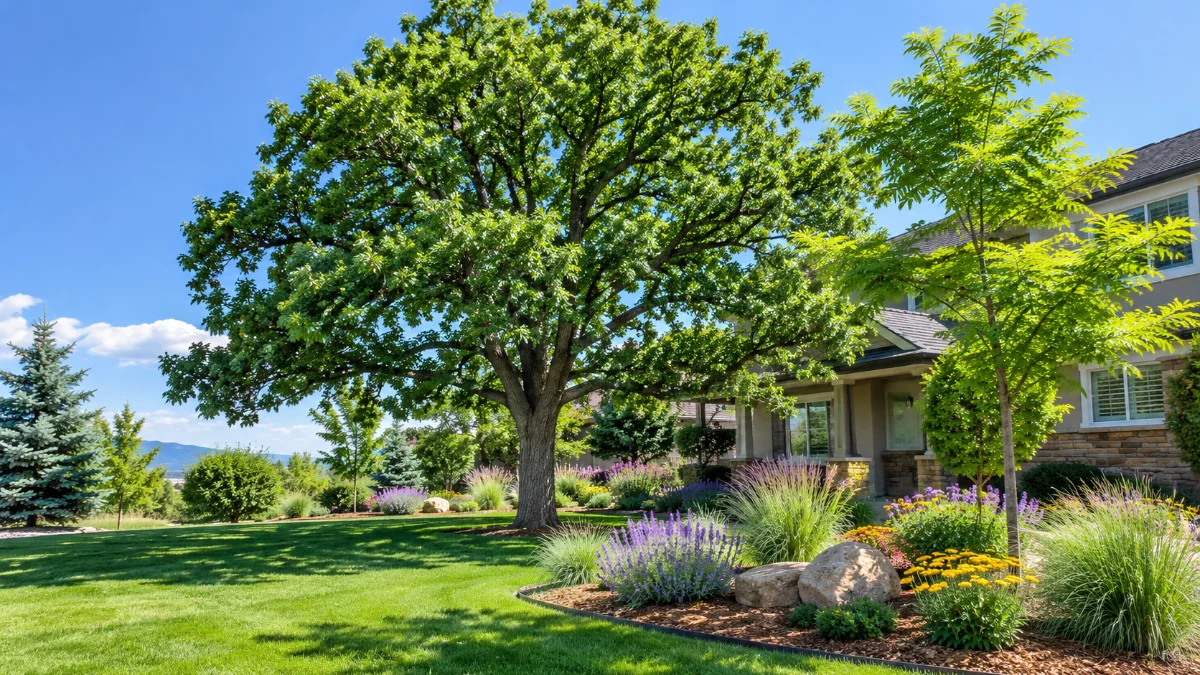
Best Shade Trees for Denver
| Tree | Mature size (approx.) | Why it works |
|---|---|---|
| Bur oak | 50 to 70 ft tall | Very drought and clay tolerant; long-lived |
| Swamp white oak | 40 to 60 ft | Handles clay; good fall color |
| Kentucky coffeetree | 50 to 70 ft | Tough, few pests; bold texture |
| Hackberry | 40 to 60 ft | Very adaptable; tolerates wind and drought |
| Thornless honeylocust | 30 to 50 ft | Light, filtered shade; small leaflets hold up to hail |
| Linden | 40 to 60 ft | Fragrant summer flowers; dense shade |
| Northern catalpa | 40 to 60 ft | Showy flowers; tough |
Honeylocust’s tiny leaflets are one reason it shows up on our list of hail-resistant plants for Colorado.
Best Small and Ornamental Trees
| Tree | Mature size (approx.) | Highlights |
|---|---|---|
| Japanese tree lilac | 20 to 30 ft | Creamy summer flowers; great street and yard tree |
| Hawthorn (e.g., thornless cockspur) | 15 to 25 ft | Spring flowers, red fruit; tough |
| Serviceberry | 15 to 25 ft | Spring flowers, edible berries, fall color |
| Flowering crabapple | 15 to 25 ft | Spring blooms; choose disease-resistant varieties |
| Amur or Tatarian maple | 15 to 25 ft | Red fall color; good for small yards |
| Gambel oak | 10 to 25 ft | Native, drought tolerant; clump form |
Best Evergreens
| Tree | Mature size (approx.) | Notes |
|---|---|---|
| Colorado blue spruce | 30 to 60 ft | Iconic state tree; needs space and good drainage |
| Pinyon pine | 15 to 30 ft | Native, very drought tolerant, slow growing |
| Rocky Mountain juniper | 15 to 30 ft | Native, very drought tolerant; many upright forms |
| Bristlecone pine | 8 to 30 ft | Slow-growing native for small spaces |
| Austrian pine | 40 to 60 ft | Tough windbreak, but pine wilt kills many Austrian pines on the Front Range; CSU Extension advises limiting new plantings |
Native evergreens like pinyon and Rocky Mountain juniper also fit water-wise designs; our guide to Colorado native plants lists more.
Trees for Colorado Front Yards
Front yards often have limited space plus nearby sidewalks, driveways and utilities. Choose medium or small trees like Japanese tree lilac, honeylocust or serviceberry, and plant far enough from the house, walks and driveway for the mature roots and canopy. Trees in the public tree lawn (between the sidewalk and street) in Denver are managed by the city’s forestry office, which requires a permit for planting or removing them.
Trees to Avoid or Use With Caution
- Ash: Emerald ash borer has spread along the Front Range; avoid planting new ash.
- Silver maple: Weak wood, invasive roots and chlorosis in alkaline soil.
- Siberian elm and Russian olive: Invasive; Russian olive is listed as a noxious weed in Colorado.
- Aspen in hot, low-elevation yards: Often short-lived and prone to pests at Denver’s elevation; they do better higher up, as our guide to landscaping at high altitude explains.
- Cottonwood near homes: Large, messy and thirsty.
Planting and Care Tips
- Plant in spring or early fall.
- Dig wide, not deep, and set the root flare at grade. On Denver’s expansive clay soil, loosen a wide area so roots can spread.
- Mulch a wide ring, keeping mulch a few inches off the trunk.
- Water deeply with drip irrigation or a slow hose, including on mild, dry winter days; our seasonal maintenance calendar shows when.
- Avoid planting under power lines or too close to foundations and patios.
- Contact Colorado 811 before digging so utility lines are marked.
Frequently Asked Questions
Bur oak, swamp white oak, Kentucky coffeetree, hackberry, thornless honeylocust and linden are reliable shade trees for Denver.
Honeylocust, hackberry and catalpa grow relatively quickly. Very fast-growing trees often have weak wood, so balance speed with durability.
Japanese tree lilac, serviceberry, hawthorn and disease-resistant crabapples are excellent small trees.
No. Emerald ash borer has spread along the Front Range, so choose other species.
Spring and early fall, when temperatures are mild and roots can establish before summer heat or winter.
Yes. During dry winter spells, water trees on mild days when the ground isn’t frozen.
Plan Your Trees and Landscape
Ridgewell Landscape and Design selects and plants trees as part of landscape designs across Denver and the Greater Denver Metro. Explore our landscape design and installation services or book a free consultation.