- Get A Free Consultation.
Yes, stone pavers can absolutely be used for both driveways and patios, and in many Colorado homes, they hold up better than plain concrete. The key isn’t whether pavers are “strong enough” for a car; it’s whether the base, soil, and climate are accounted for during installation. Get that right, and a paver driveway can last for decades right alongside a paver patio.
At Ridgewell Landscape and Design, we’ve spent over 15 years building custom hardscapes across the Denver area, including Broomfield, Parker, and the surrounding communities. This guide breaks down exactly what makes stone pavers work for driveways and patios, which types we recommend, and the Colorado specific factors most articles skip over.
| Question | Answer |
| Can pavers handle driveways? | Yes, with proper base prep |
| Do driveways need thicker pavers than patios? | Not always. Soil and climate matter more than vehicle weight |
| Best paver types for Colorado? | Interlocking concrete pavers, travertine, and flagstone |
| Biggest local challenge? | Snow plows and ice, not the weight of cars |
| Typical install time? | A few days to a week for most projects |
A lot of homeowners assume driveway pavers need to be dramatically thicker or tougher than patio pavers because cars are heavy. In reality, a properly compacted base does more work than the paver itself. What actually determines whether a paver driveway succeeds long term is:
This is why our installation process focuses on excavation depth, compaction, and drainage layers first, and paver selection second. Getting the paver base depth right matters just as much for a driveway as it does for a patio. A driveway and a patio built on the same well prepared base will both hold up; the difference is more about traffic patterns and how the space is used day to day.
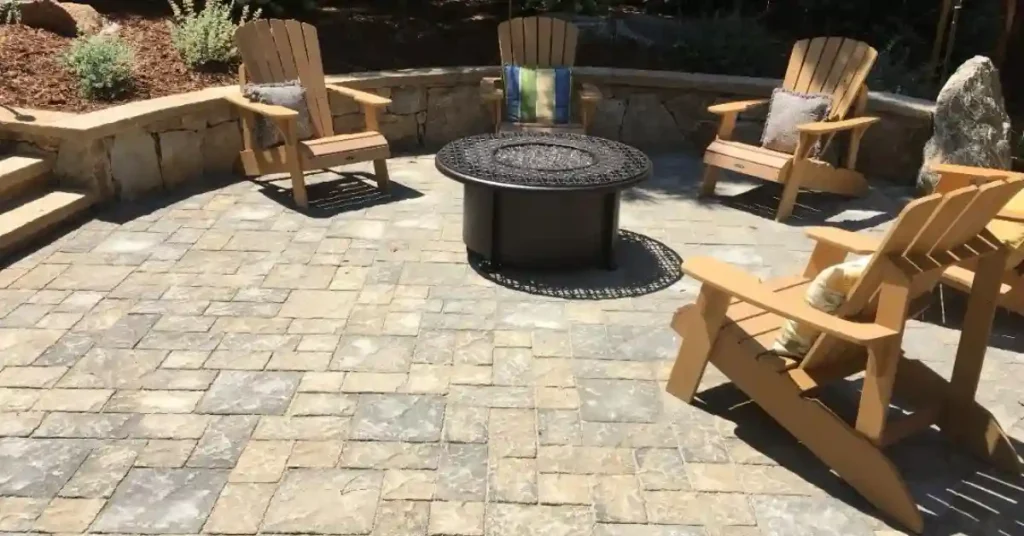
Based on what we install most often across our projects, these three options consistently perform well in Colorado:
The most common choice for driveways specifically. Their locking shape distributes weight evenly across the surface, which helps them resist shifting under regular vehicle traffic. They’re also easier to repair. If one paver cracks or stains, you can pull it and replace it without redoing the whole driveway.
A popular choice for patios and pool decks because it stays cooler underfoot and has a naturally elegant, mountain lodge look that fits Colorado’s aesthetic. It can work on driveways too, though it’s more commonly chosen for lower traffic areas.
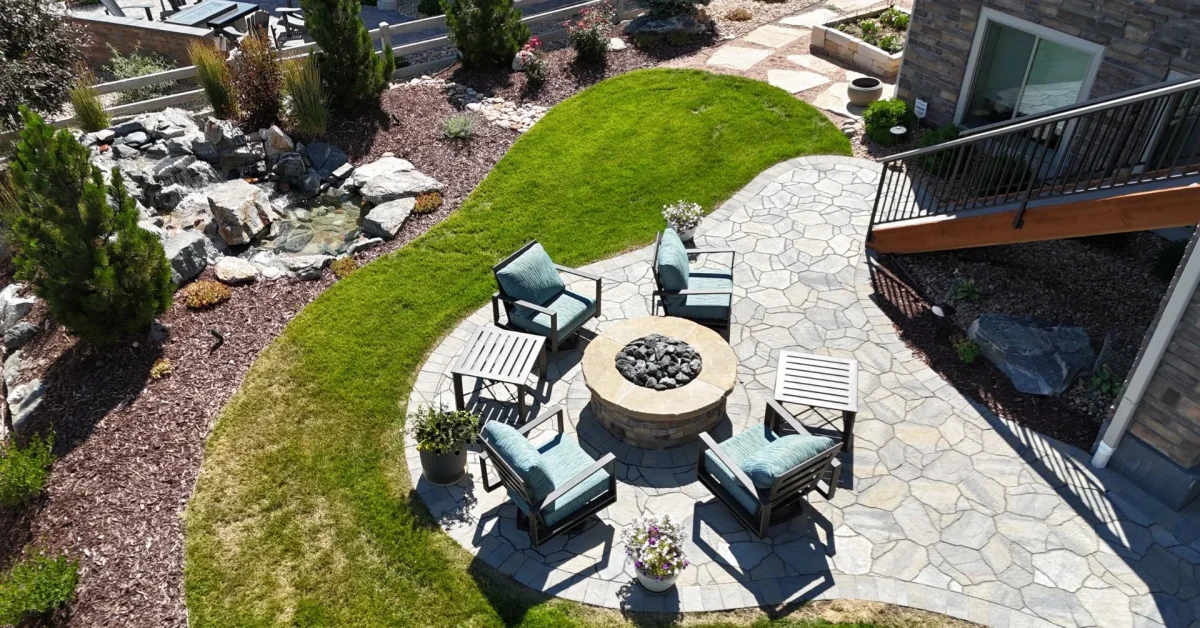
Best known for its natural, irregular look that blends into Colorado’s landscape. Flagstone is a favorite for patios, walkways, and lighter use driveway sections, especially on properties going for a rustic or mountain inspired feel.
Quick comparison:
| Paver Type | Best For | Look |
| Interlocking concrete | Driveways, high traffic areas | Clean, uniform |
| Travertine | Patios, pool decks | Elegant, cool underfoot |
| Flagstone | Patios, walkways, accents | Natural, rustic |
If you’re still deciding between a full driveway conversion and a patio layout, our guide on turning a driveway into a patio walks through that decision in more detail.
If you’re installing a paver driveway in Colorado, the thing to plan for isn’t the weight of your vehicle, it’s winter maintenance. Snow plows and ice scrapers can chip edges or dislodge pavers that weren’t set with the right joint spacing and edge restraints.
A few things that make a real difference here:
This is a detail a lot of national “how to” articles miss, because it’s specific to areas that actually get real snow, which is exactly the kind of local knowledge that matters when you’re planning a driveway here.
There are two misconceptions we hear constantly from homeowners, and both hold people back from a great option unnecessarily.
This isn’t accurate if they’re installed and sealed correctly. Sealing frequency depends on the paver type and how much traffic the area gets. A driveway used daily needs more attention than a rarely used side patio, but it’s nowhere near a constant chore. Most homeowners just need periodic resealing, not ongoing upkeep. For the basics on upkeep, see our guide on how to clean a paver patio.
The upfront cost of pavers is often higher than plain poured concrete, but the long term value tends to even out or come out ahead. Concrete cracks and needs full slab replacement; pavers can be repaired piece by piece, and they don’t develop the same unsightly cracking over time. If cost is a deciding factor for your project, our 20×20 paver patio cost guide breaks down real numbers.
For most residential projects, installation takes a few days to about a week. Factors that can extend this include:
We always walk clients through a realistic timeline before work begins, so there are no surprises mid project. For a full walkthrough of the process, check out our guide on how to install a paver stone patio.
Resealing frequency isn’t one size fits all; it genuinely depends on the paver type and how much traffic the area sees. A driveway used every day will need attention sooner than a patio that only sees foot traffic a few times a week. Rather than following a fixed calendar, we recommend having your surface checked periodically so sealing happens when it’s actually needed, not on an arbitrary schedule.
Yes. The paver itself matters less than the compacted base underneath it. With proper excavation and compaction, pavers handle regular vehicle traffic well.
Not necessarily. The bigger factor is your soil type and local climate exposure, not the paver’s inherent strength. Interlocking concrete pavers are the most common driveway choice, but travertine and flagstone can also work depending on the layout.
Properly installed pavers with the right base and joint sand are built to handle freeze thaw cycles. The bigger risk in Colorado is snow plow damage at the edges, which proper edge restraints help prevent.
The initial cost can be higher, but pavers tend to offer better long term value since damaged sections can be repaired individually instead of replacing an entire slab. Pavers can also add resale appeal, as we cover in do paver patios add home value.
Most projects take a few days to about a week, depending on size, site conditions, and how much base preparation is needed.
No. Sealing frequency depends on the paver type and traffic level, not a fixed yearly schedule. High traffic driveways typically need it more often than lower traffic patios.
Every property has different soil, drainage, and traffic patterns, which is exactly why a one size fits all answer doesn’t work here. If you’re in the Denver area, Broomfield, Parker, or nearby communities and want to know what’s realistic for your space, contact Ridgewell Landscape and Design and we’ll walk your property and give you honest guidance based on what we’ve built over 15+ years in Colorado.
Fresh Ideas From our experts
What Your Neighbors Are Saying
"They are the best. We have a small backyard and needed it to reflect a relaxing and enjoyable space. Chris used our ideas and came up with the perfect design. Then Francisco came with the cost projections and worked to accommodate our budget. He and his team then used their considerable construction expertise to create a space that’s an extension of our home where we spend a lot of time. Thank you for creating such a welcoming space."
"I am new to Colorado and hired Chris and Francisco to design and implement a plan for my new build house. From design to finish and followup they were beyond my expectations. They are in constant contact throughout the project and their crew is very hardworking. They followup when the project is finished and are always available for whatever questions you may have. I would highly recommend them, and I get many complements on the work they have done for me."
"We were thrilled with the end result of our brick paver patio refurbishment. We hired Chris, Francisco and their team to fix our sinking brick paver patio. It had been installed by a different landscaper, and after only 2 years it was collapsing. Boo hiss! Ridgewell Landscape and Design came in and saved the day! They discovered the original installation was done incorrectly, and that’s why it was collapsing. Their team worked hard and got the project done quickly and professionally. We are thrilled with the look and finish of the job! Bravo!!"